Jonathan C. Lewis
A Thousand and One Nights
A fictional travelogue; three minute read.
The glaring Tunisian sun is at the height of its powers. Ancient pavers burn into my canvas shoes. Sweat soaks my shirt, my neck, my armpits.
My son Ben and I are here for a short holiday. He’s taking a break from college to rethink his major. I’m here because, whenever he wants to spend time with his dad, no corner of the planet is too far away.
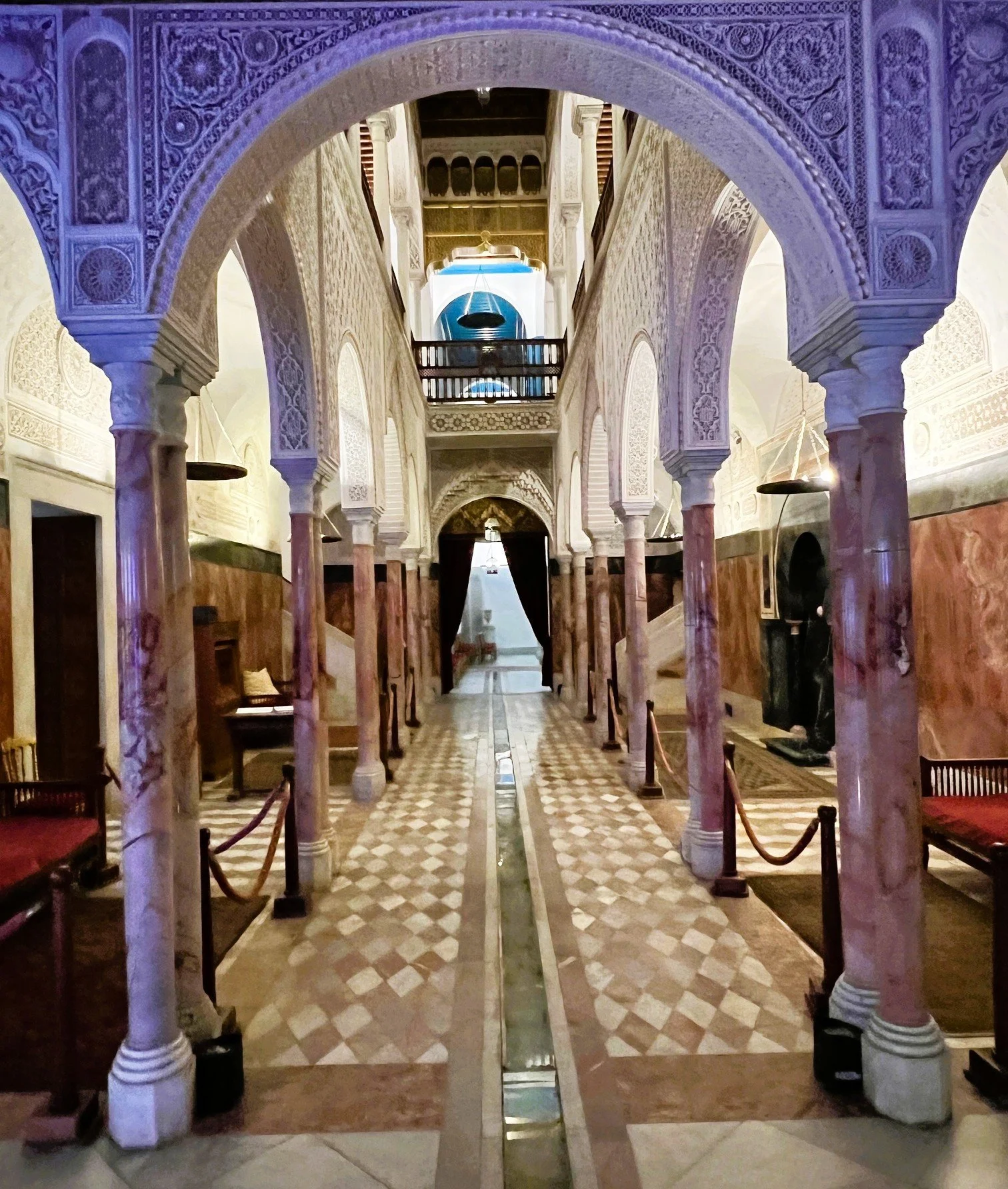
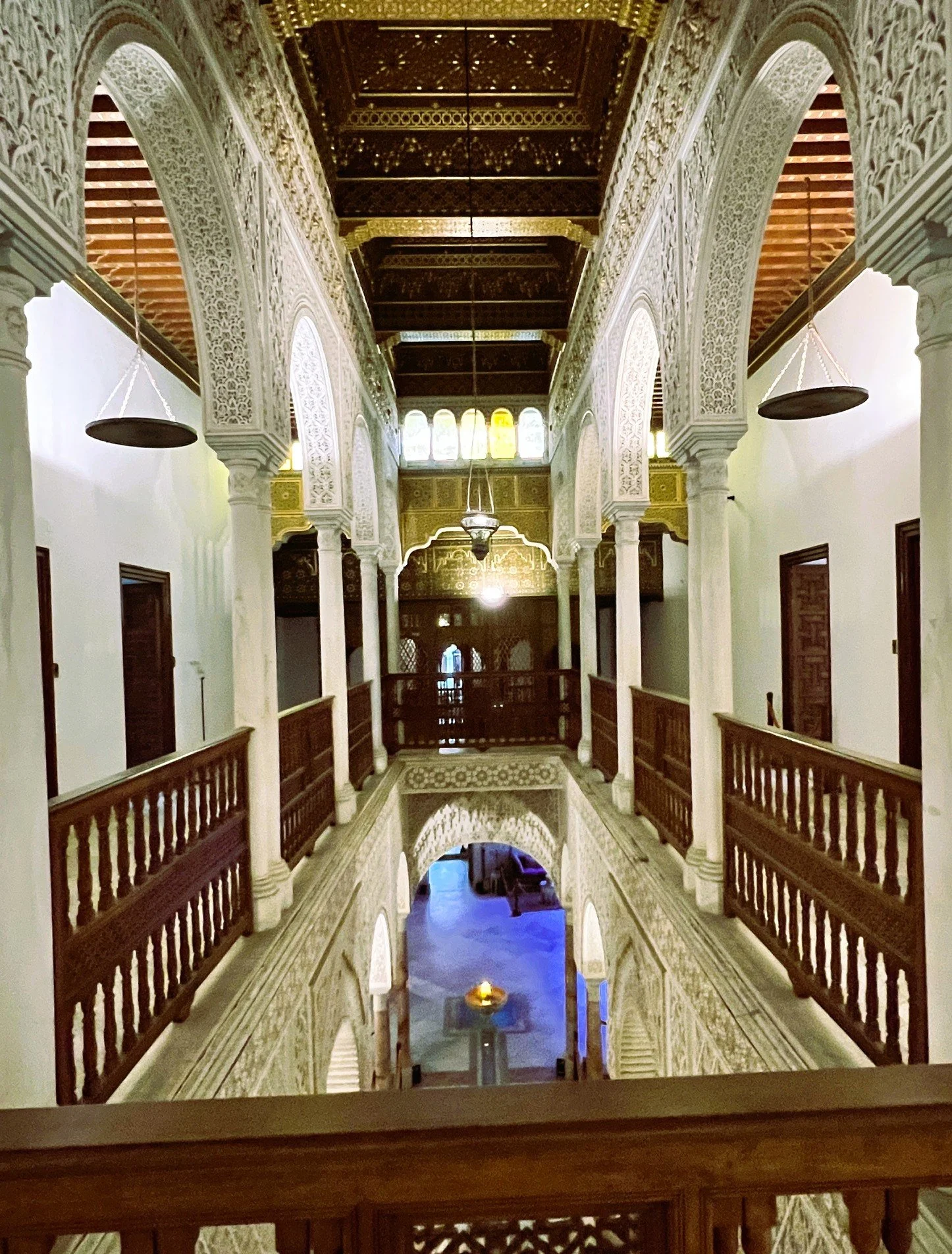
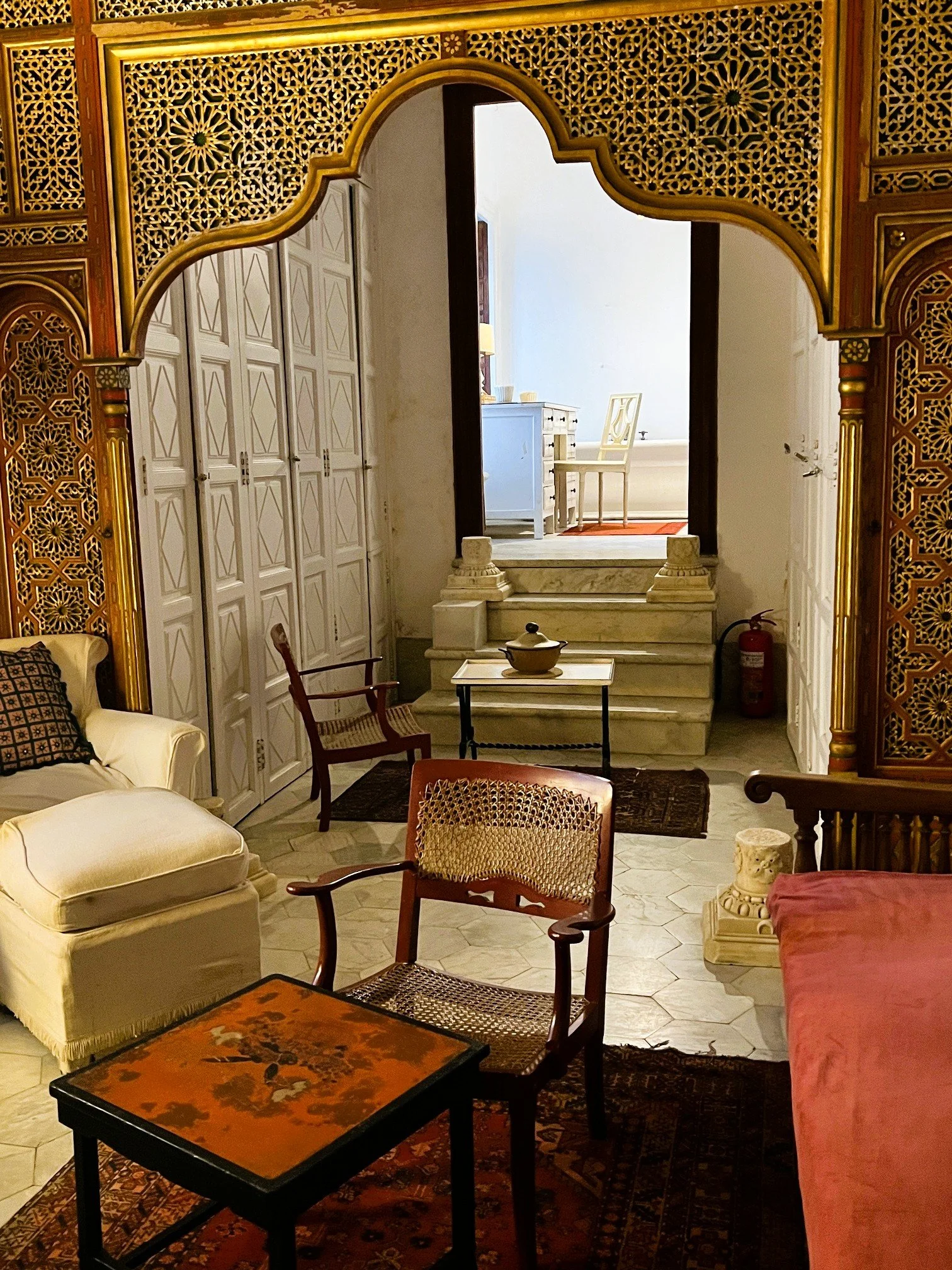
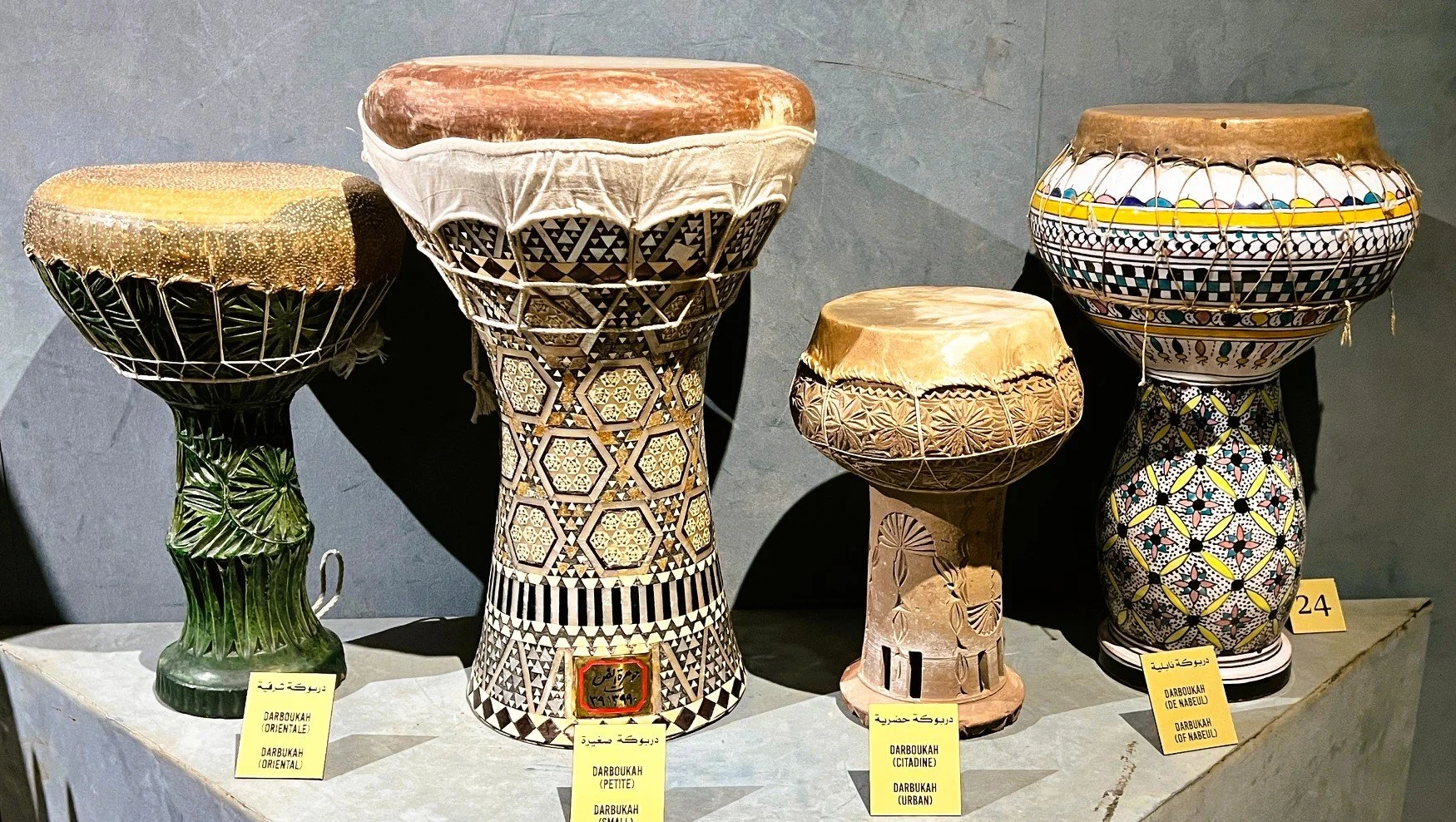
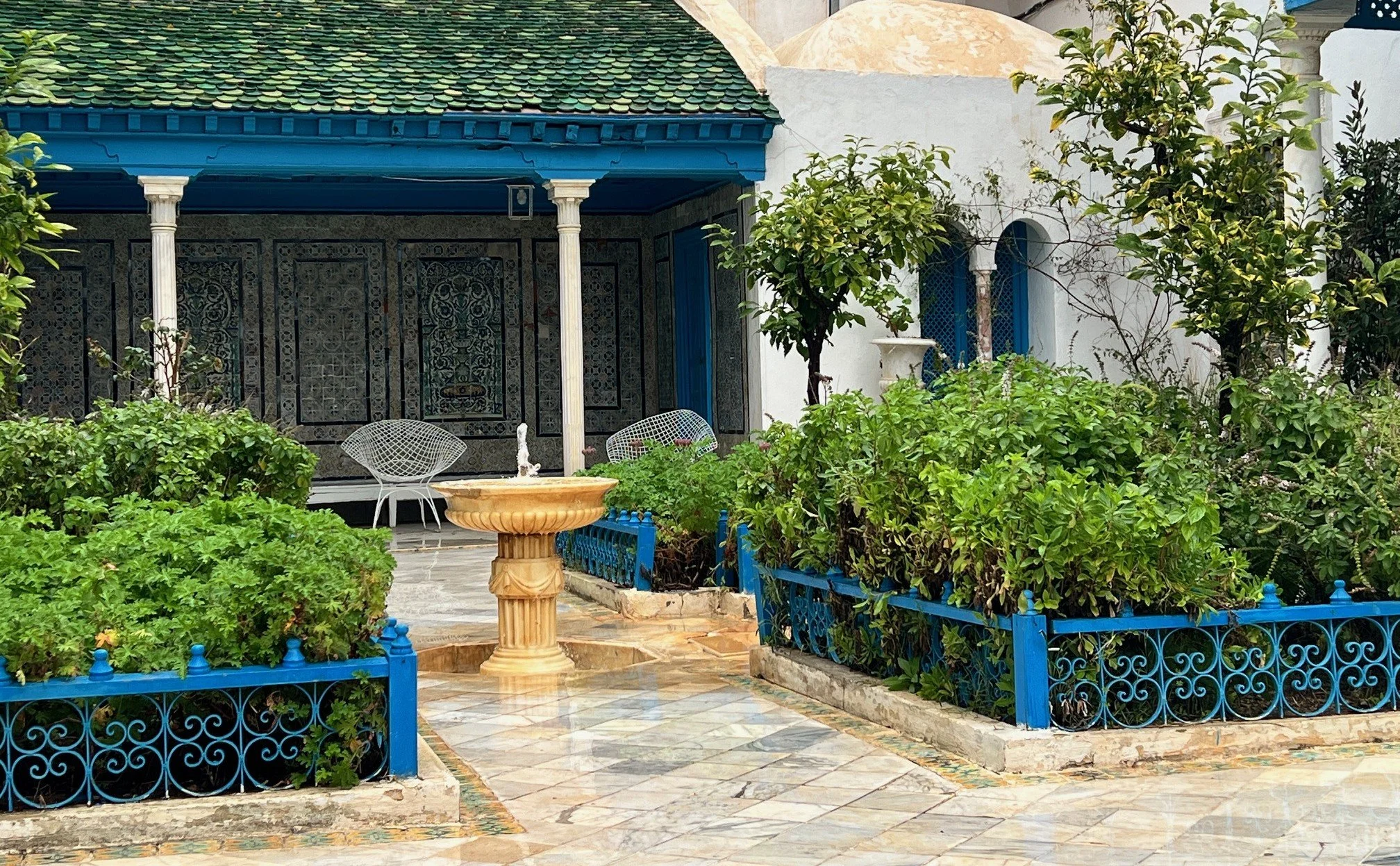
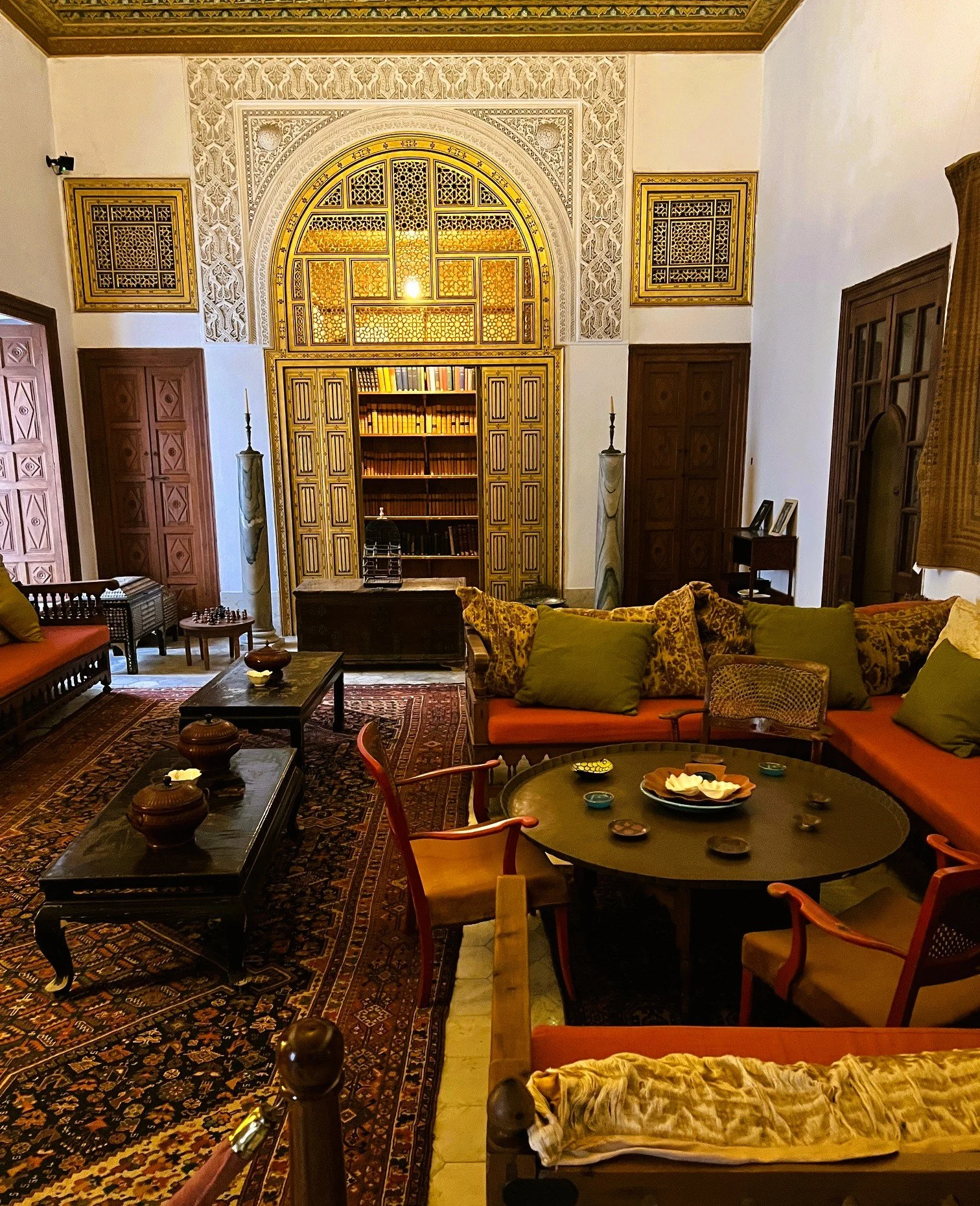
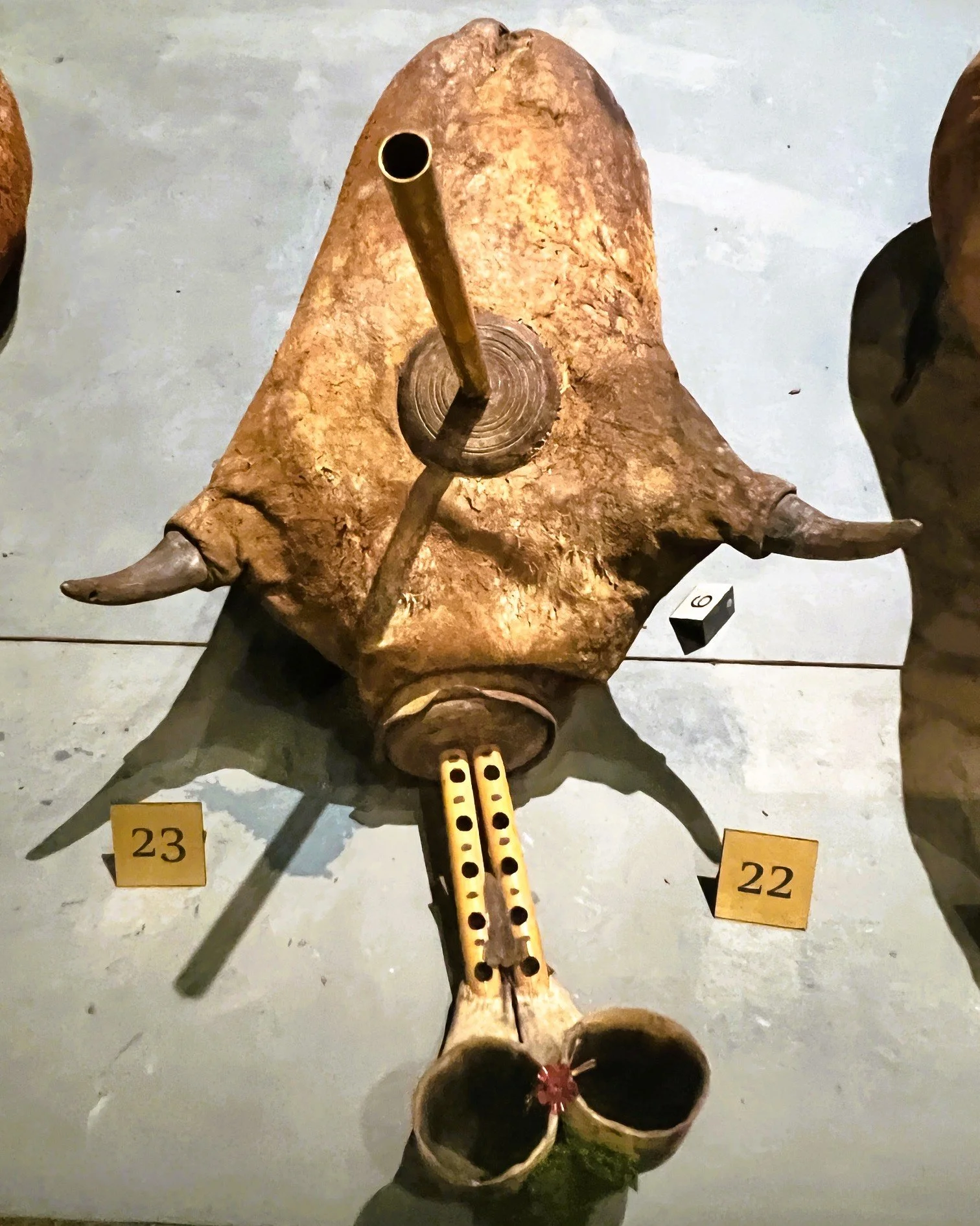
We’ve ducked into the coolness of Dar El Annabi—the 18th century palatial residence of Mufti Mohamed Taïeb El Annabi. Fifty rooms. A library of Arabic-language manuscripts. A mini-museum exhibiting Berber music instruments. A theater. A hamman. A prayer hall. Garden terraces.
Even a few minutes here is like living inside the story of A Thousand and One Nights. Scheherazade is playing in my head. I can’t hear the music in Ben’s brain, but it’s probably Santana’s Black Magic Woman.
Stepping into a room filled with cushions and marble carvings, not ten feet away wearing black cargo pants, black travel vest and a floppy sunhat is Professor Ghali. As she turns to me, her aged, wrinkled face smooths into a large grin. I grin back.
“Ben, Ben, you’ve got to meet someone. My university mentor. She’s the one who convinced me to go into teaching history.”
In full stride, we traverse the room, our heels hitting the marble floor. “Noah, how are you? What are you doing here? Who’s this?”
Laughing, I answer, “I’m here studying history! This is my son Ben. Ben, meet Professor Ghali.”
They shake hands. I mention that Ben is rethinking his major, and I’m collecting firsthand history to liven up my class lectures.
“Ben, follow me. I want to show you a special view,” she directs as if still commanding a lectern. As I once did, he falls into step.
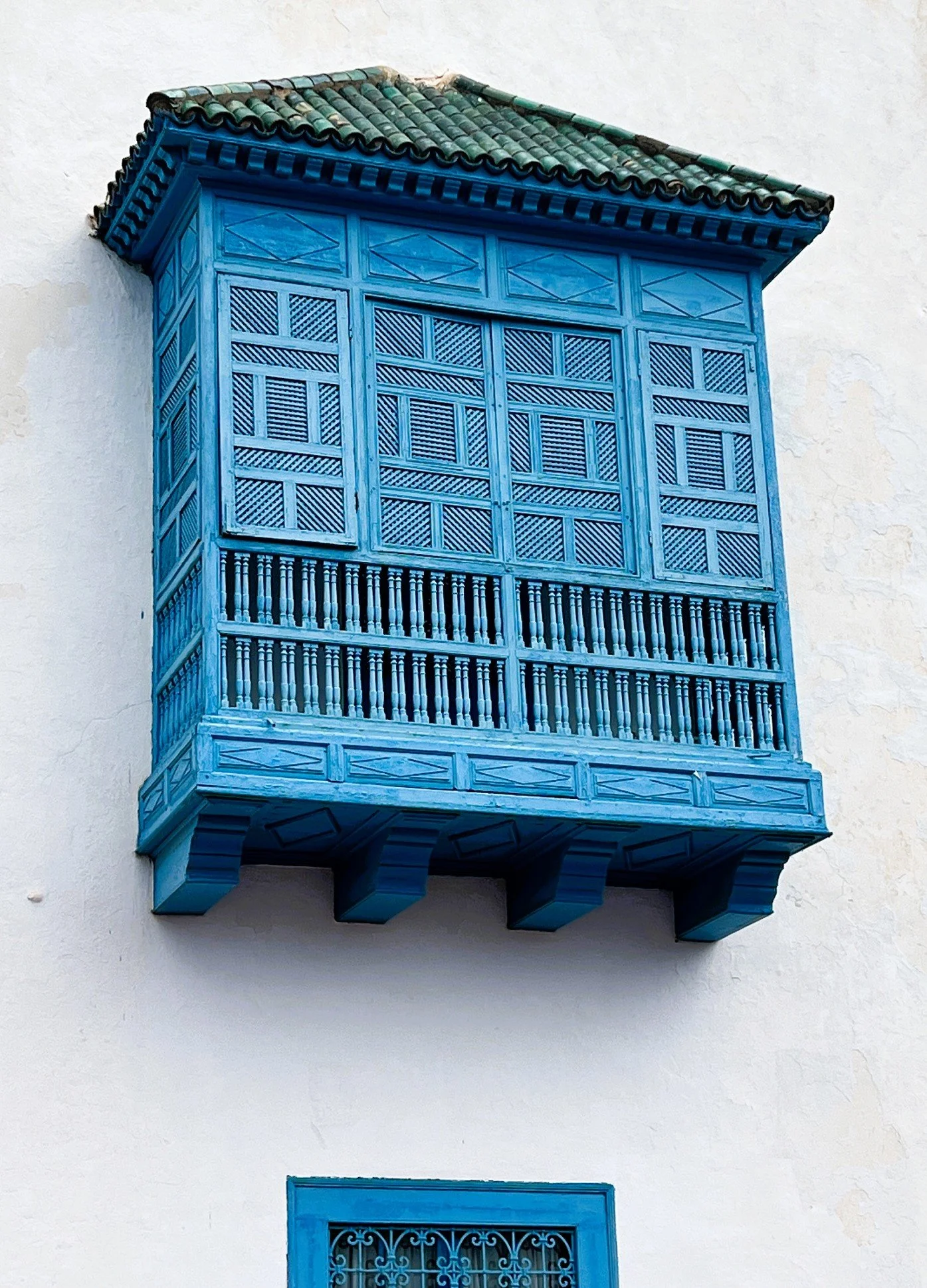
“Look through this window. It’s from the 19th century. The carved wooden latticework allowed women to look out at the Gulf of Tunis without being seen by men on the street below. The privacy screen is called a mashrabiya.”
As Ben peers through the bougainvillea-covered mashrabiya, I wander off to find the music room. I can hear them talking. I eavesdrop.
“So, you’re at a crossroads?” she announces. Without waiting for his answer, she adds, “Like a camel caravan boss wondering which way the Saharan sands will be blowing.”
Then, as she so often did with me, she moves the conversation deeper. “What are you afraid of?” He sucks in a half-breath. I do too.
Before he can collect a reply, she presses, “Your dad was my best student which is why I thought he would make a solid historian, but the choice was his. Only you get to decide your path.”
With that, she pivots to the hamman. With an earthy smirk, she offers the kind of flirty comment which filled her lecture halls to capacity. “I bet some of those burqa babes had a lot of fun in here.”
I know Ben is red-faced. So am I.
Not stopping, she bores into Ben. “Being an avatar in a life story written for you by anyone but you never works out. You end up living a myth.”
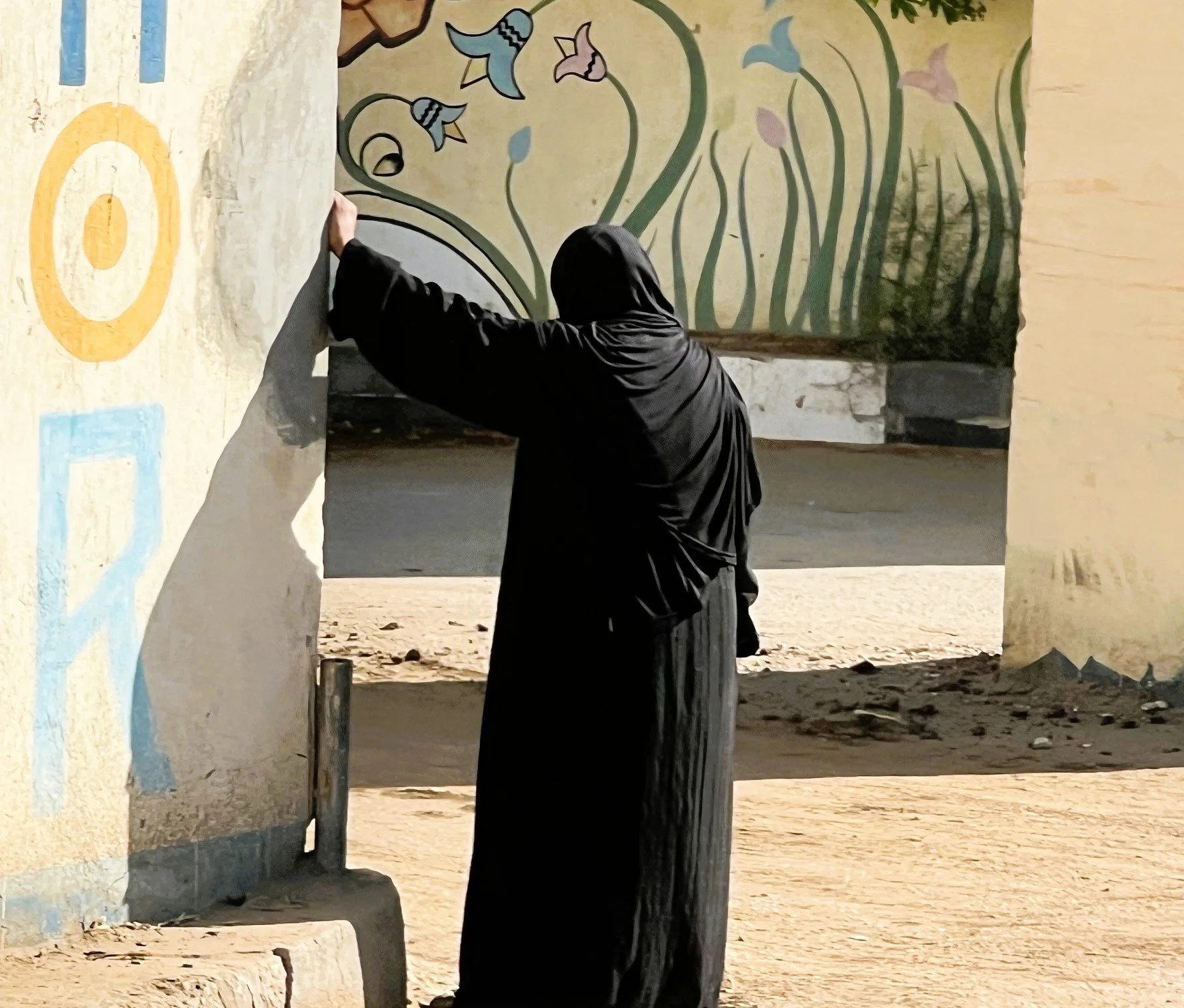
Quietly, as if pulling a memory, she adds, “Like a lot of Arab women.”