Jonathan C. Lewis
A Spleen Well-Lived
A fictional travelogue; three minute read.
On holiday, I collect cuisines the way other people collect souvenirs. In my high school classroom, I display them on my waistline.
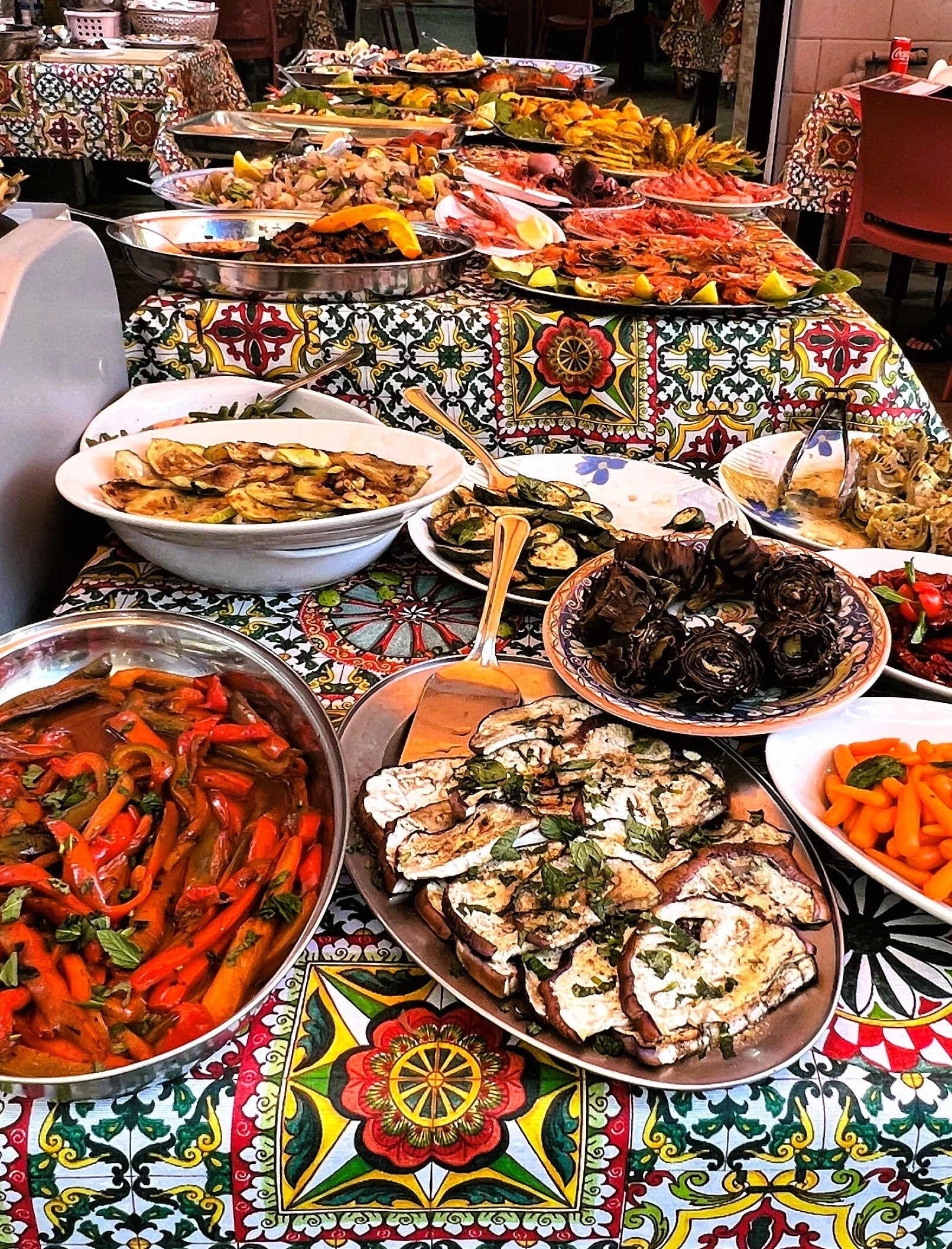
For the past few weeks, I’ve been eating my way through Sicily. The island of Sicily is existentially a combination delicatessen, pasta factory, pastry shop and fish market. If you’re not raising food, harvesting food, cooking food, serving food, then you’re a foodie tourist—like me.
Lifelong eating, I mean lifelong learning, is the way I know I’m living my best life. I teach my students, “Taste life.”
When I was a kid, food was how my parents loved me, and how they instructed me about life’s hardships. Restaurant ordering—a rare occasion of celebration--came with warnings, “That entrée is expensive. We can share side dishes. Desserts are overpriced. Water is fine, thank you.” And when the bill arrived, my dad calculated the tip to the final penny.
At home, meals—bland, boring, monotonous—were hard to swallow. Our dinner conversation was “Clean your plate. Don’t waste food.”
On weekends, I wanted to eat lunch or dinner at my friends’ houses. I never risked inviting them to mine.
In the Palermo street markets, hawkers shout out invitations to sample their wares. Everyone wants me eating everything. I’m smothered in eat-me-now smells.
Above the food stands, electrical wiring entangles rusted balconies. Laundry hangs helter-skelter like triumphant soccer flags after a game win. A motorcycle repair shop spills out onto the cramped sidewalk.
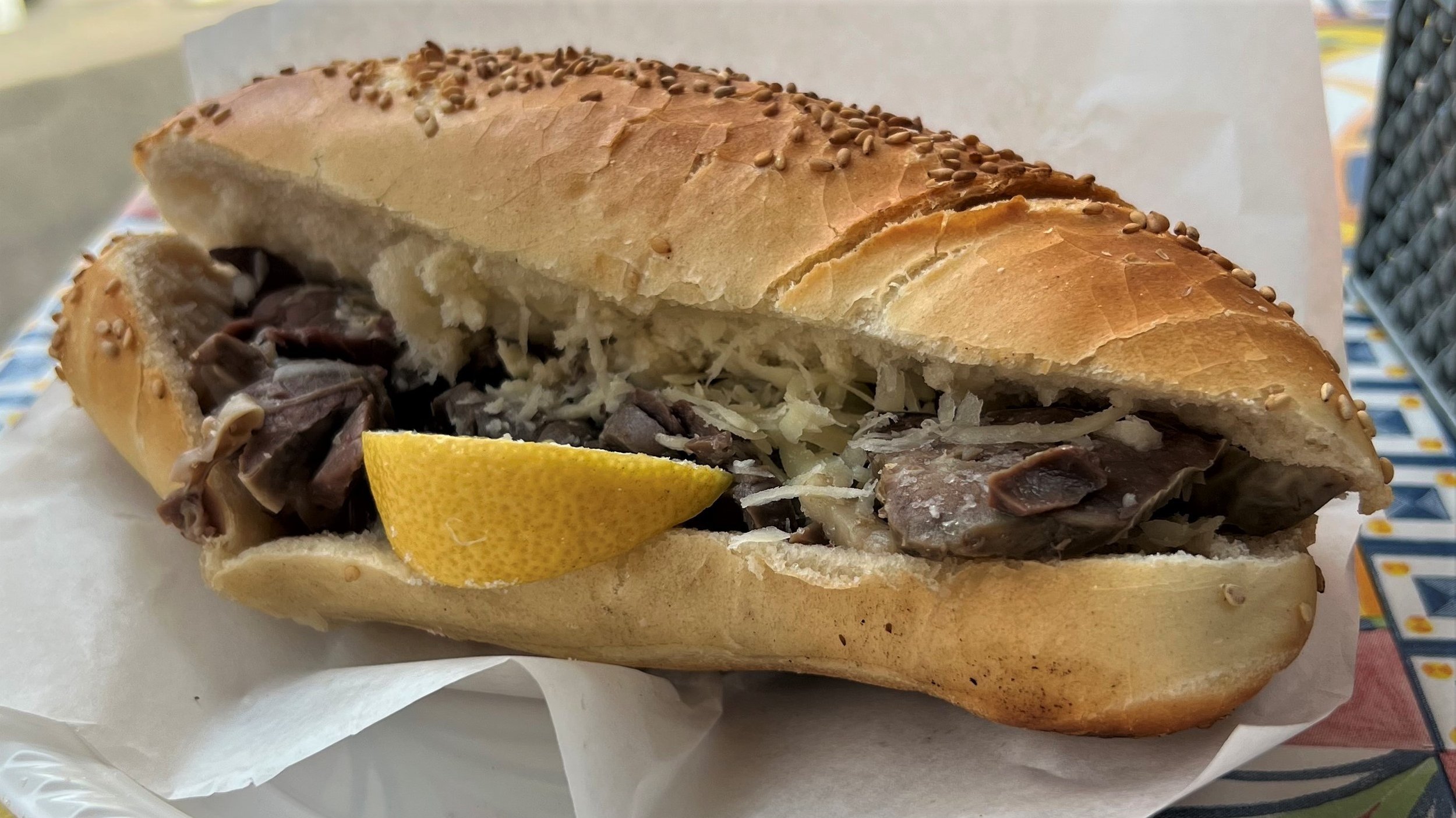
Pani ca meusa is cow spleen that is slow-simmered, then reheated in hot lard and folded into a crunchy sesame roll with white Caciocavallo cheese and a lemon wedge. The texture is soft and smooth, floppy and sloppy, like a thick, unwieldy slice of bologna. The taste, similar to a mild pot roast, compares favorably with warthog or crocodile.
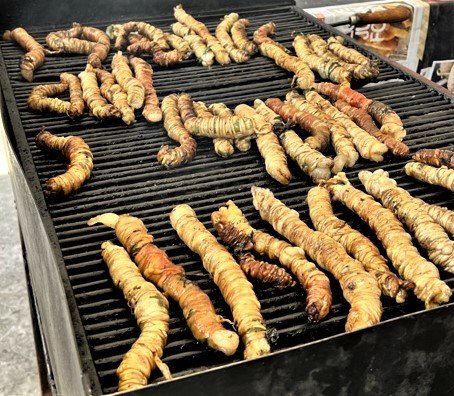
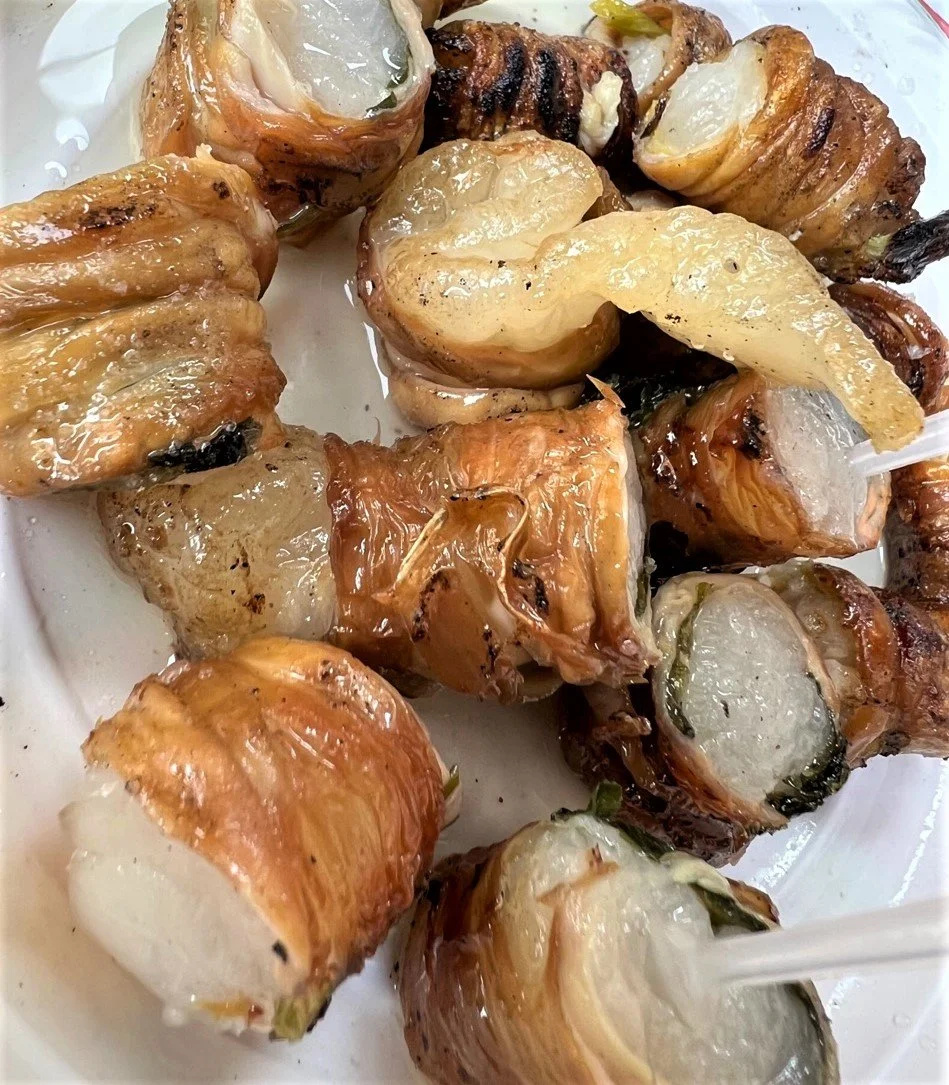
When I tell my students about eating stigghiola, their groans, feigned and otherwise, won’t faze me. Stigghiola--lamb guts tightly wrapped in leeks, sizzling on a never-cleaned grill and billowing bluish-black smoke into my face—form a tube that looks like a large earthworm. I devour them doused with olive oil and lemon juice. I can’t wait to show my class pictures of me popping one in my mouth.
As a civics teacher, I know that if my students someday step outside their social comfort zone, travel to new places, try new foods, they are more likely to be appreciative of other ethnicities and in the long-run better citizens. I tell my stodgier colleagues, “If I turn off a few stomachs, maybe I can turn on a few minds.”
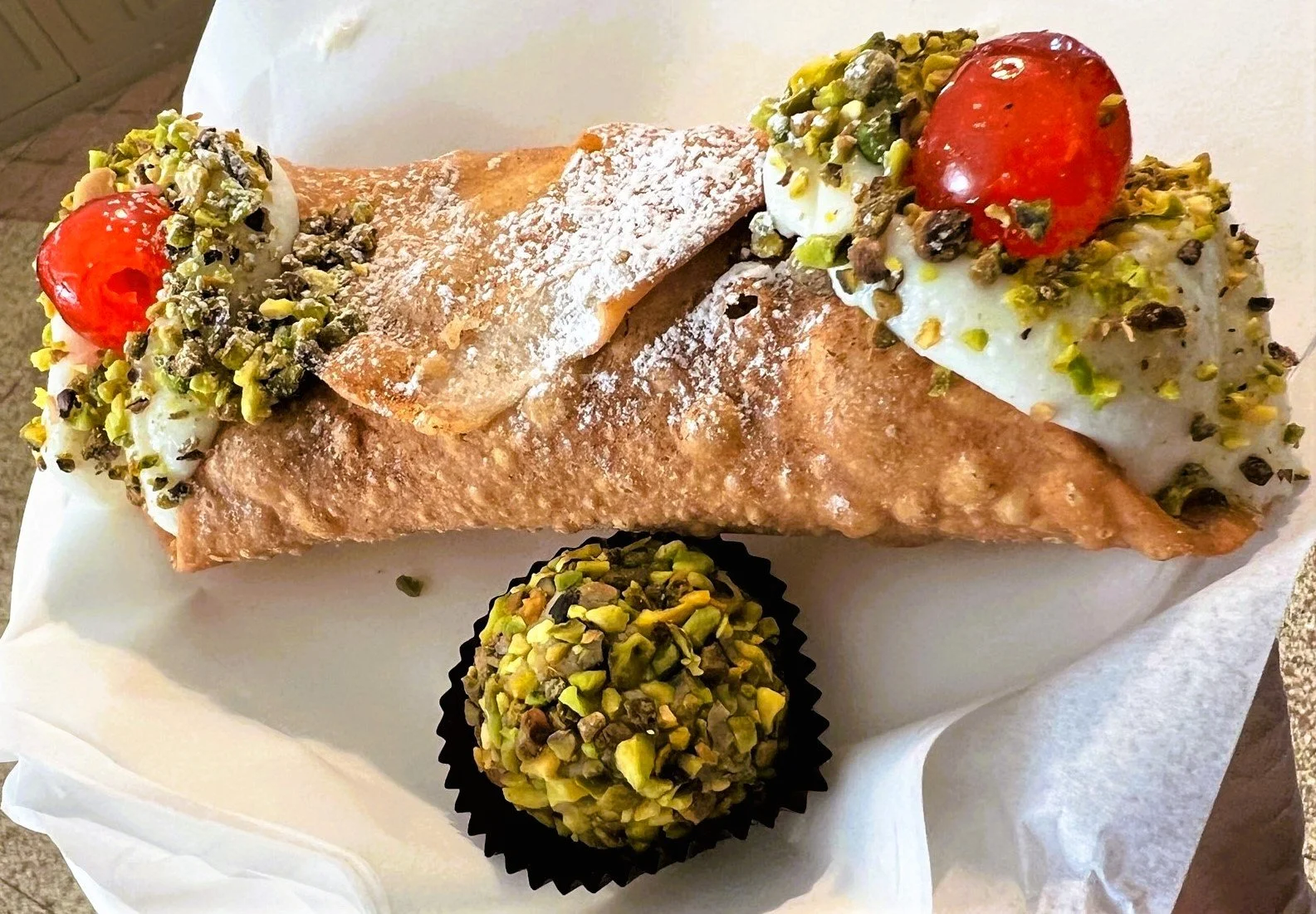
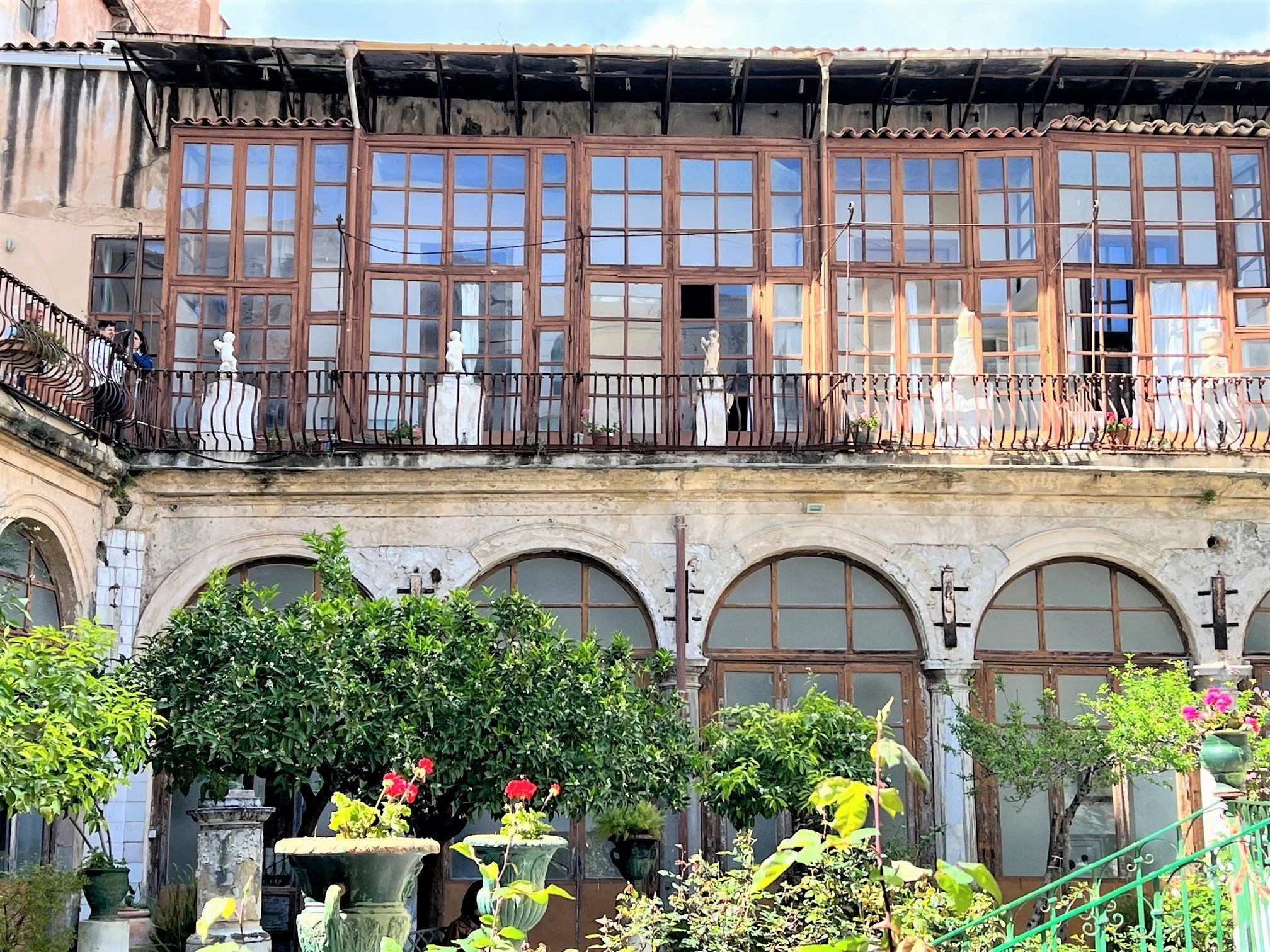
In a cloister shaded by lemon trees, a cannolo and I share a bench. A fountain gurgles like a baby with a bottle. I have a moment to savor all that fulfills me—and fills me.
Here at Saint Catherine’s, for 700 years nuns have supported their convent by keeping a sweet shop and bakery. Not a minute ago, while I watched, a nun stuffed a fried pastry shell with sweetened ricotta, then topped it off with candied fruit, chopped pistachios and chocolate bits.
The first bite is a revelation, just not a religious one. As my students tease me, you are what you eat.
Burp.