Jonathan C. Lewis
Crowds
A fictional travelogue; three minute read.
When Vesuvius erupted on the Italian peninsula in 79 A.D., a temper tantrum of volcanic mud and smothering ashes converted the city of Pompeii into a cemetery. From bathrooms to bordellos—the colonnades, the arches, the statuary, the amphitheaters—every building was given eternal life.
From my back row seat in the amphitheater, I hear every syllable a professor is lecturing his Smithsonian Journeys tour. “This is one of the oldest surviving Roman amphitheaters. I’m sure it has occurred to some of you that Pompeii foreshadows climate change killing off the human species, leaving only empty buildings and abandoned bridges.” A few heads nod.
The city is a crematorium. Except for lizards basking in the scorching sunlight and tourists swarming like worker ants, nothing stirs.
After a day of walking on gravesites, my muscles are dying. I’m starving to death.
In survival mode myself, I’ve stopped at L'Antica Pizzeria da Michele.
A thin-crusted marinara pizza smeared with thick tomato sauce, oil and basil leaves comes to my plate direct from a wood-burning oven. For ages, local fishermen have nourished themselves on marinara pizza (from the word marine).
The English accent at the table next to me is telling her dining companions, “Naples is pizza's purple patch.” On their table, the demolished margherita pizza—invented in Naples and named for Queen Margherita—confirms her culinary convictions. Made with basil, mozzarella and tomato, locals boast it represents the red, white and green Italian flag.
Marinara or margherita, food is how I cheat death.
In Pompeii, eating out was the norm. Lower-class homes did not have cooking hearths and a third of the middle-class got by without kitchens. On street corners, snack bars served up bread, cheese, veggies, soups, mutton, duck, goat, chicken, pig, fish, snails, wine.
Remembering that, without any safe place to hide, all of Pompeii was cooked to a crisp, I shudder.
With the unwitting help of throngs of other sightseers, I spend my day reenacting the hustling, bustling, crowded tumult that was once Pompeii. More easily, I could have hung out in downtown Naples.
Naples mirrors the chaos of Pompeian commerce and crowded streets. Run over by a motorcycle or a donkey cart. Same difference.
A ratpack of schoolboys, escapees from their class field trip, slurp down sodas in a Naples park. Boys in ancient Pompeii, after a day of goat-herding, quenched their thirst from public fountains. Same difference
Pompeiians bet on chariot races. In Naples, lottery tickets are for sale. Same difference.
Under the lusty gaze of local guides resting near the Temple of Jupiter, college girls cluster to giggle, gossip and share cellphone photos. Once, the men of Pompeii did their girl-watching next to the statue of Apollo in the Forum. Same difference.
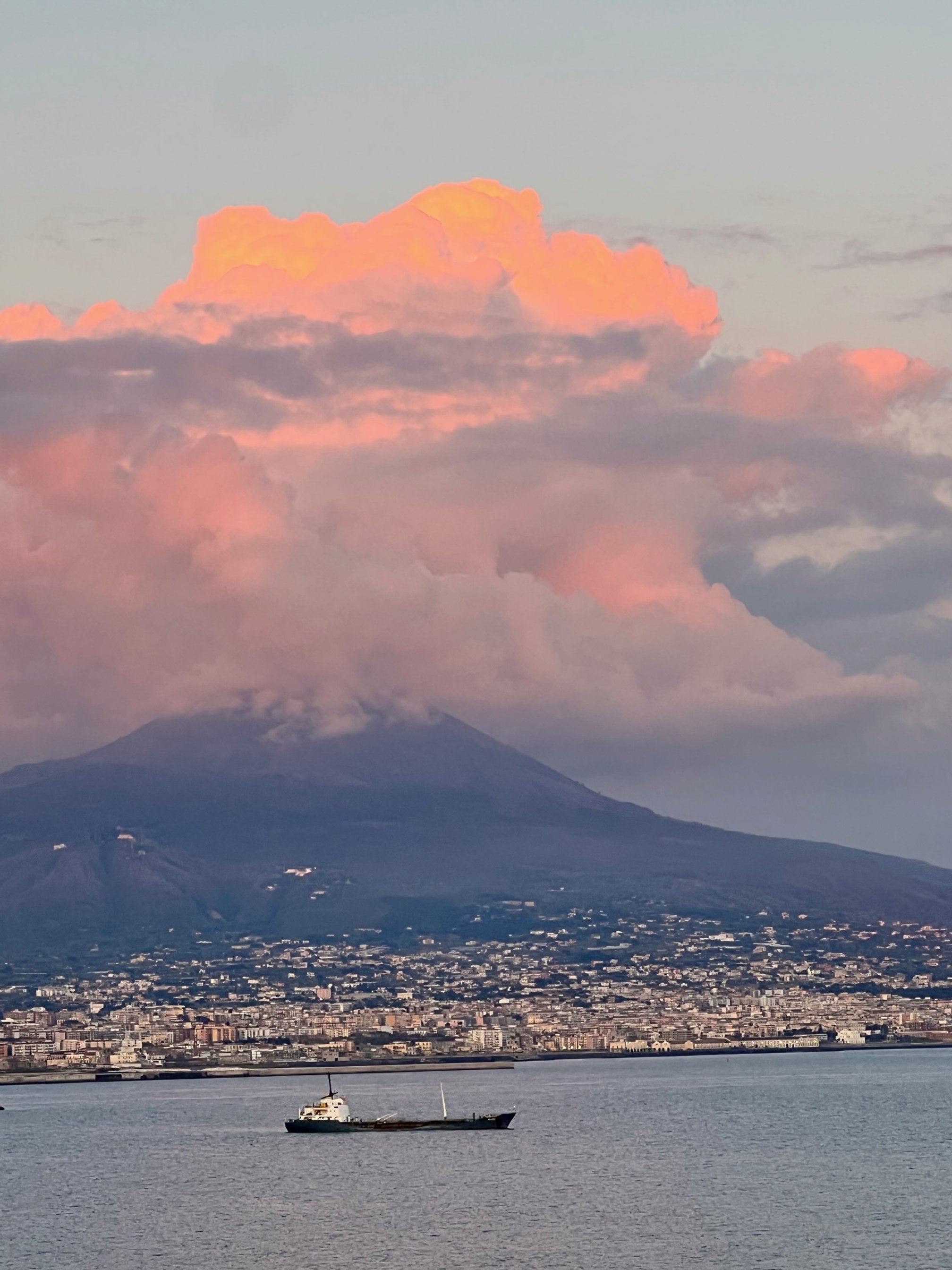
Strolling along the waterfront promenade, white caps on the Bay of Naples dot the dark blue waters, sailboats tack into the breeze, a cruise ship confidently steams out to sea. A puffy cloud hovers all alone in the hushed sky.
After a hard, hot day of sightseeing, and listening to doomsday professors, but now with a full stomach, my body unwinds. I stop to smell the sea breeze.
In the distance Mount Vesuvius slumbers.
Sudden death unthinkable.