Jonathan C. Lewis
Jealousy
A fictional travelogue; three minute read.
Along a roadway edging Vienna’s Karlsplatz park, a public art sculpture holds my attention. The full-sized, mud-colored Mercedes-Benz—made entirely from bio-degradable jute, raw wool, cellulose, clay, wheat, dirt, wood—is artist-designed to decay and disintegrate.
“What are you looking at?” the artwork smirks. “Haven’t you ever seen a pro-environment, anti-automobile artwork before?”
I tilt my head, but say nothing. If there’s a passerby, no sense in self-branding as a crazed tourist in need of police attention.
“Streets for people, that’s what I’m for,” the car rattles from its muffler. “While I’m aging in place, I’m showing off Vienna’s public-friendly, flowering urban spaces.”
The arty car is not wrong. Continuing on my walk into downtown, I don’t hear horns honking or motors gunning. I don’t smell gas fumes. I don’t see blue smoke.
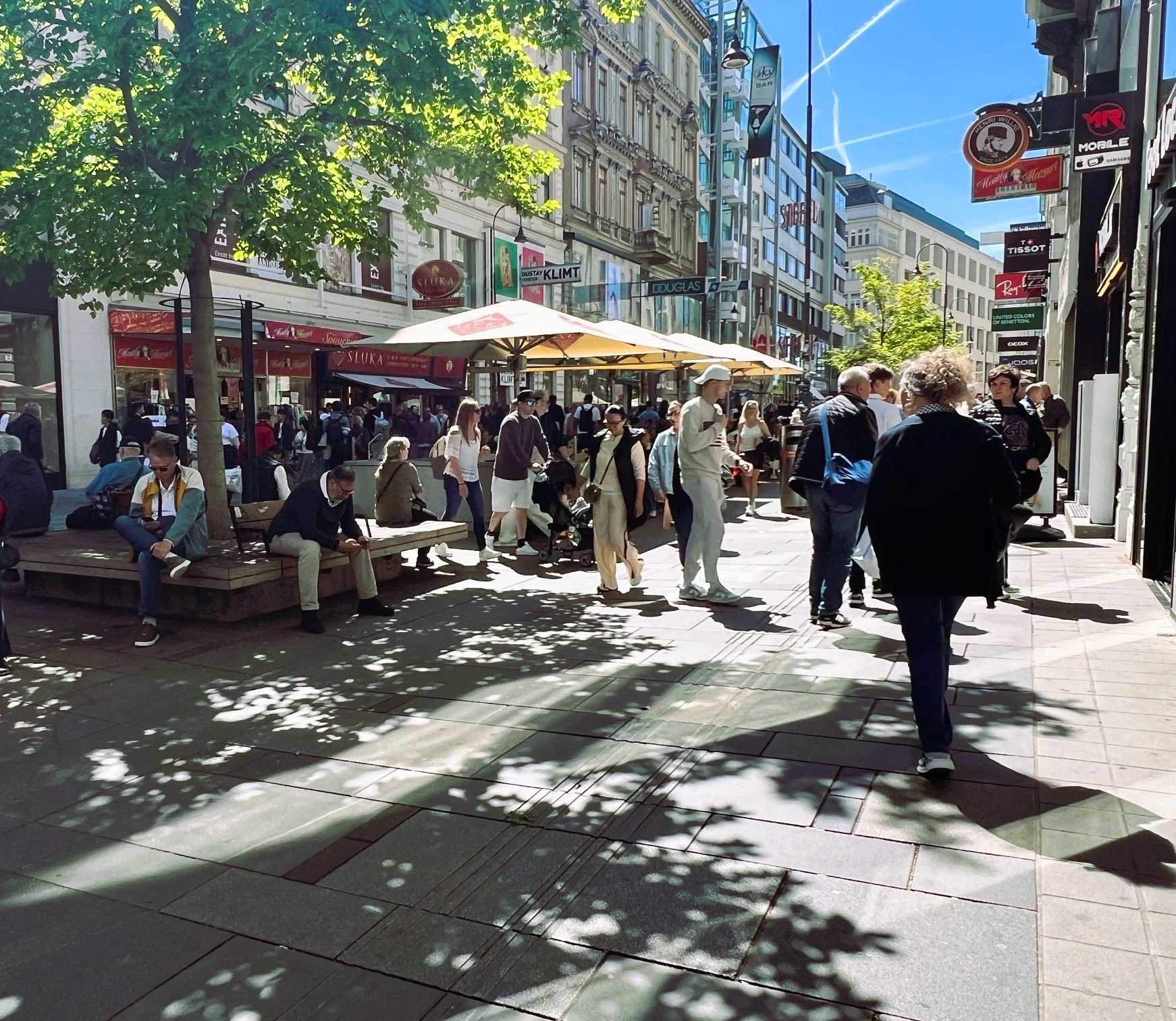
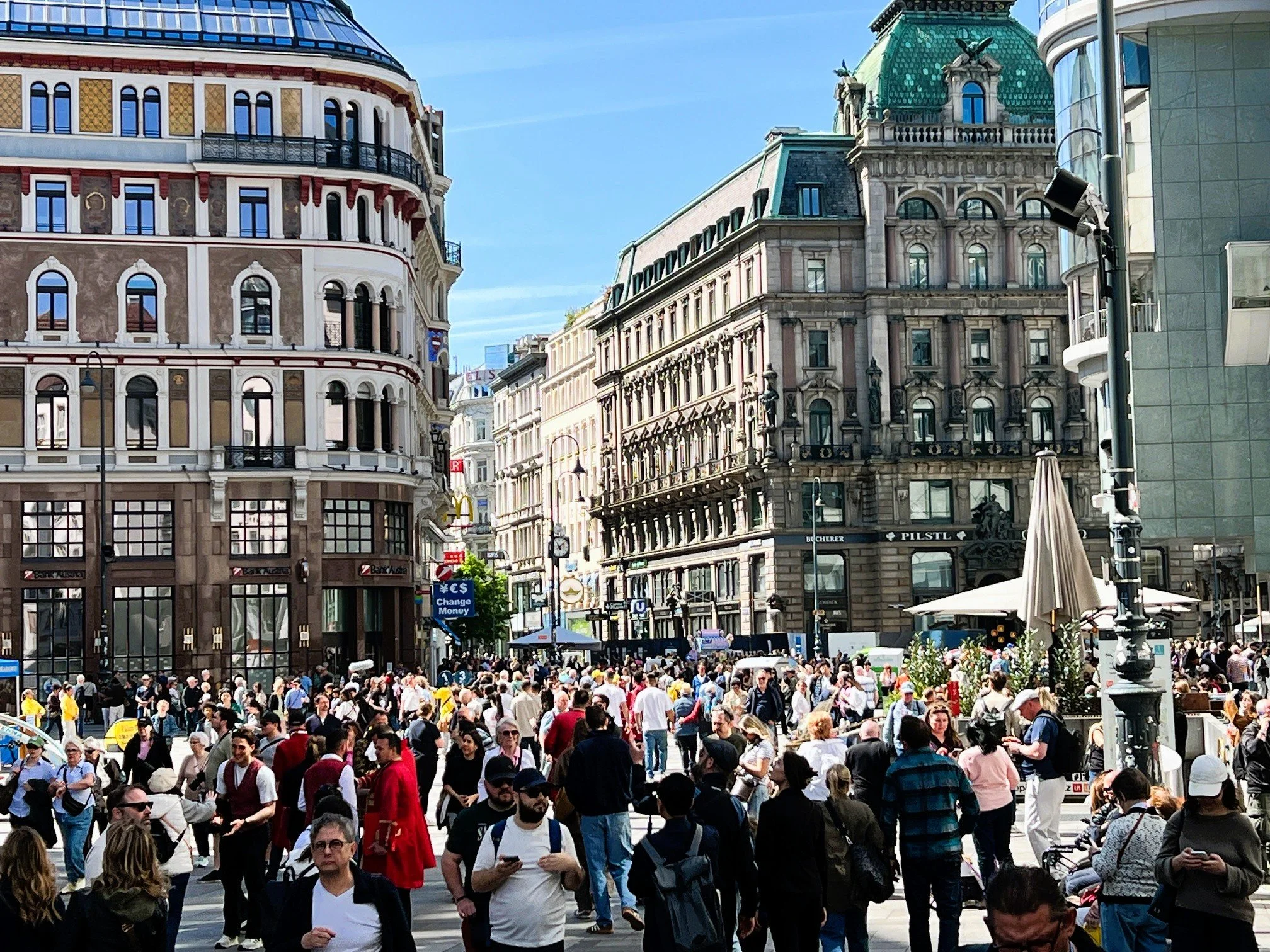
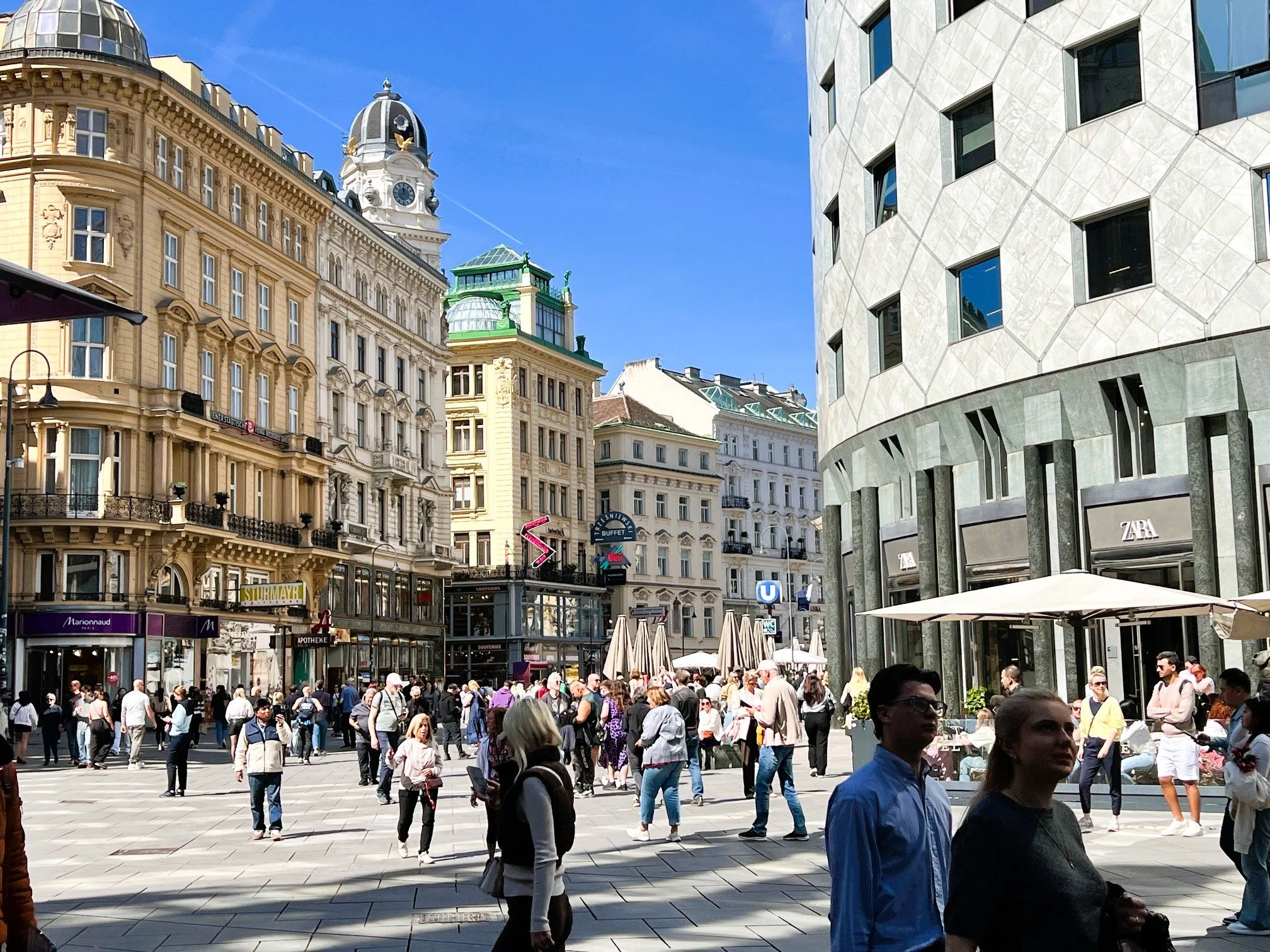
In a happy delirium, I’m sauntering on the sidewalks—really the non-sidewalks—of Vienna. Nary a curb or gutter in sight. No bossy signs telling me when to wait and when to walk. The main shopping streets, the alleys, the side streets, the mini plazas form a permanent, peaceful pedestrian mall.
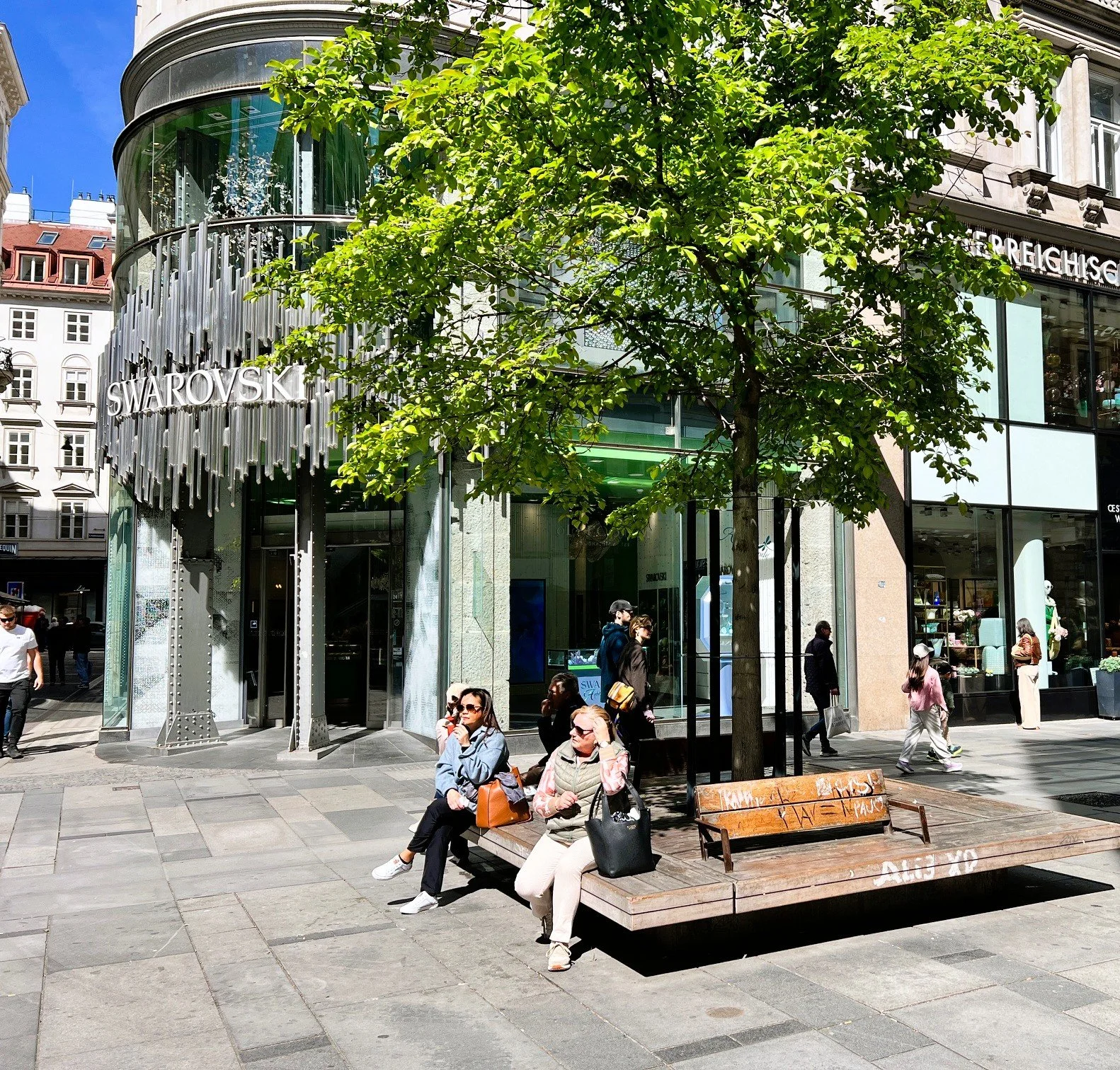
Feeling like a local, I’m window shopping. Admiring architecture. Bench-perching under shade trees. People-watching.
A couple in their eighties stroll by, holding hands. A young man on a bicycle, dressed like a Silicon Valley tech worker, pedals somewhere in a hurry. Two women, dressed from the ad pages of Elle, carry large bags from the Kohlmarket luxury shops. A dad pushes a stroller. A leashed dog walks his owner.
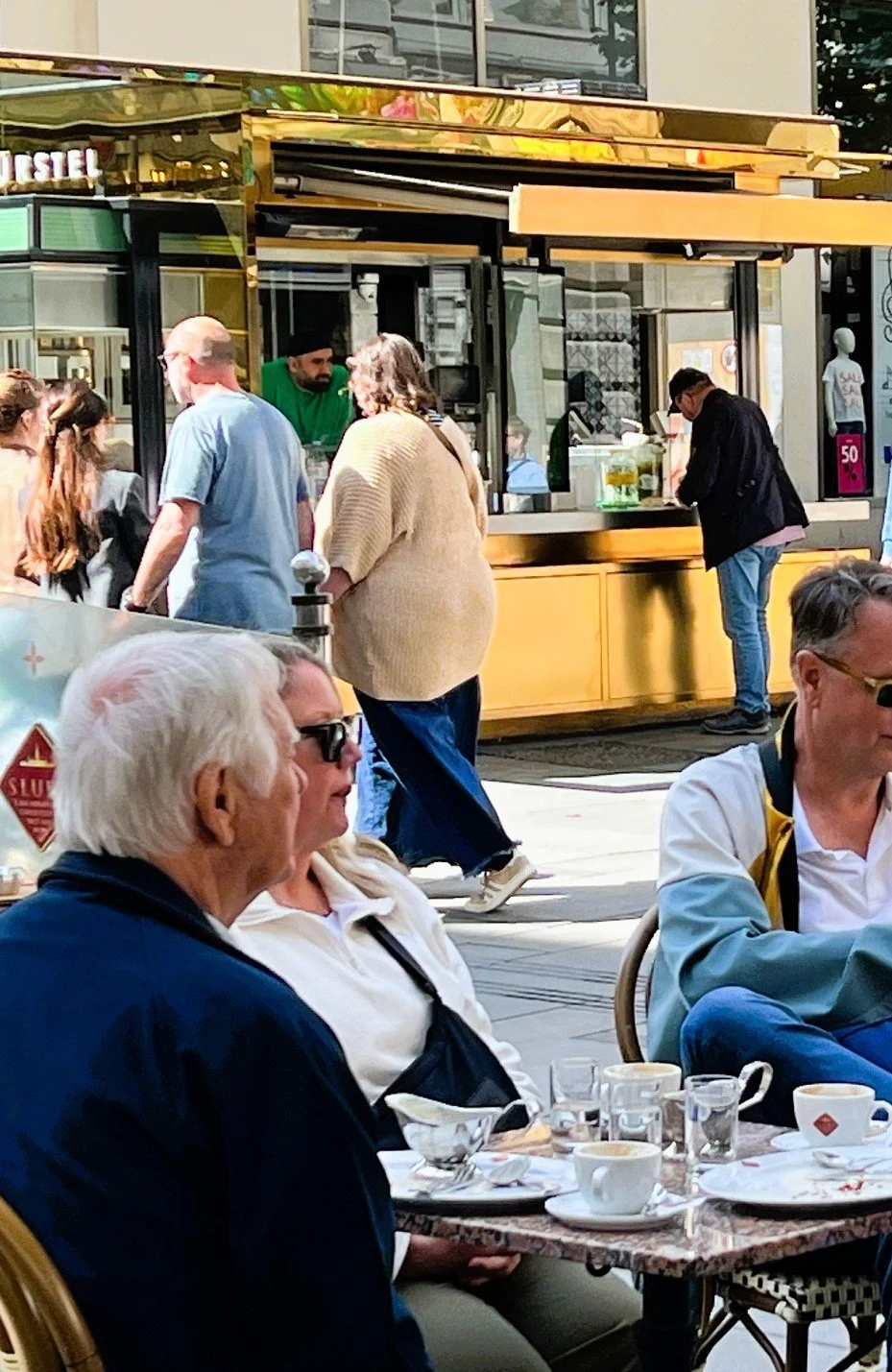
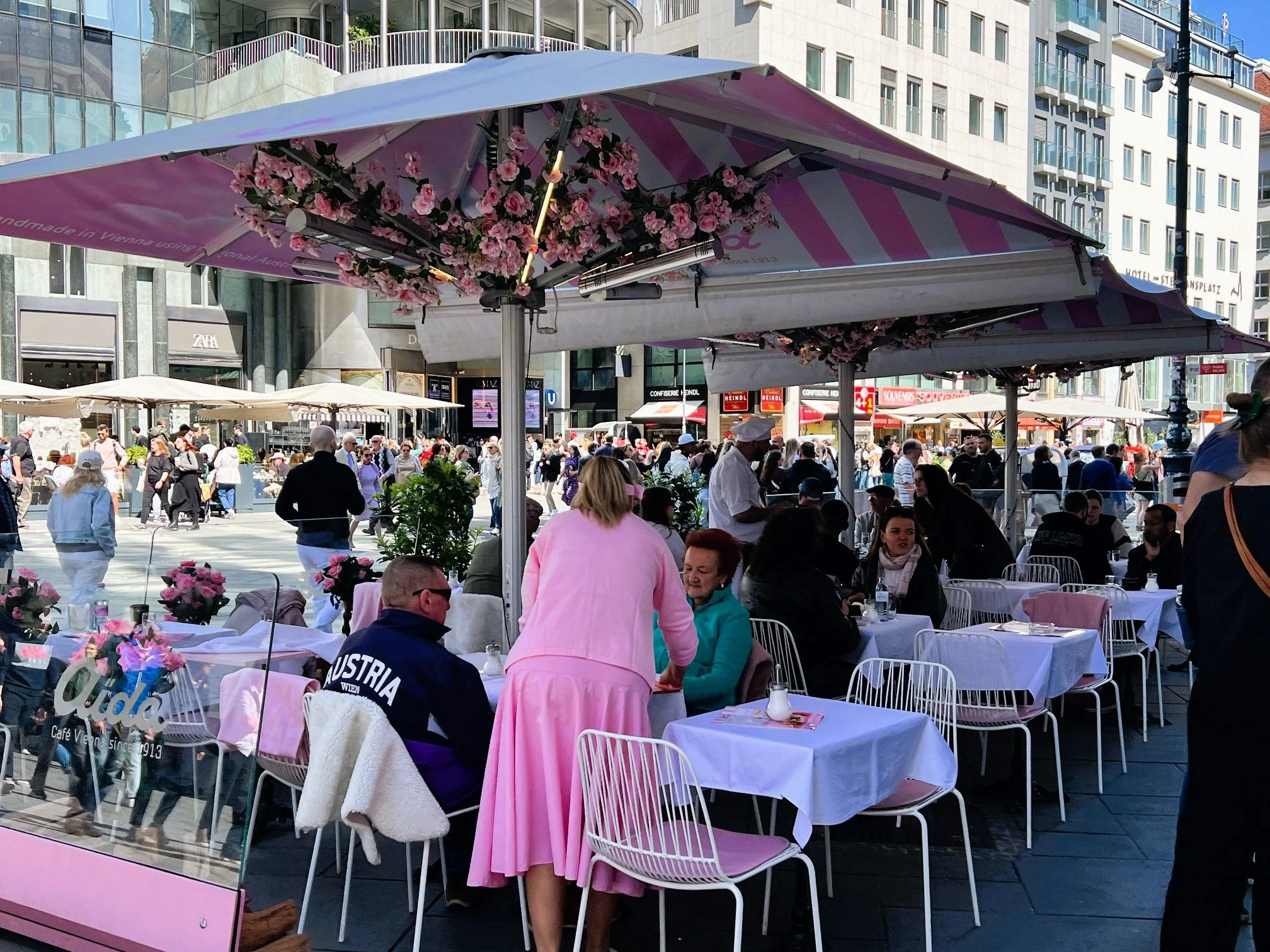
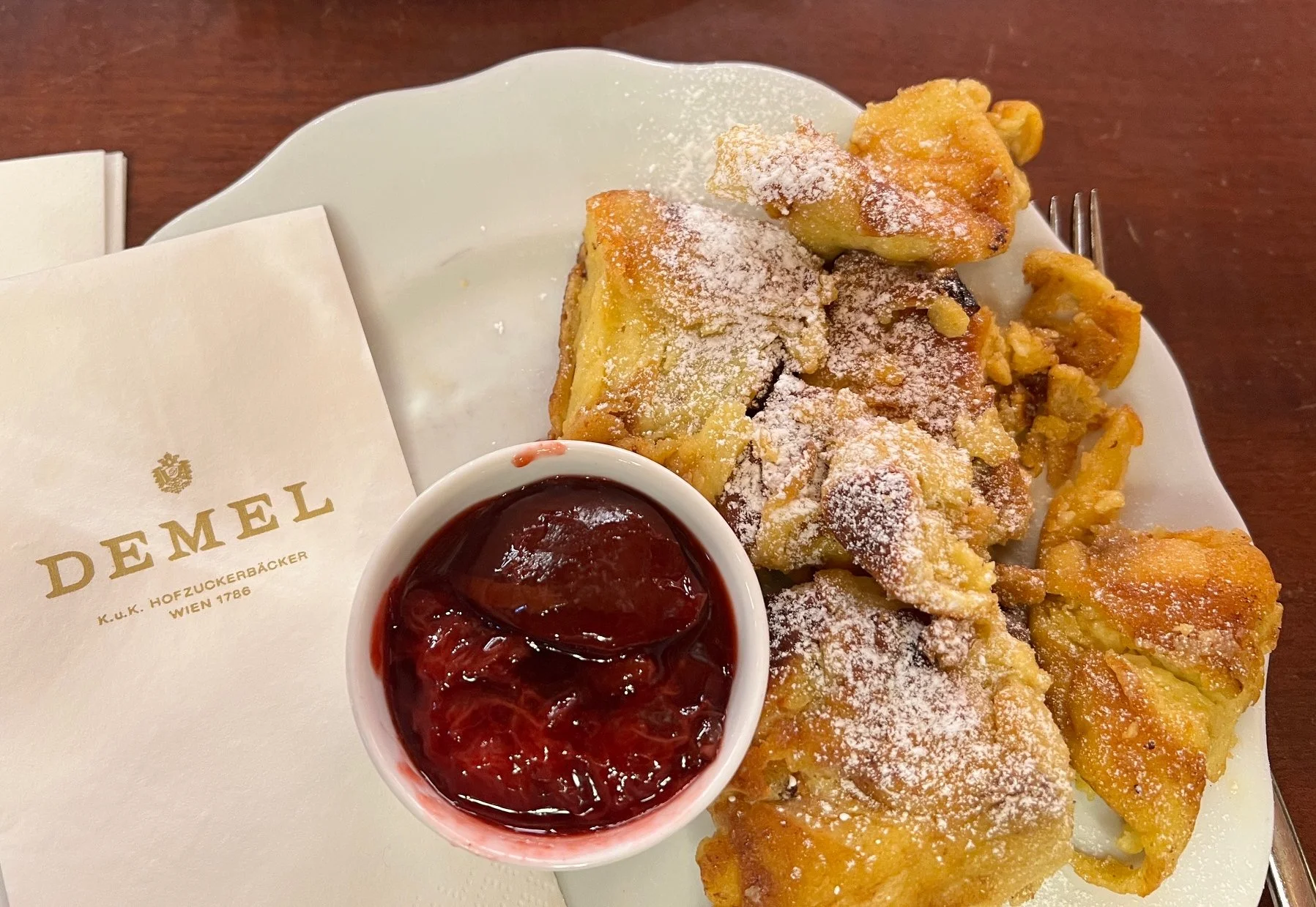
Mid-morning, I stop at the famed confectioner Demel’s. Seated at an umbrella-covered bistro table, I order sugary ‘pancakes’ with plum sauce and a foamy cappuccino. I’m surrounded by murmuring conversations, the rustling of morning newspapers, people easing into the day.
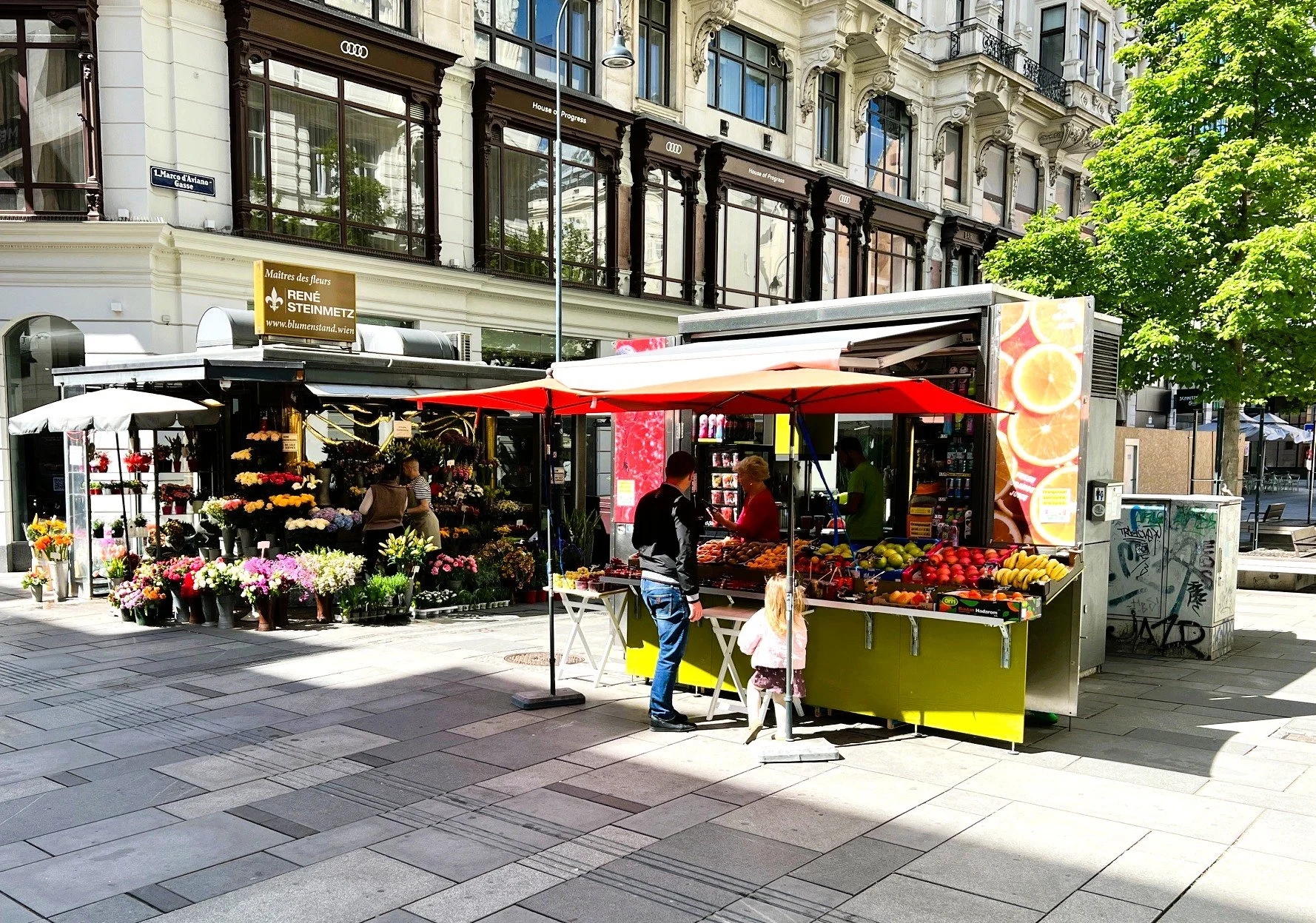
Upscale boutiques from Tiffany to Tumi prosper side-by-side with street cafes, pop-up magazine sellers, souvenir stores, hotels, pharmacies, cleaners and churches. After hours of strolling, I don’t see a single boarded-up storefront or vacancy.
Shopping without the cacophony and chaos of stop-and-go lights, screeching tires or near-miss collisions. No cars edging into crosswalks, no crosswalks at all. Forgetting my teacher’s salary, I’m put in the mood to spend my Euros.
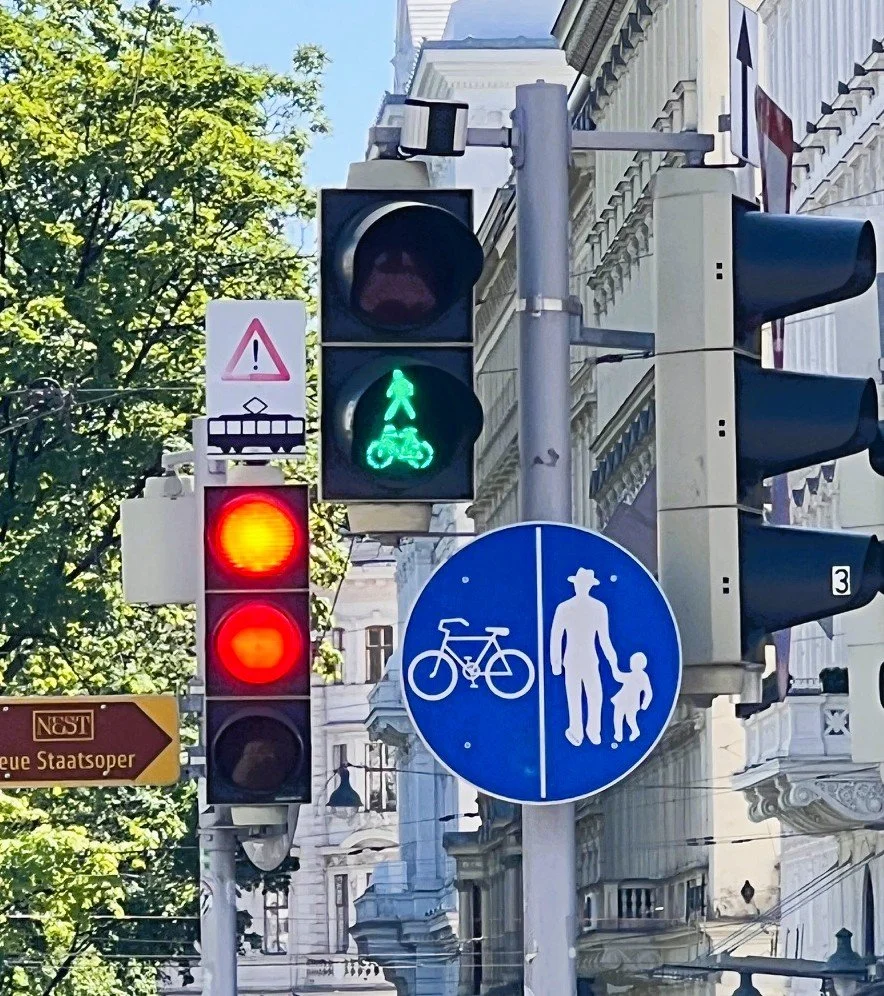
Austrians are car-crazed, just like Americans, Germans, the Italians. The difference is the Viennese have choices—the freedom to not use their cars. Promenades, public trams and bike paths are not an afterthought, not a traffic-diverting sideshow, not a parklet shoved between parked cars.
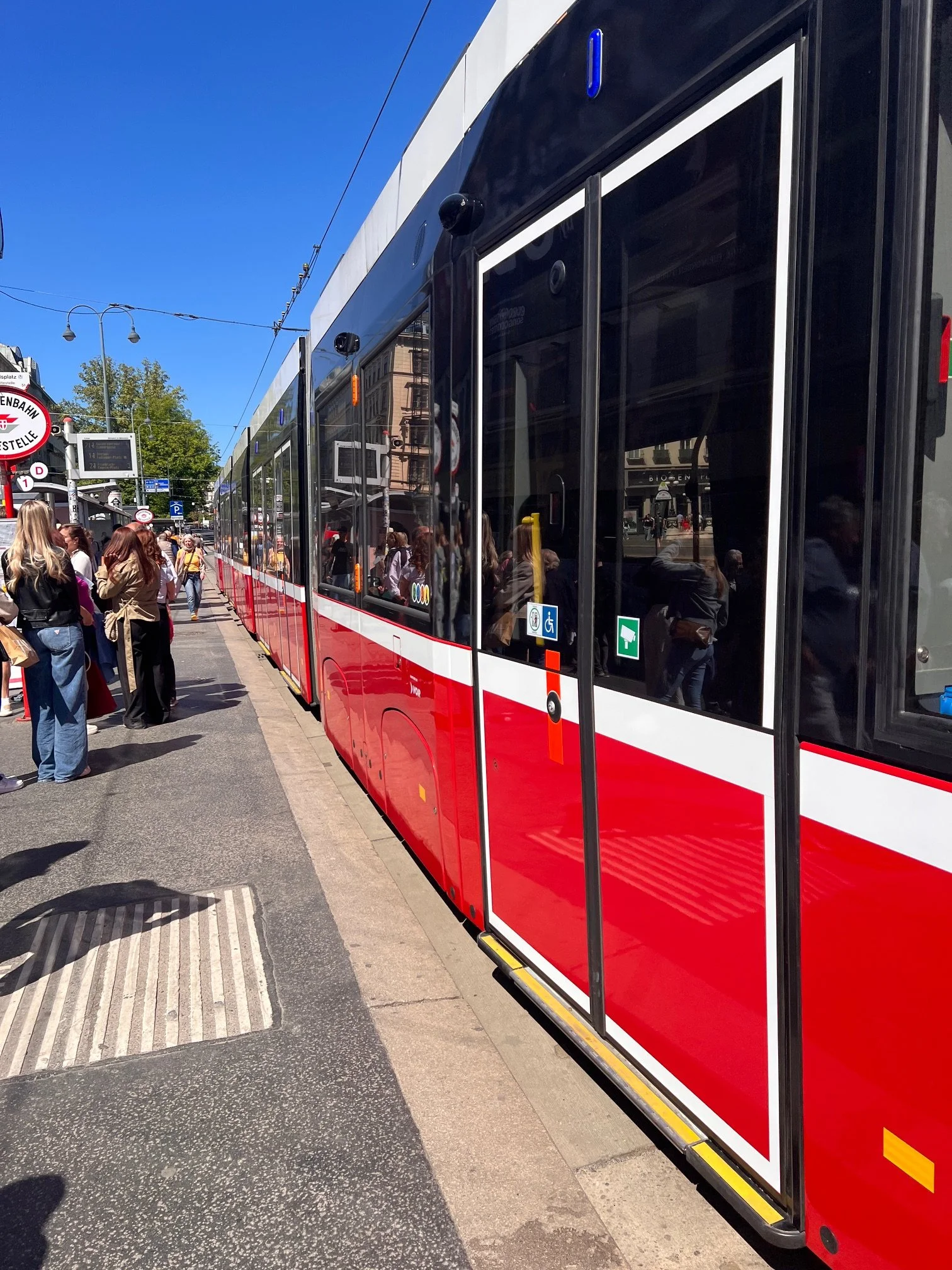
The city’s trams are ubiquitous, quiet, clean, affordable. Bike paths, separated from pedestrians and cars, speed people on their way.
Vienna’s car-free—really, care-free—downtown is so normal, so natural, so commonplace that my guidebook doesn’t even bother to mention it. It failed to call out the simple contentment of enjoying a public living room—a gathering spot for the elderly, a place women walk safely and parents can take their children. A tourist destination for sure.
Nor did the auto sculpture say anything about the giddy feeling of block upon block, intersection after intersection of car-less streets. Maybe that information was in the trunk.
I’m jealous. I want my city to love me as much as it loves my car.
I want to park here.