Jonathan C. Lewis
Lingering
A fictional travelogue; three minute read.
With a well-practiced pickup line that bores even him, a tour guide outside the gates of Pompeii hustles an American woman in a green, sheer tank top, “Want ice cream? You’re already sweet enough.” She smiles wanly, and walks on. An Italian libretto writing itself.
I wish my wife were here to hear him. We’d read each other’s minds, then laugh about the silliness of Italian men and sex. Then later that evening fall into bed to make love. Since she died three years ago, I’ve been as celibate as a Roman statue.
Pompeii was the Las Vegas of its time. Life had lusty portions of food and wine, entertainment, pleasures of the flesh, the sybaritic lifestyle. “The Sybarites, luxury-loving Italians, invented the soup spoon, the chamber pot and the steam bath,” reads my guidebook. “Steam baths and brothels were passionate neighbors. Prostitutes often made their living on the second floor of a bathhouse.”
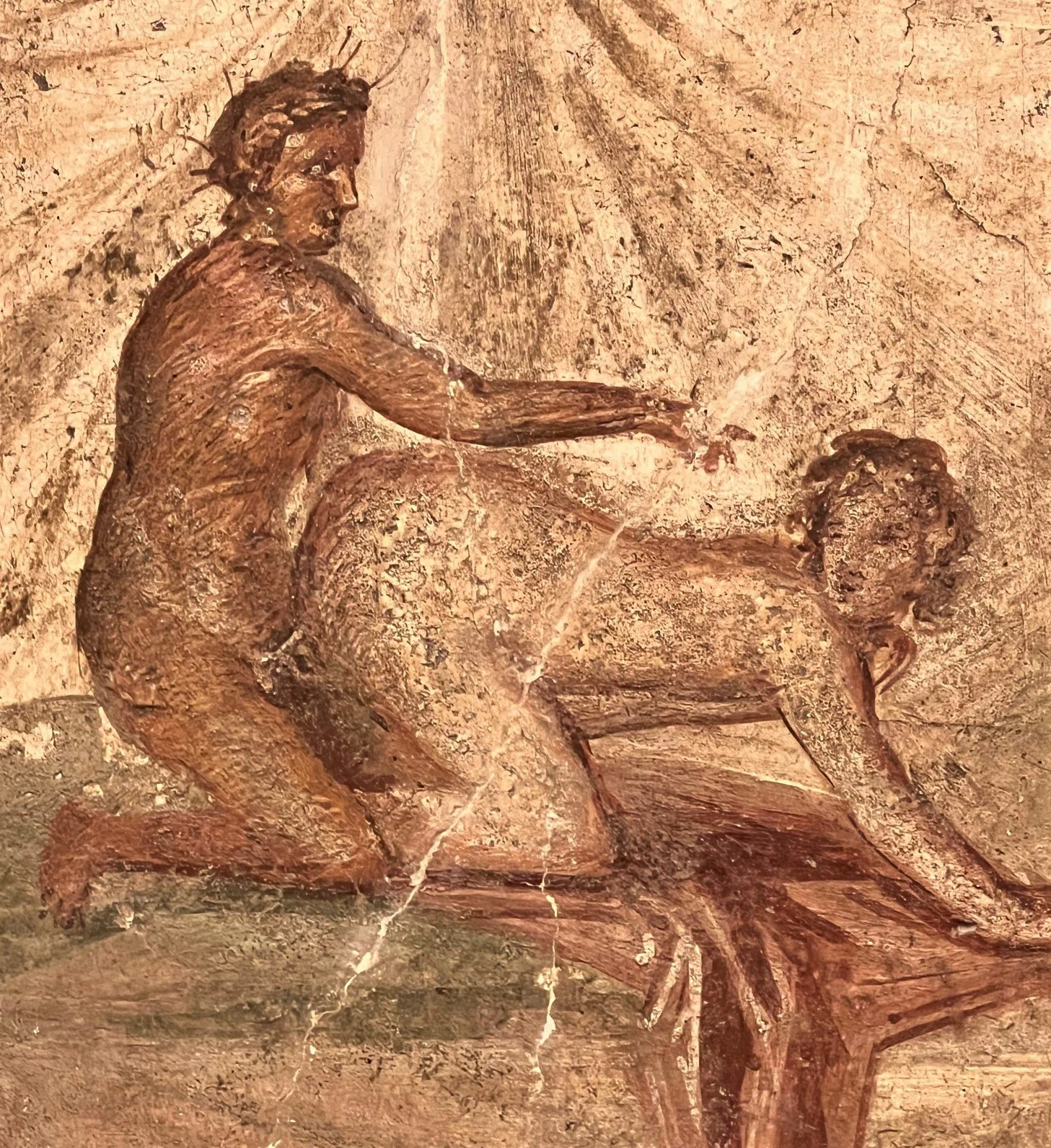
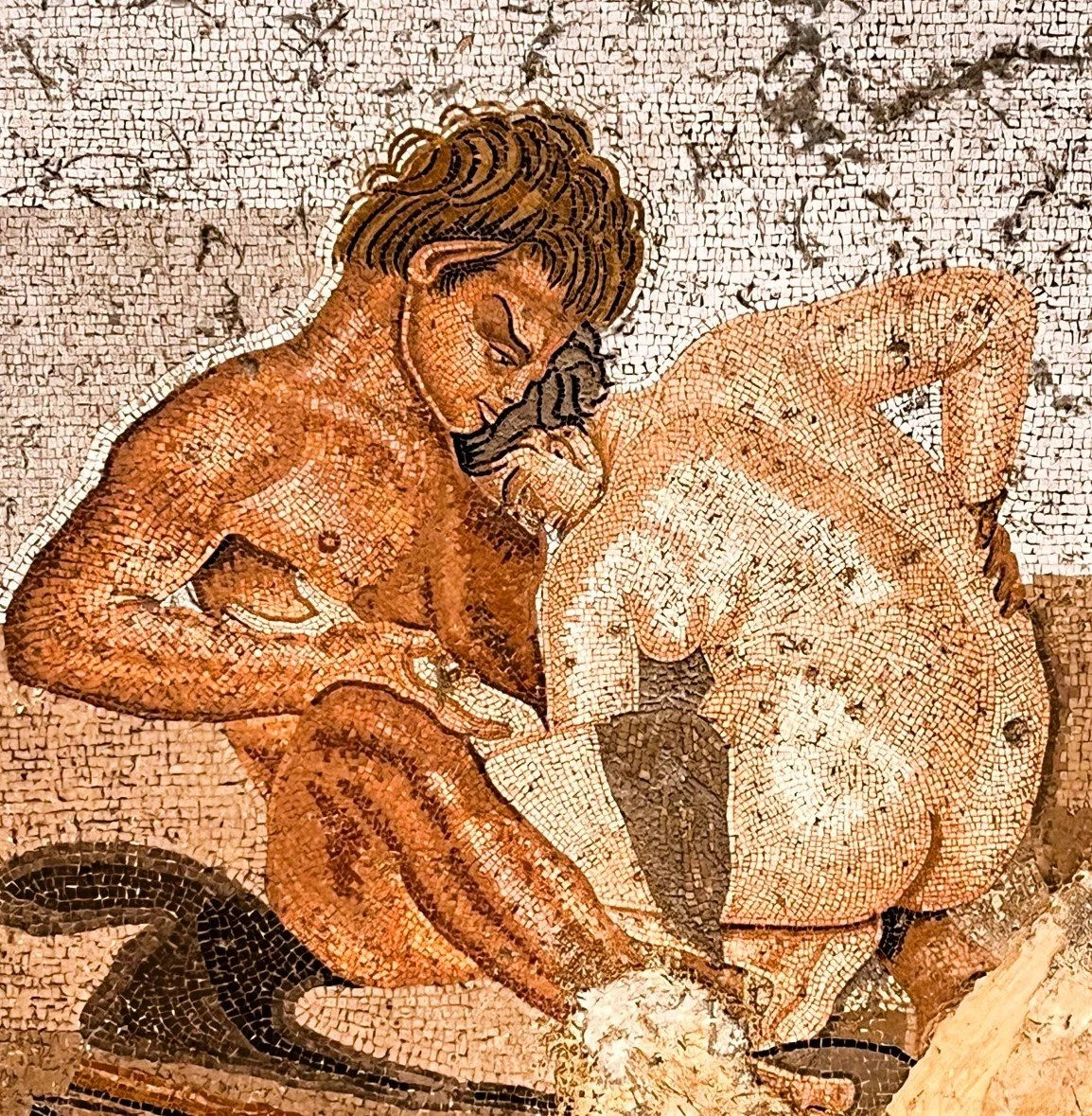
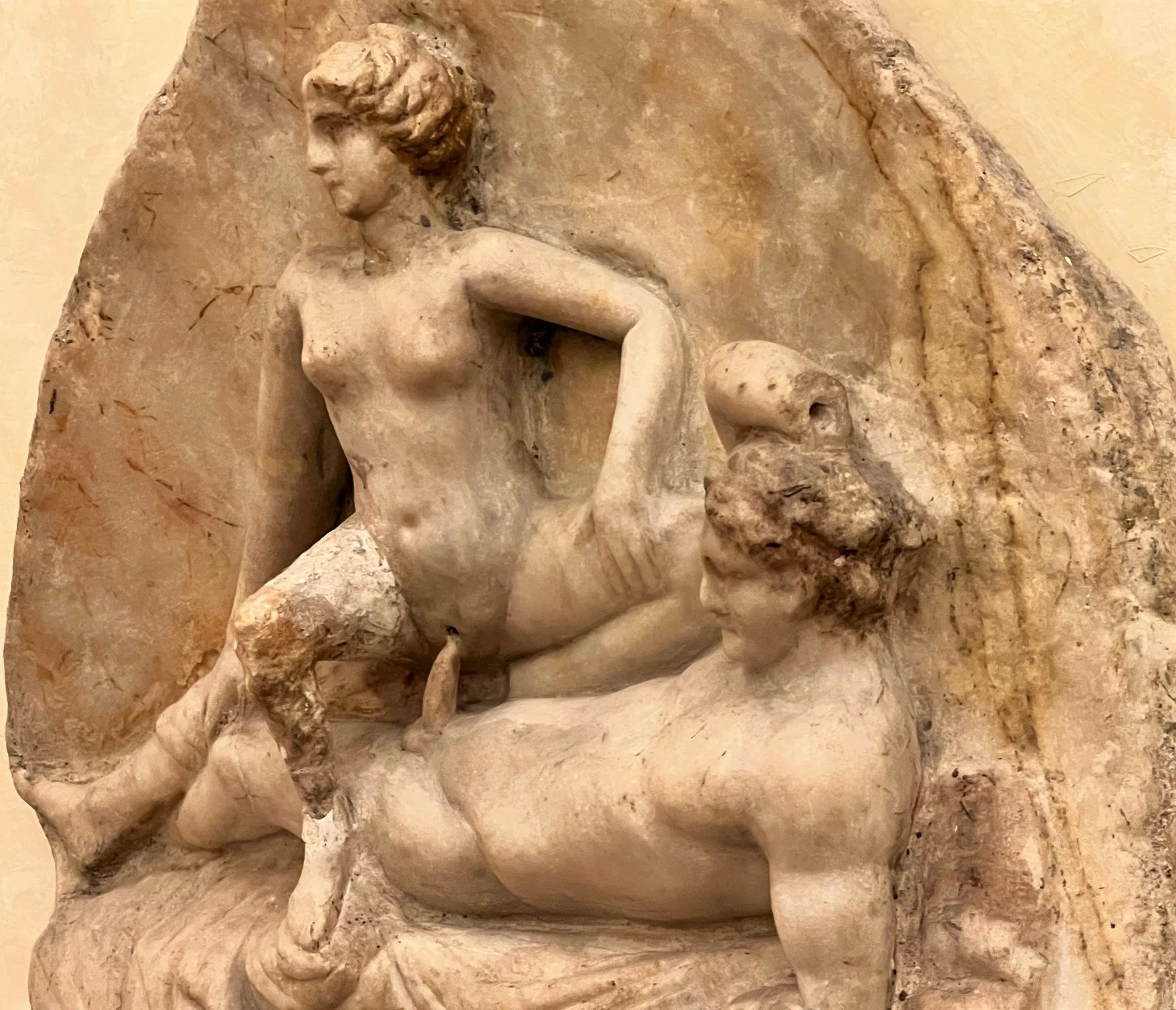
I stroll without purpose or point into rooms with bawdy frescoes—an erect penis about to penetrate a woman, a woman giving and getting oral sex, a tryst of two men and a woman. An X-rated fresco portrays a male satyr having intercourse with a female goat; the goat looks infatuated or bored, I can’t tell which.
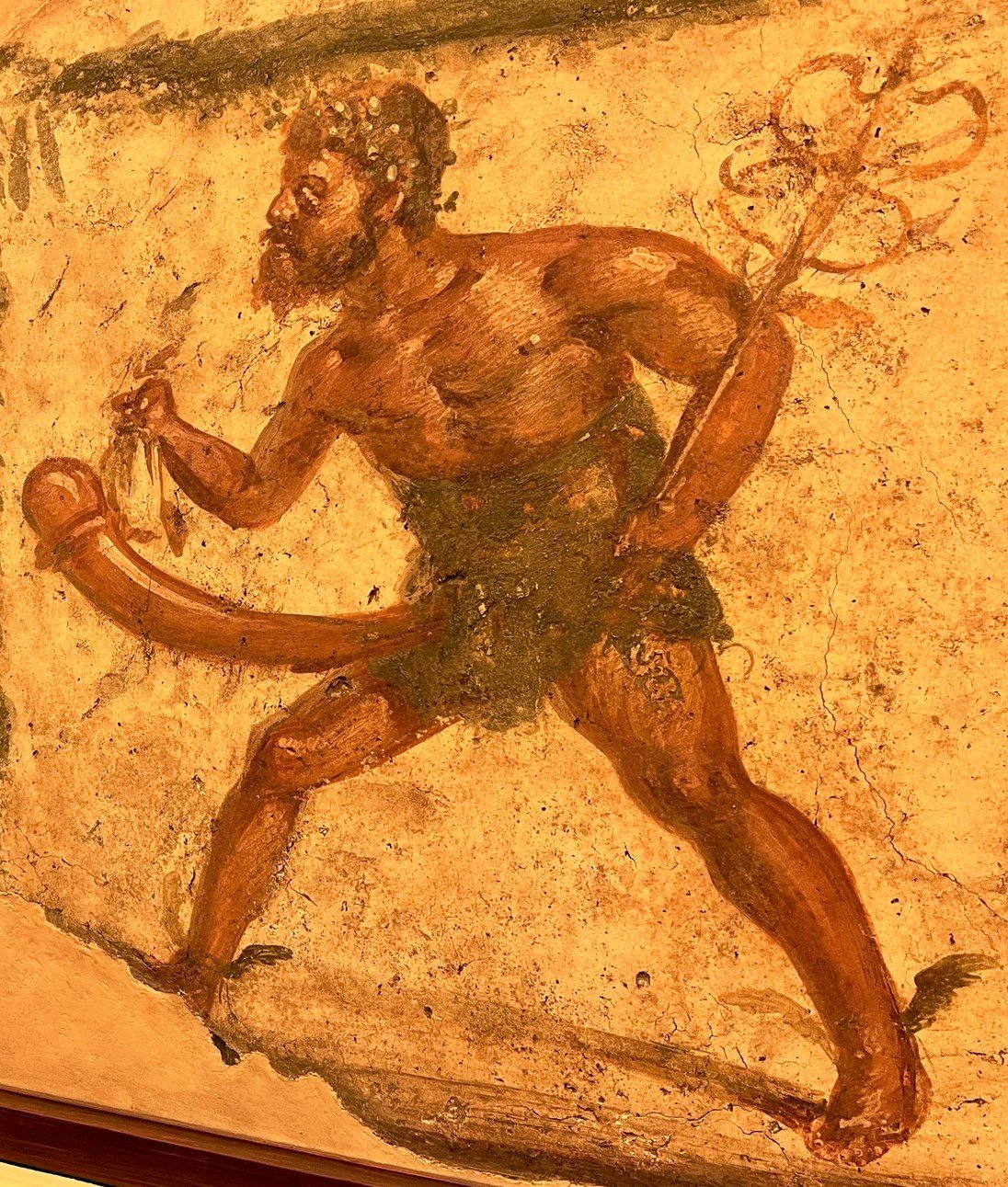
The hefty penis of the fertility god Priapus is carved into walls, door lintels, signposts. A gaggle of elderly women tourists in floppy, flirty straw hats balance themselves on their rubber-tipped metal canes. One jokes, “I used to make chicken brothel.” The others titter.
At least someone is enamored by Pompeii’s penises. They’re not alone.
A kissing couple in their lustful twenties seem to have found inspiration from a stone male erection mounted on a gurgling water fountain in the middle of the street. They rub against each other. At their age, my wife and I did the same.
After a while, Roman lovemaking as an aesthetic experience tires me out. Numbs me.
Leaving Pompeii, I direct my taxi driver, “Santa Chiara, per favore.” From nymphomania to the nunnery.
At the Monastery of Santa Chiara, the frescoes are chaste. I’m strolling through the pages of the Old Testament. A Gothic portico shades frescoes of biblical stories, religious allegories, venerated saints.
In the center of the cloistered courtyard, benches and octagonal columns wrapped entirely in majolica tiles portray secular life in the 1700s. Maritime voyages, agricultural workers, city tradesmen. Floral garlands in canary yellow twinkle in the sunlight, vines in lush greens sparkle. It’s hard not to remember my wife’s garden.
In the weightless way that nuns can walk, a nun floats by. She has the pink, unblemished face of a prepubescent boy. Not a wisp of hair shows. In her Catholic burqa, she is as sexless as a nun can be.
She looks in my direction. From a different female, her glance might signal interest. I can almost hear my teen daughter, “Look, Dad, that woman is checking you out.” Instead, the nun’s eyes are a silent finger wag, a warning to not disturb the serenity of the cloisters.
The sensuous fragrance wafting off the lemon trees hugs me.
I think I’ll sit here a bit longer.