Jonathan C. Lewis
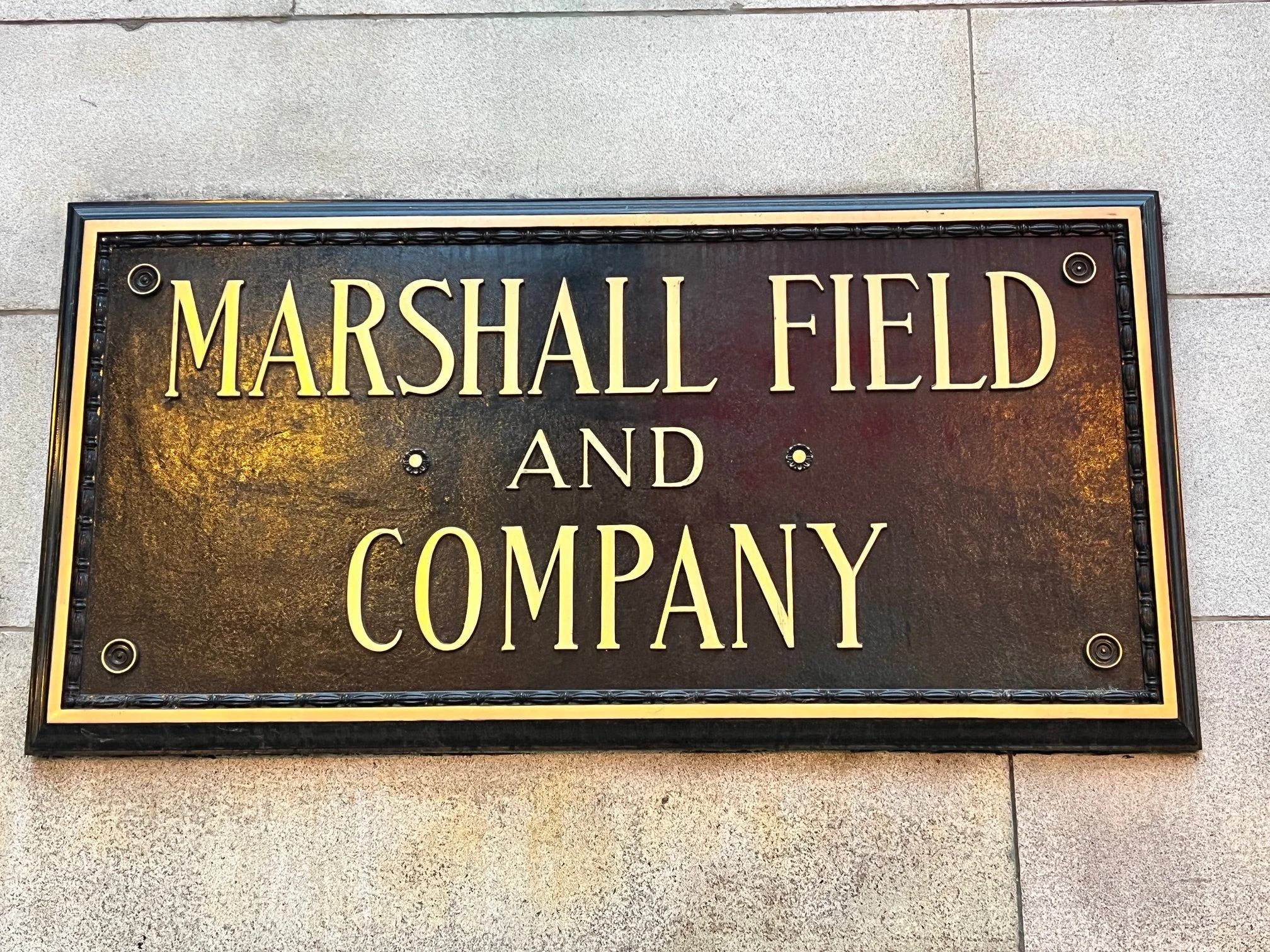
Marshall Field’s
A fictional travelogue; three minute read.
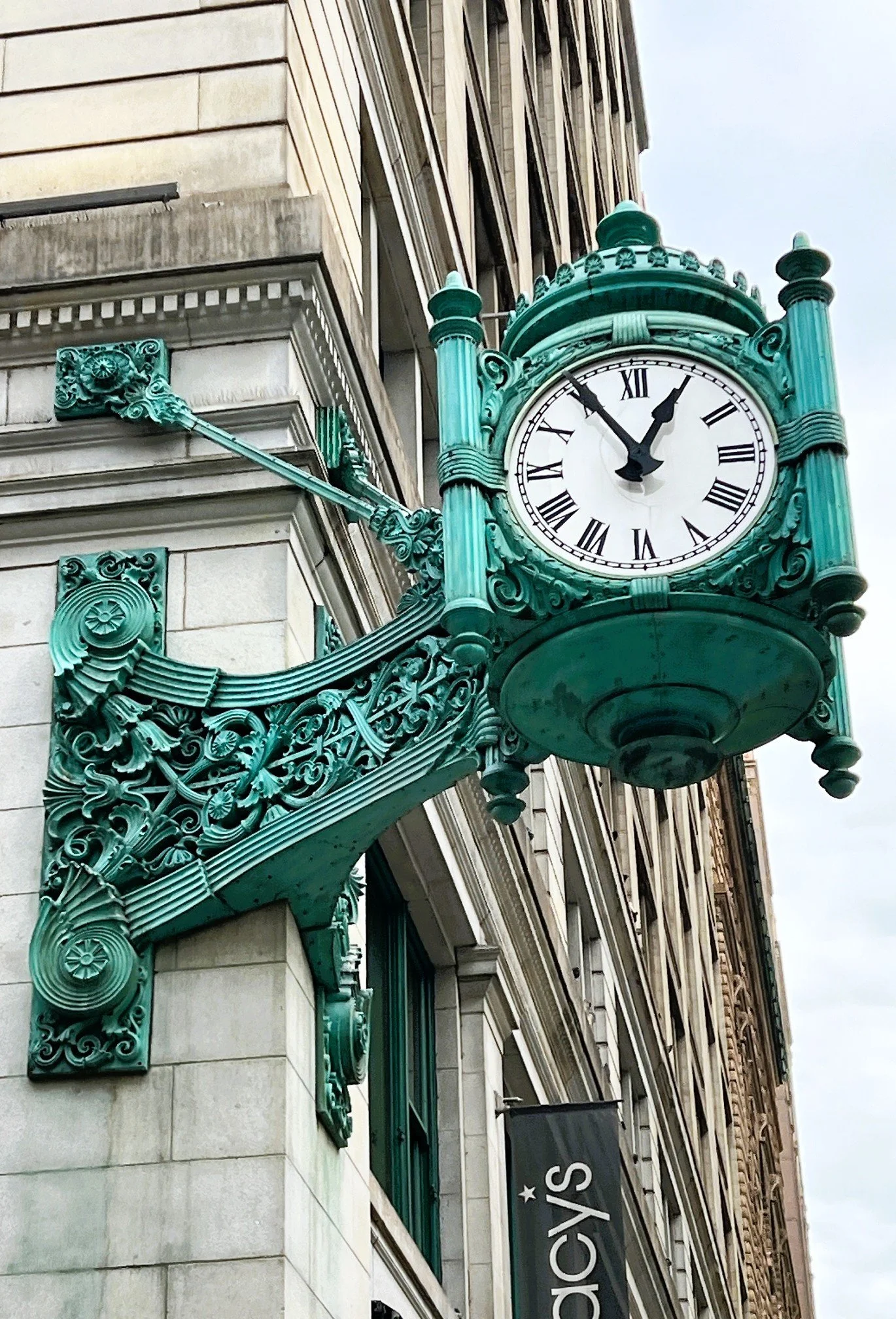
“No one here dares to call this place Macy’s. Everybody calls it Marshall Field’s. It’s the GOAT of department stores. In our heyday, 73 acres of shopping took up a full city block.”
“I worked here doing window displays,” my elevator companion gleams. He is a stylish white-haired man wearing designer jeans, a starched long sleeve shirt rolled at the forearms, polished leather loafers, a bowtie.
My cellmate and I are stuck a few feet short of the first floor. At least for a while I’m not charging things I don’t need to my overworked credit card.
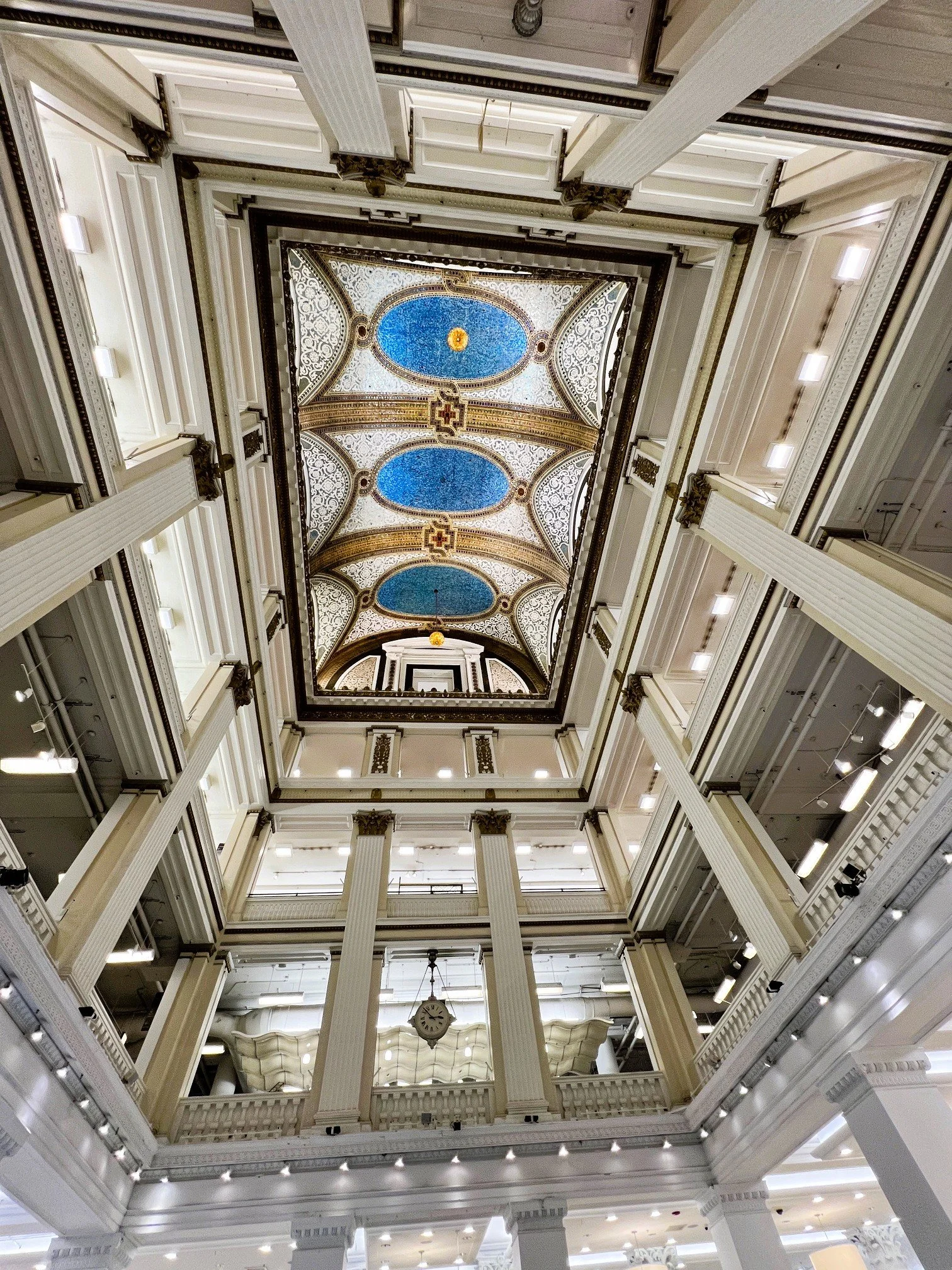
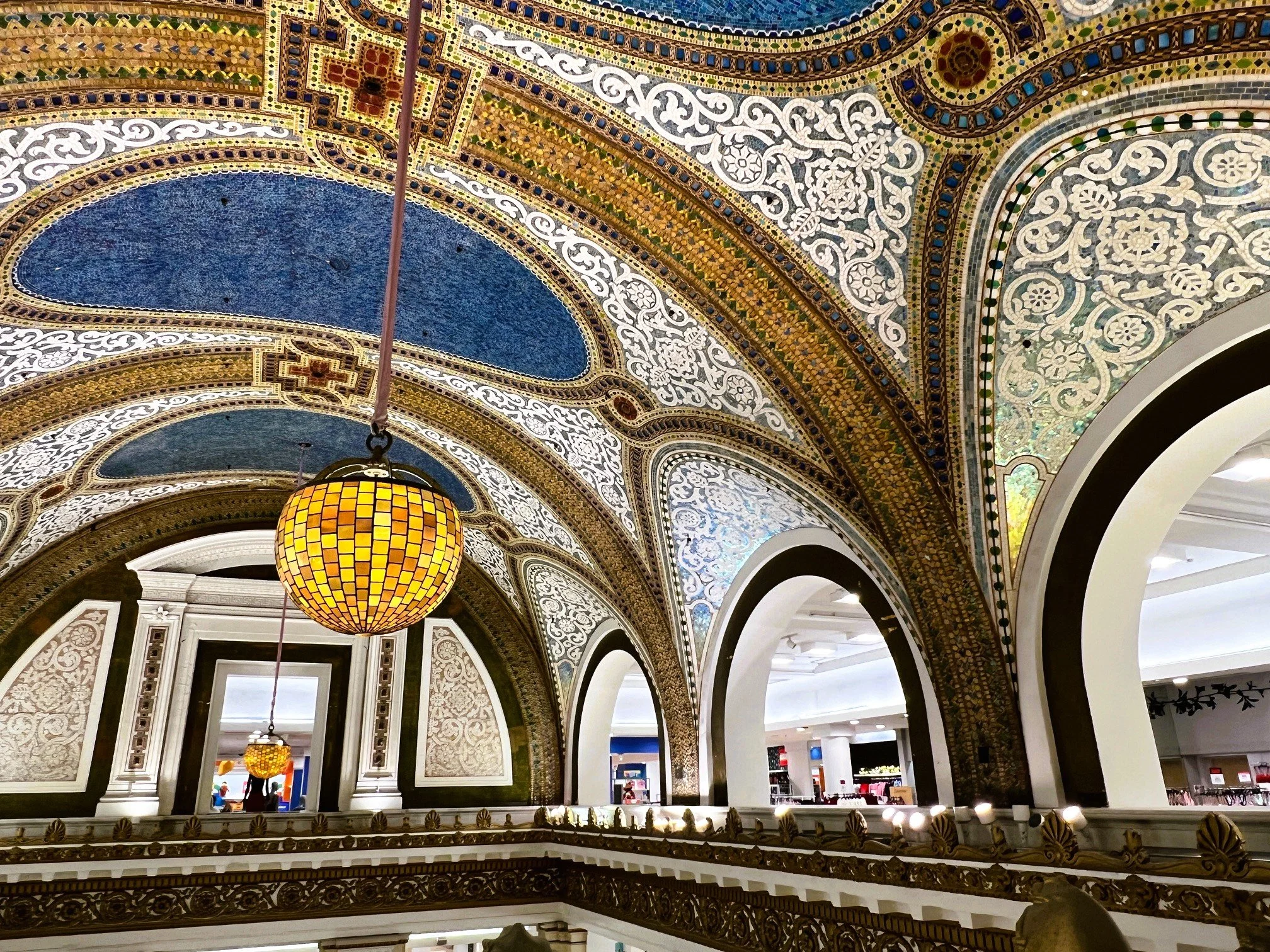
Before our elevator jammed, I had been admiring the Tiffany glass mosaic—a jeweled dome covering the store’s main atrium. 1.6 million iridescent glass pieces. 6,000 square feet. If Earth’s gravity weren’t holding me down, I could have fallen upwards into it.
“Tell me more,” I ask. I start to add that I teach high school economics and consumerism is central to the American story, but he needs no encouragement.
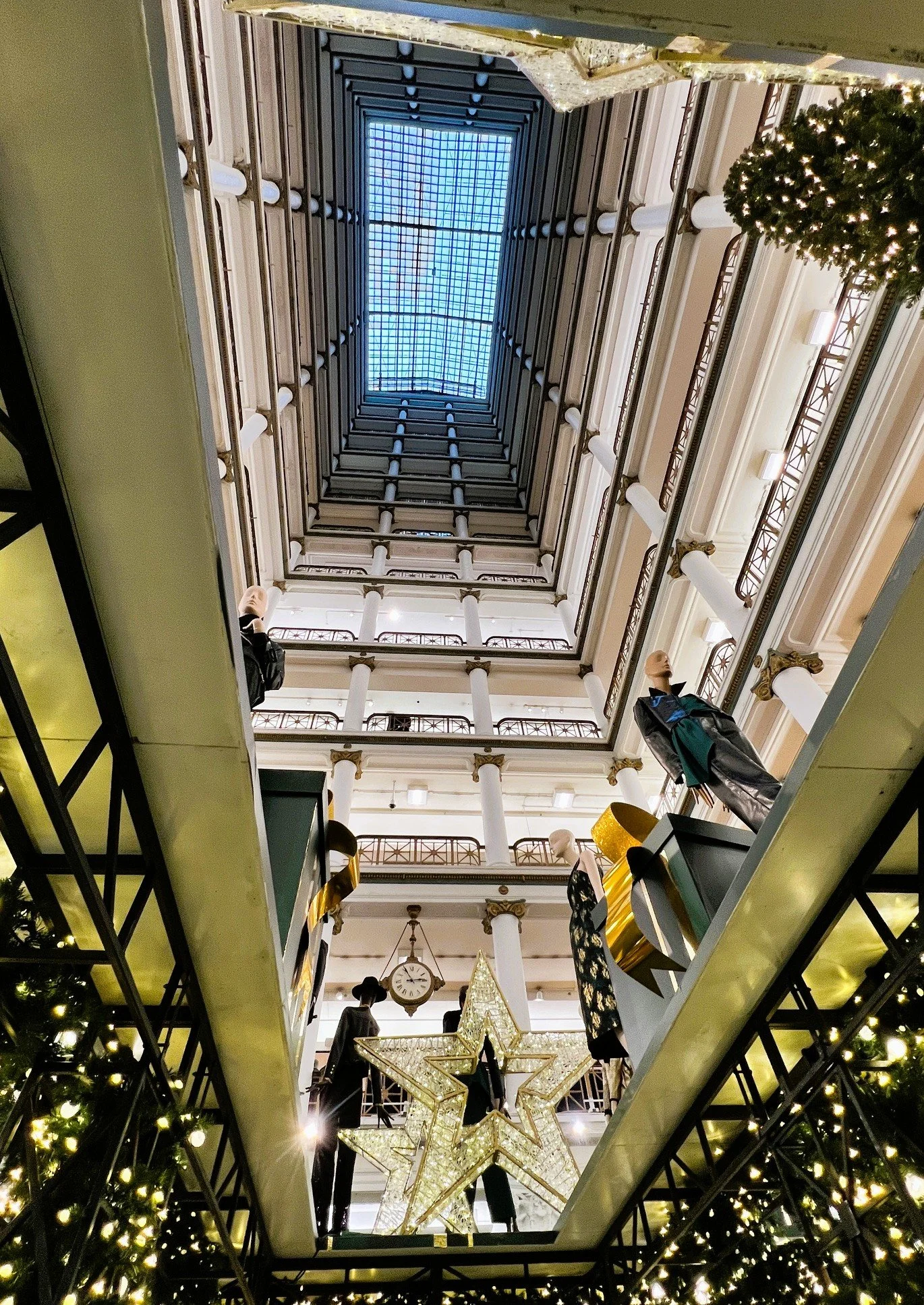
“We invented fixed, no-haggling prices, instituted money-back, full-refund guarantees, hired the first personal shoppers, launched the first bargain basements and, before Amazon, offered same-day home delivery using a fleet of horse-drawn wagons. My famous street-facing windows brought in loads of customers,” he swoons at his own memory.
"The big boss, Mr. Field, coined the phrase 'give the lady what she wants.' You know it as 'the customer is always right.' He also pioneered hiring women sales clerks."
A revised lesson plan rings in my head like the sound of a cash register. While a department store was empowering women to spend their money, at the same time suffragettes were campaigning for the 19th Amendment.
“Our elevator operators were sent to charm school. Man oh man, they were good looking. Riding the elevator to the eleventh floor was how I met my wife.”
Happy in his memories, he smiles. His pale face is a wrinkly Beaux Arts facade.
“Before automobiles, city streets were crowded with horses pulling delivery wagons, streetcars, hansom cabs. In a single day the average horse crapped 45 pounds of manure—about the weight of your average six-year-old—and peed two and half gallons. Shopping downtown was smelly, sticky, skanky.”
I flinch. Stepping in shit on a city street is no abstraction for me. Travel has its hazards, and fecal matter is one of them.
“Mr. Field was the first to put perfume counters on the ground floor. Straightaway a shopper entering our store escaped the foul odors outdoors. A customer knew instantly that she was in our temple, our shopper’s paradise.” He says shoppers the way teachers talk about their best students.
“Back then, women wouldn’t dare enter a saloon for lunch, so we built tea rooms and luncheonettes. Overnight, Marshall Field’s was a destination for a day out shopping.”
With a jolt, the elevator drops a few inches, and the doors open to reveal rows of sparkling jewelry under bright lights. Hidden speakers play big band tunes.
When I look around to say goodbye, I’ve been ghosted. My impromptu guide has vanished. It’s almost as if he is still behind the scenes dressing up the store, beautifying my customer experience.
As I wander towards an exit, I want to buy something, anything.