Jonathan C. Lewis
Canal Saint-Martin
A fictional travelogue; three minute read.
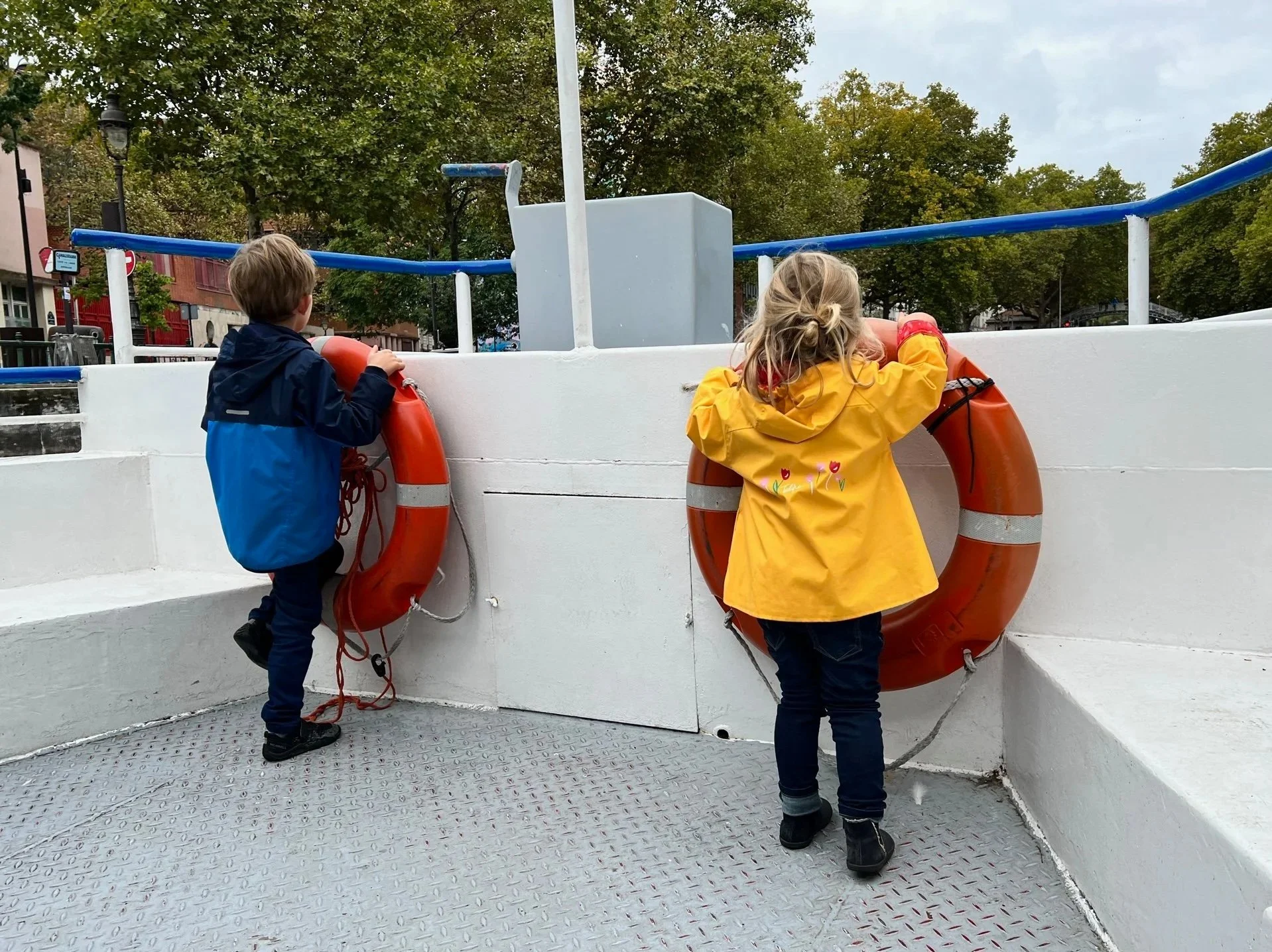
My kids and I are aboard the tour boat Le Martin-Pêcheur on the Canal Saint-Martin. Ben and Brittany are at the bow, eyes riveted on the approaching canal locks, playing sea captain. If they were any closer to the ship’s railing, they’d be swimming.
Poets proclaim Paris the City of Lights. Cole Porter lyrics insist that I love Paris “in the springtime, in the fall, every moment of the year.”
The travelers I know who are obsessed with Paris are usually obsessed with one particular corner of it. Baguettes are a common fixation. Notre Dame or the Palais Garnier Chagall ceiling are predictable preoccupations. A neighborhood bistro does it for others.
For my wife, it’s window-shopping the latest fashion boutiques. This morning at the hotel, she assured me that she would survive a day alone or, as she put it, liberated. We laughed the laugh of happy parents.
The Canal Saint-Martin is what floats my boat. When my kids hit their teens, I expect they’ll be groaning over my dad jokes. I can hardly wait.
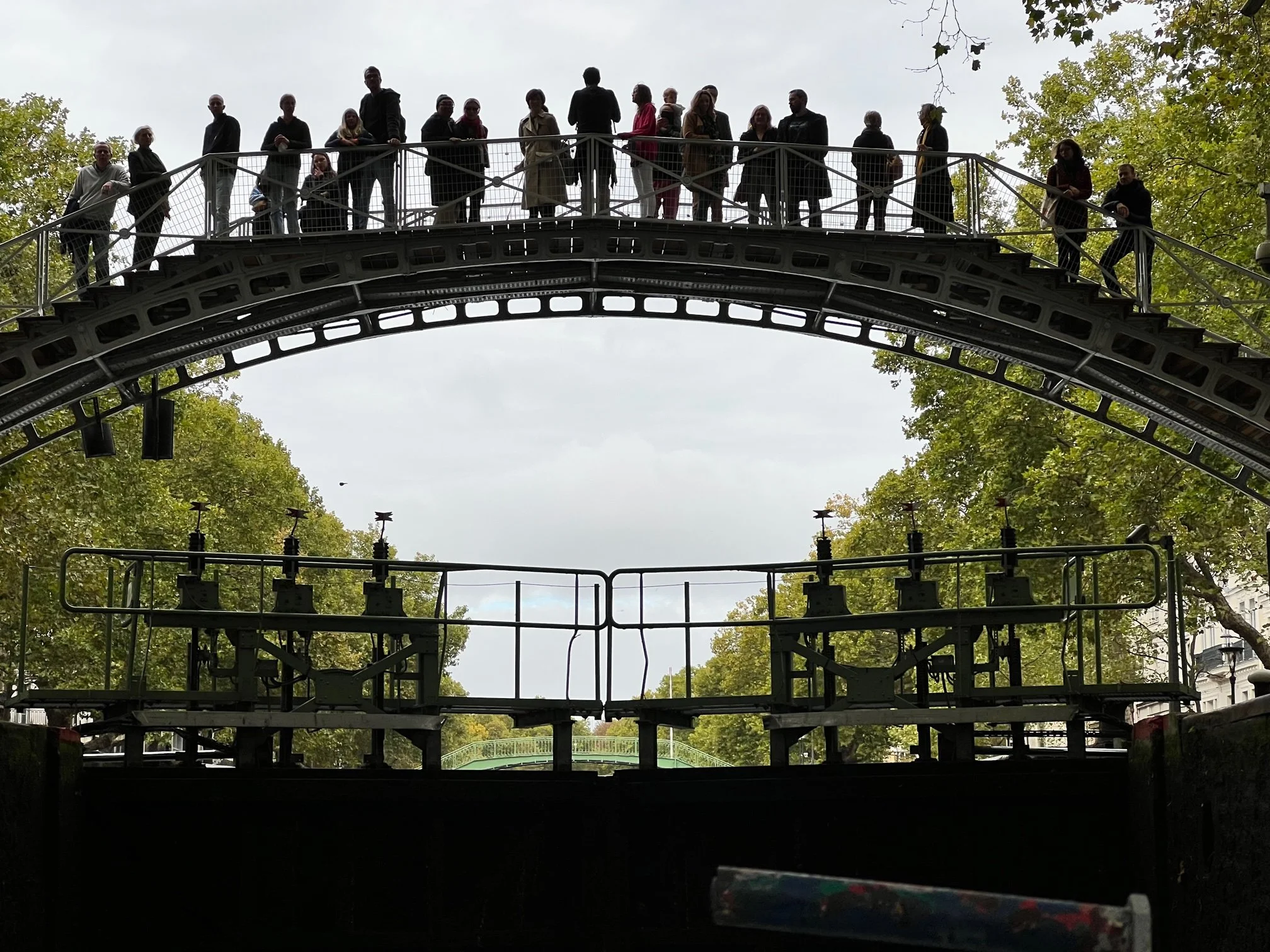
Our trip started on the Seine passing close to the Île Saint-Louis, Notre-Dame, the Louvre. On the three-mile-long canal we are cruising at three knots through nine locks, under two roadway bridges, past two swing bridges and six pedestrian overpasses. Paris’ only remaining lift bridge also spans the canal.
A mile-long, vault-like tunnel running from the Bastille to the Faubourg du Temple takes our boat under the streets of Paris. As the boat steers into the tunnel, the azure sky disappears and the temperature drops ten degrees. It’s as if I am entering the underground set for Phantom of the Opera. A collective murmur of wonderment is audible from my fellow tourists.
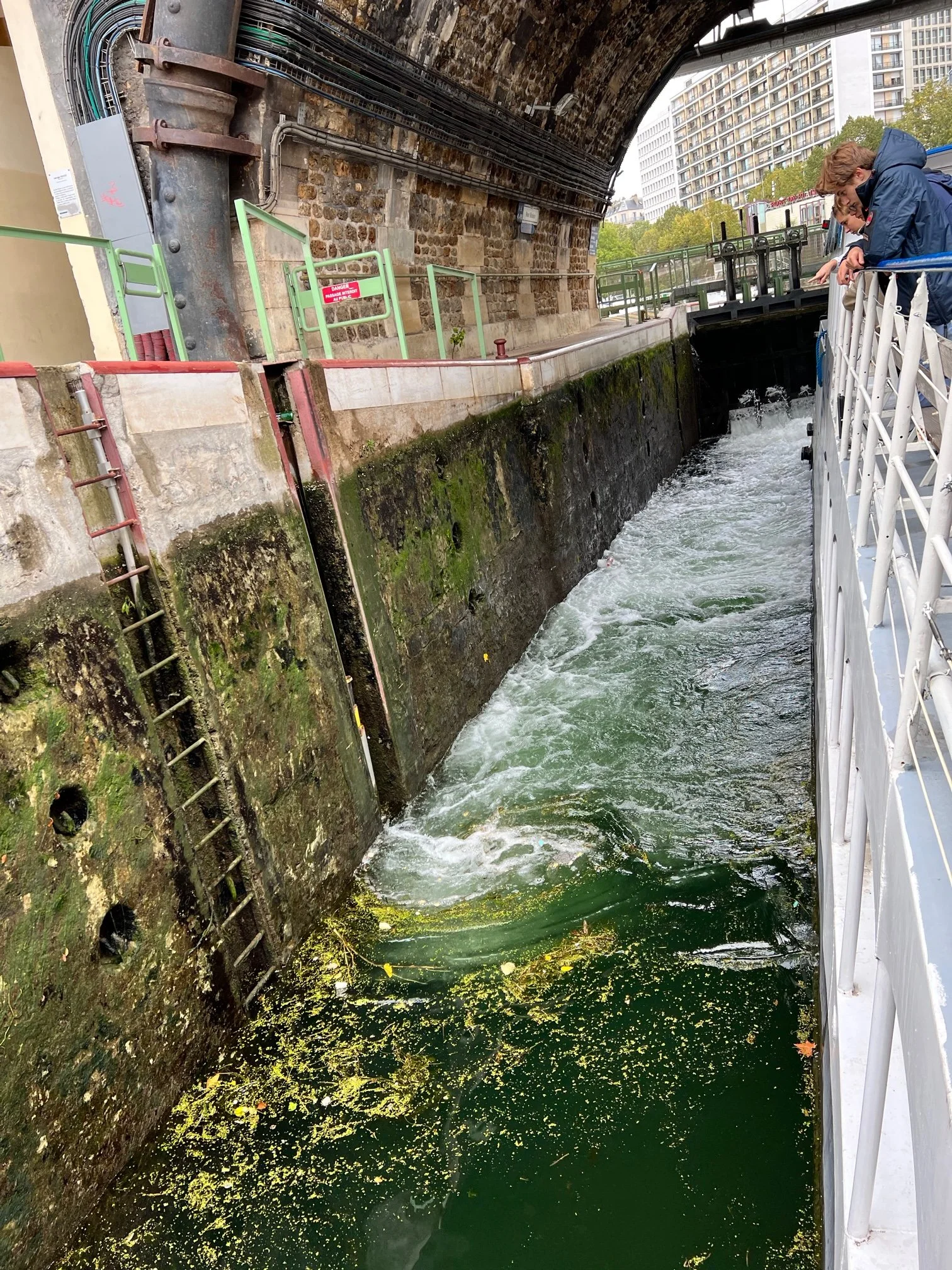
While a canal lock with its gushing water coursing through the gates pauses our forward progress, my history teacher’s brain is churning. I’m having a Huck Finn journey of discovery. As the ship exits the tunnel, I see the canal in a new light.
The banks of the canal—walkers, bikers, fishermen, cafes, boat marinas, swimming docks—are vibrant with trendy Parisian life underwritten by government bureaucrats spending government money. After all, the Canal Saint-Martin is, first and foremost, a public works project.
In the 19th century, Napoleon ordered the canal’s construction so boats could move merchandise and fresh water into the city. The life-and-death raison d'être: combating cholera and dysentery. To pay for the canal, a new tax on wine was levied.
Imagining my kids’ future without clean water, I shudder.
On holiday, I try to forget reality, but being a dad makes that impossible. The thought of returning home makes my armpits itch.
My country’s “let them eat cake” leadership underfunds public health, sanitation systems, public works of all kinds. Socially sanctioned collective violence against future generations—my kids—depresses me. From public schools to public watersheds America seems bored with building the canals of the future. Every day in the back rows of my classes I see the results. Why more families are not grabbing passports and racing to the nearest border crossing is a mystery to me.
When we arrive at Parc de la Villette, I collect my kids. They race each other to a drinking faucet. The water is clear, clean, safe.