Jonathan C. Lewis
Pulling My Strings
A fictional travelogue; three minute read.
A gaunt, elderly, hollowed-out face, rigid like a wooden puppet, stares at the landscape from a Trenitalia train cruising at 185 mph from Rome to Napoli. His black-trimmed overcoat has seen better days. So has he.
The man’s concentration is disrupted by espresso and biscotti served from a rolling cart. In the way of travelers sitting opposite each other, I acknowledge him with a slight head nod.
In the intervals between sips of coffee, our polite, perfunctory questions reveal nothing very personal. But, when he learns that I’m heading to Sicily, his cheek and forehead muscles come alive. Unprompted, he launches into a rave about puppetry.
“The marionettes are the soul of Sicily,” he says. “You must go.” Puppetry, he tells me, is called “opera dei pupi.’ Opera of the puppets.
“Our puppetry goes back to ancient Greece,” he reports. “During the Middle Ages, at first the Catholic Church used marionettes to perform morality plays. When the shows changed to include comedy, Church killjoys banned it. Then, in the streets outside the cathedral walls the puppeteers, finally uncensored, produced bawdy stories—and attracted even larger audiences.” He winks.
I promise to heed his advice.
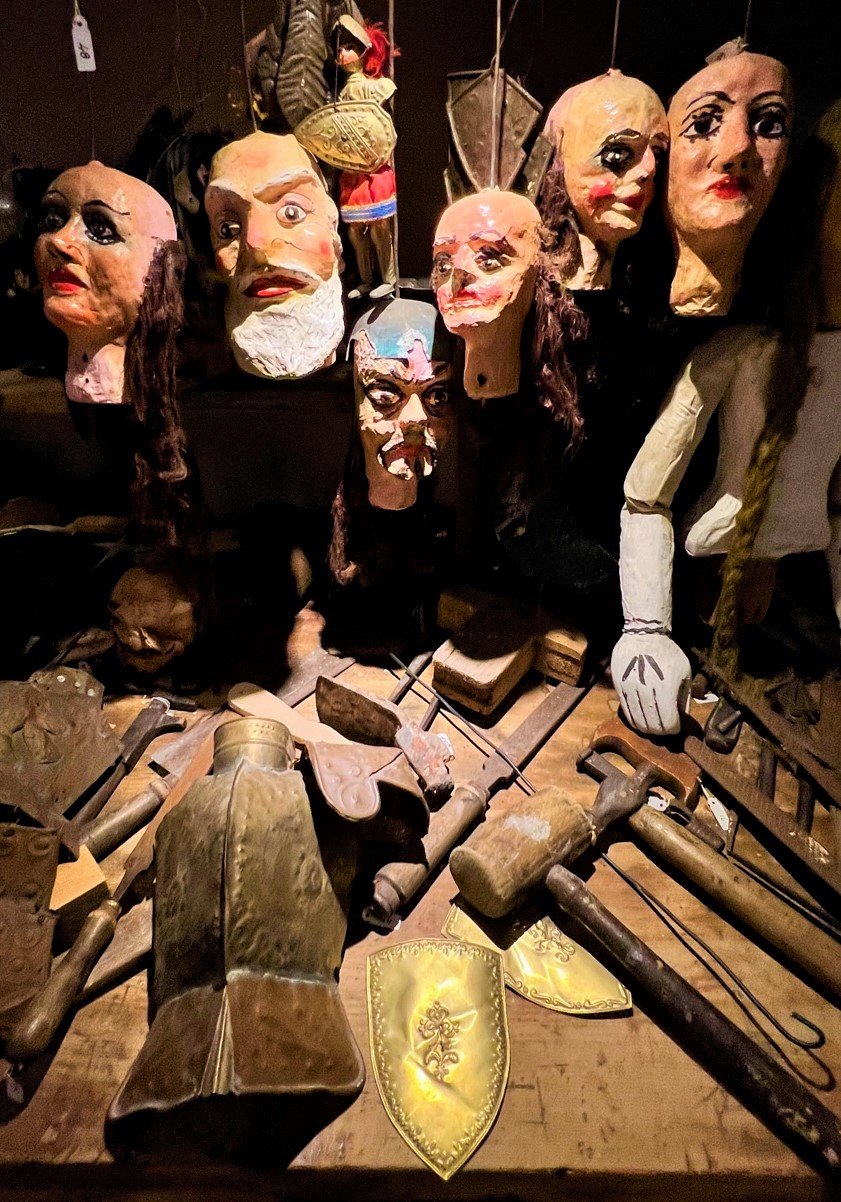
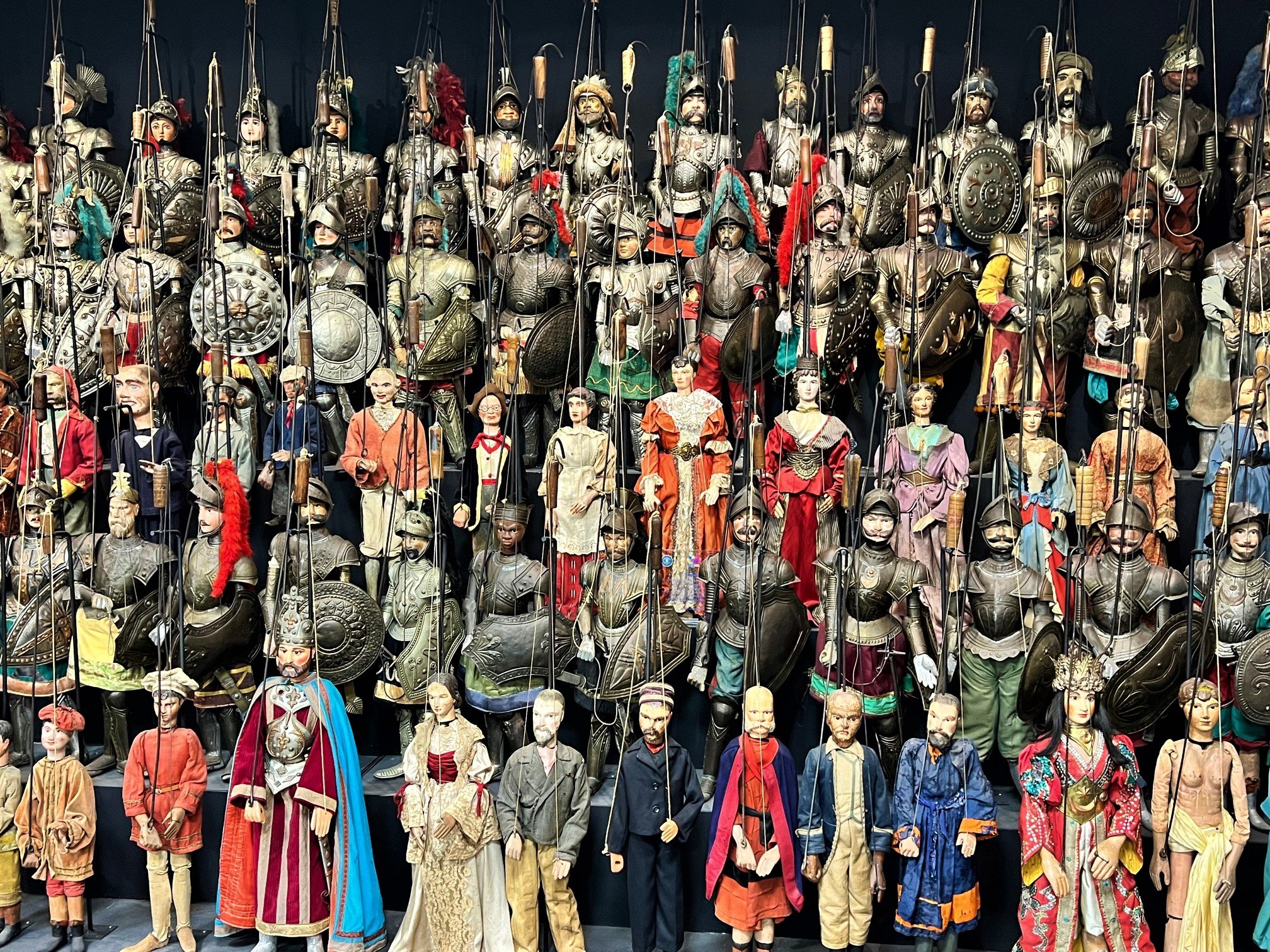
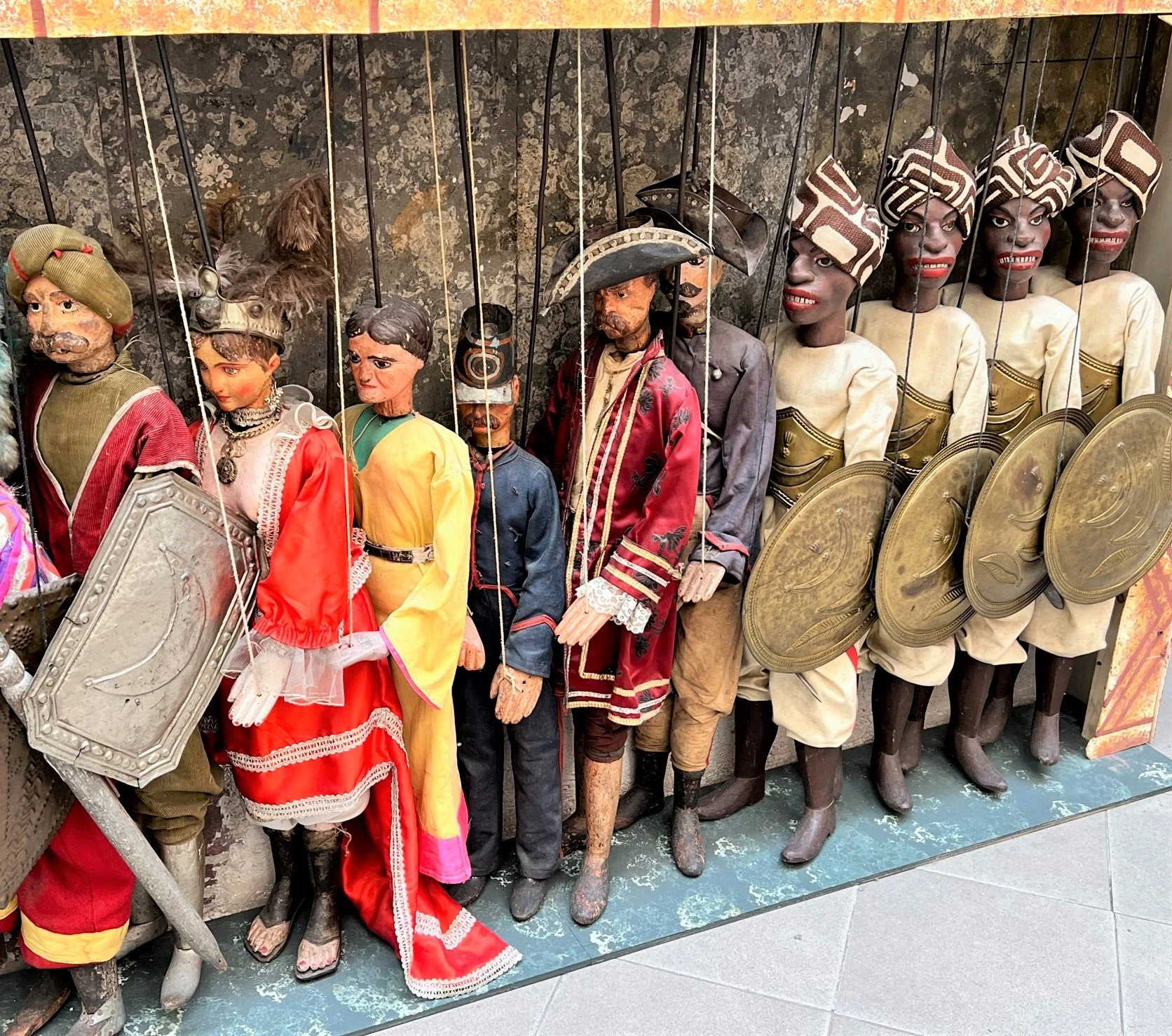
Today in Palermo I’m at the Antonio Pasqualino International Museum of Marionettes . The museum showcases a world unto itself—a subculture within the Sicilian culture which is itself a subculture within the larger Italian culture. Four thousand puppets—Crusaders, knights and nobles, damsels—are displayed.
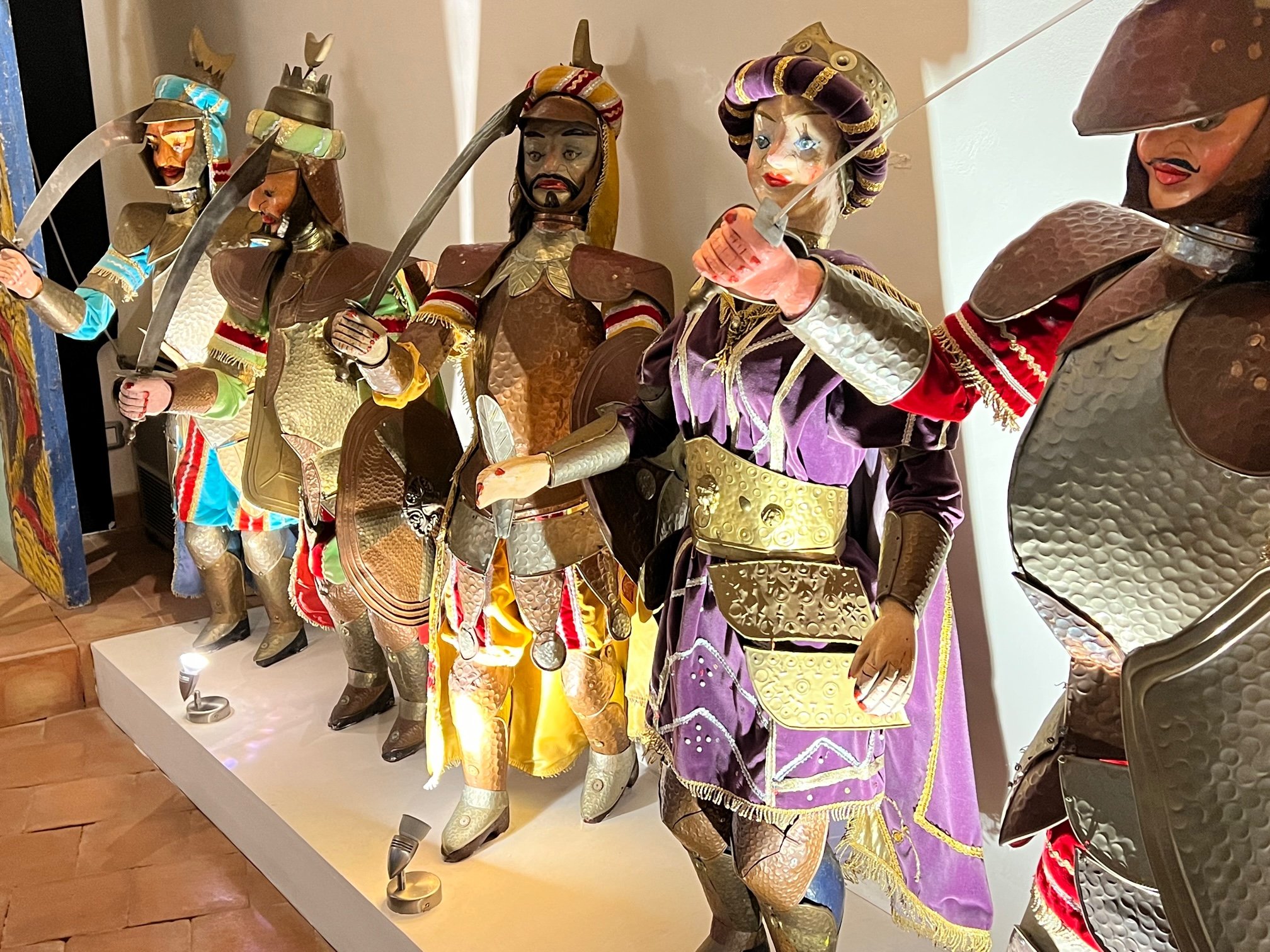
On the main stage, four-foot-tall, inanimate figures in elaborate costumes are voiced by off-stage actors. As the stage action unfolds, the little people walk, talk, gesture, fight, die—bemoan life losses and unrequited loves.
I’m swept along by the puppets’ theatrical enthusiasm. I forget the puppets are puppets.
The dolls jump and lurch across the stage, their hands flapping and flailing, their struggles and triumphs revealed, their round, innocent eyes watching me, making their stories into my story. They are crusaders for truth.
For chiseled blocks of wood without facial expression, each puppet has first-rate communication skills. Better than some of the blockhead faculty members where I teach high school history.
At work, the invisible hands of the school board, parents groups, local politicians and the press control my strings—telling me, before I say it, what I can say and how I can say it. On campus, I’m a conversational coward. As muted as a puppet in a storage trunk.
The puppets engage plot lines about love and death, war and peace, honor and dishonor with commitment. The heroes and heroines believe in themselves. Nothing in the known world can stop them.
“Who or what are you willing to die for?” their wooden voices seem to ask. “To rescue your family, would you slay a dragon? To protect your honor, would you prove yourself against the armies of popular opinion?”
I came to Italy to get away. The puppets know better. I’m still part of everything I’ve left behind—and what is yet to come. Nothing ever changes that.
In the park outside the museum the wind is resting at the end of the day. Inside, puppeteers lock away their puppets.
My adrenaline recedes, fading into an exhausted hunger.
The crusades can wait.