Jonathan C. Lewis
Roman Reign
A fictional travelogue; three minute read.
Alone, I’m exploring one of Tunisia’s UNESCO Roman ruins. Dougga, founded in the sixth century BC, has been a Berber, Greek and Italian settlement.
As I lock my car door, a fierce wind explodes driving leaves, twigs and assorted debris against me. The flaps on my black parka fly open. I look like a crow in flight. For a minute, I think I might be blown into the valley below.
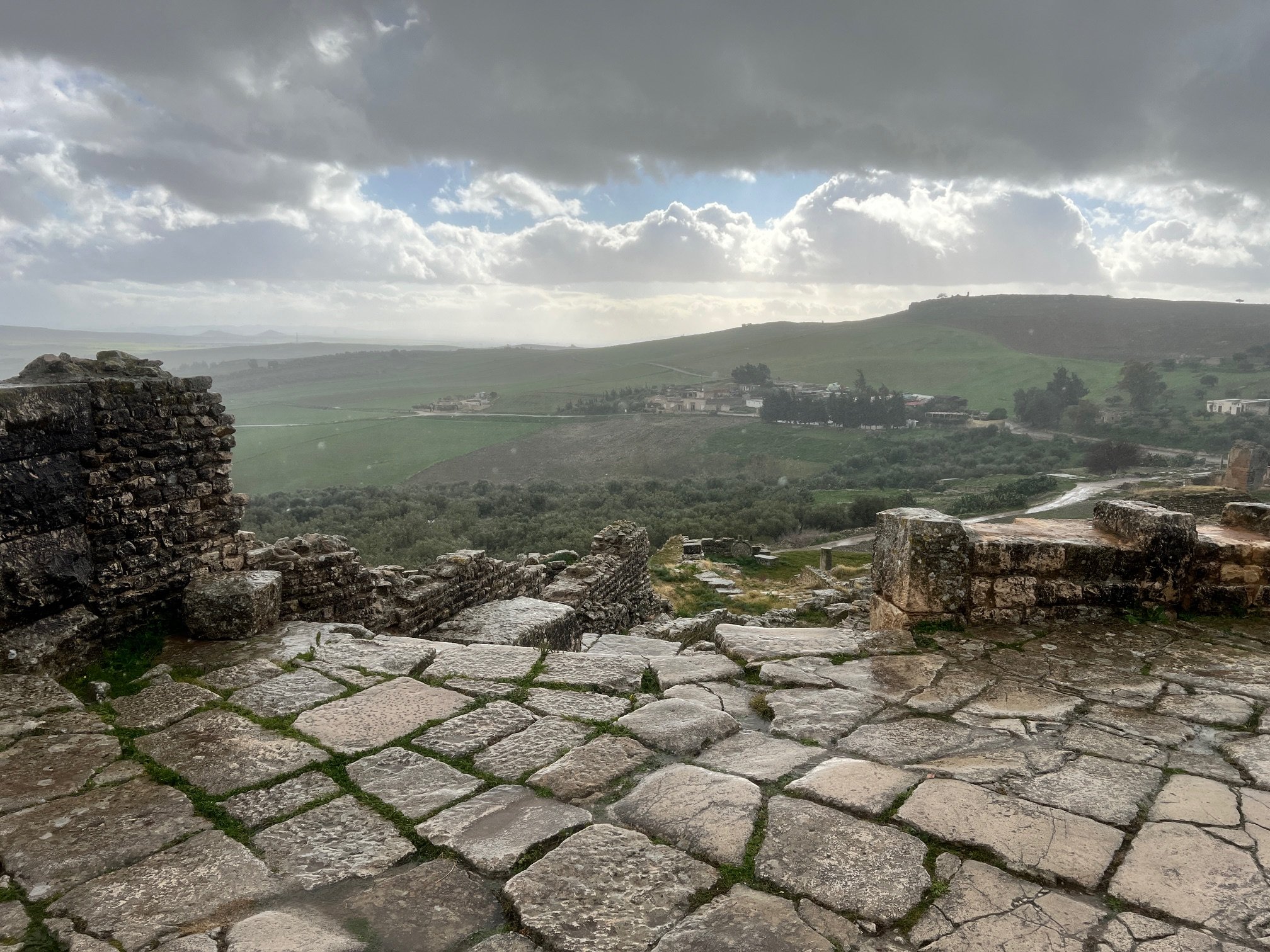
Dougga sits on a plateau guarding fertile fields of gnarly olive trees planted twenty centuries ago and patches of wheat, barley, figs and almonds. The sounds of bleating sheep reverberate through the rolling hills. Goat herds graze.
From this crest, the Romans had strategic control for hundreds of miles. As I’ll explain to my high school history classes, no invading army stood any chance of pulling off a surprise attack.
The duty of the Roman legionnaire stationed at Dougga was guarding the Empire’s breadbasket. North African grain fed Caesar’s Rome for eight months of the year. My job is harvesting travel experiences to share with my students.
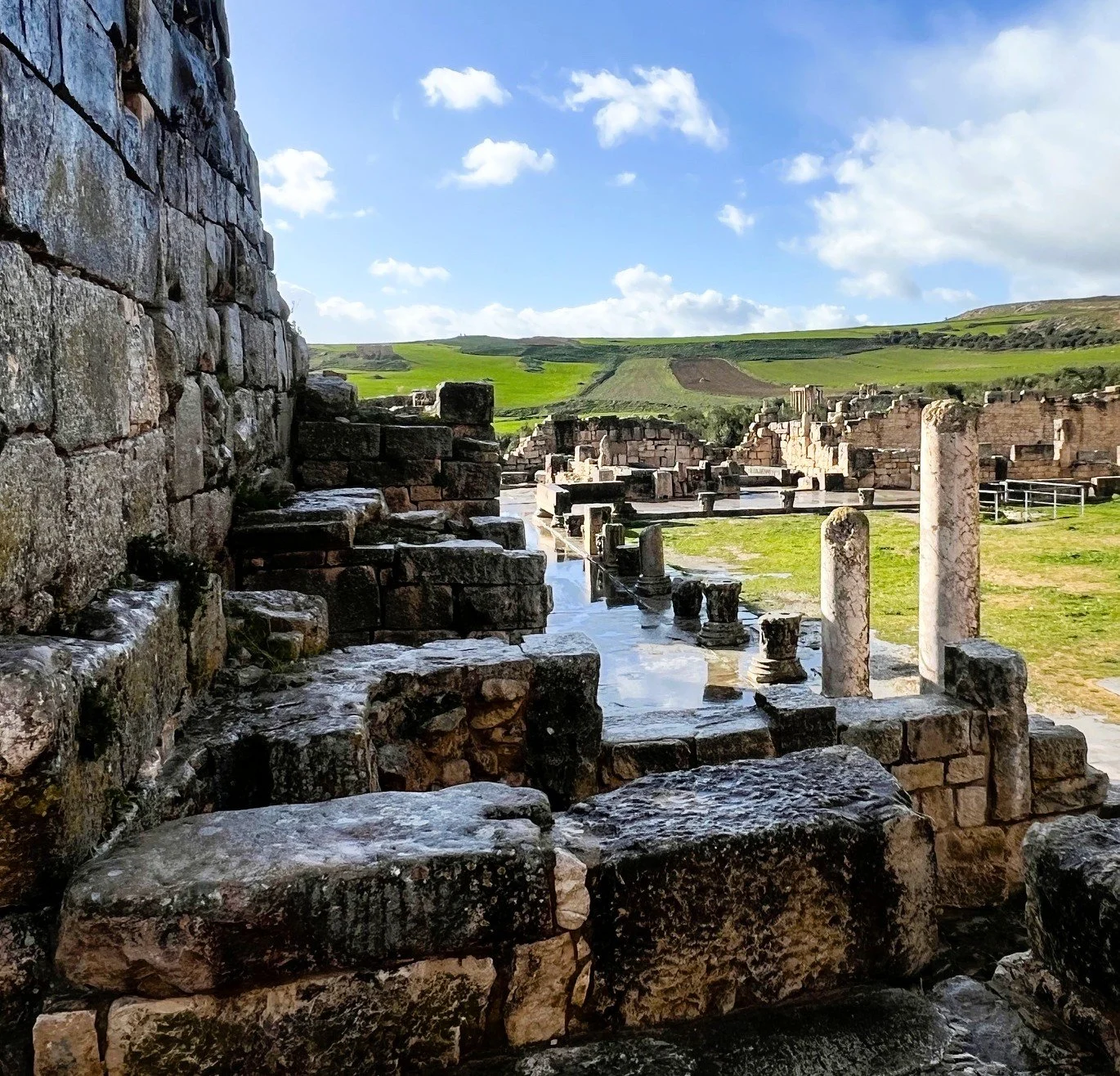
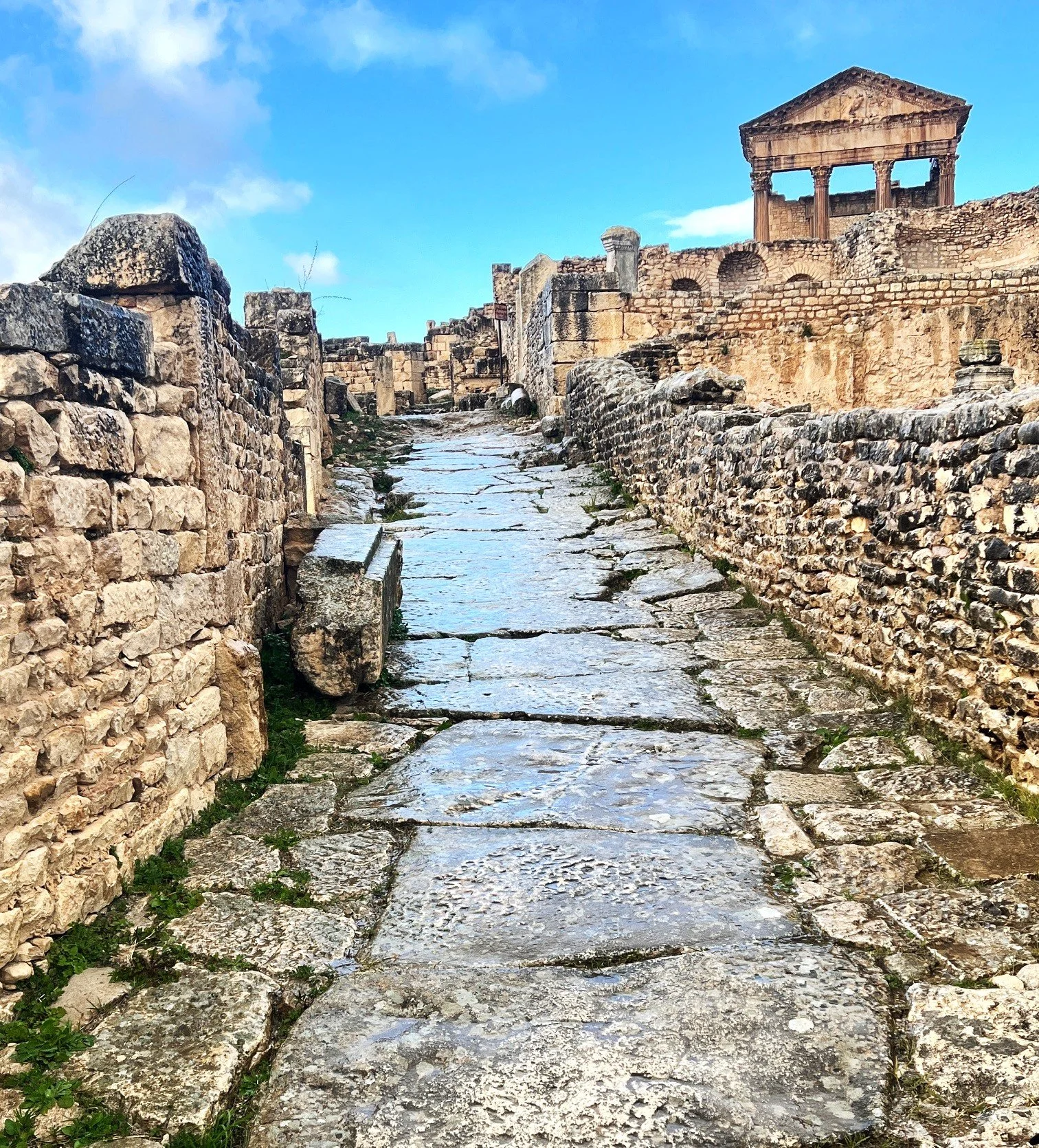
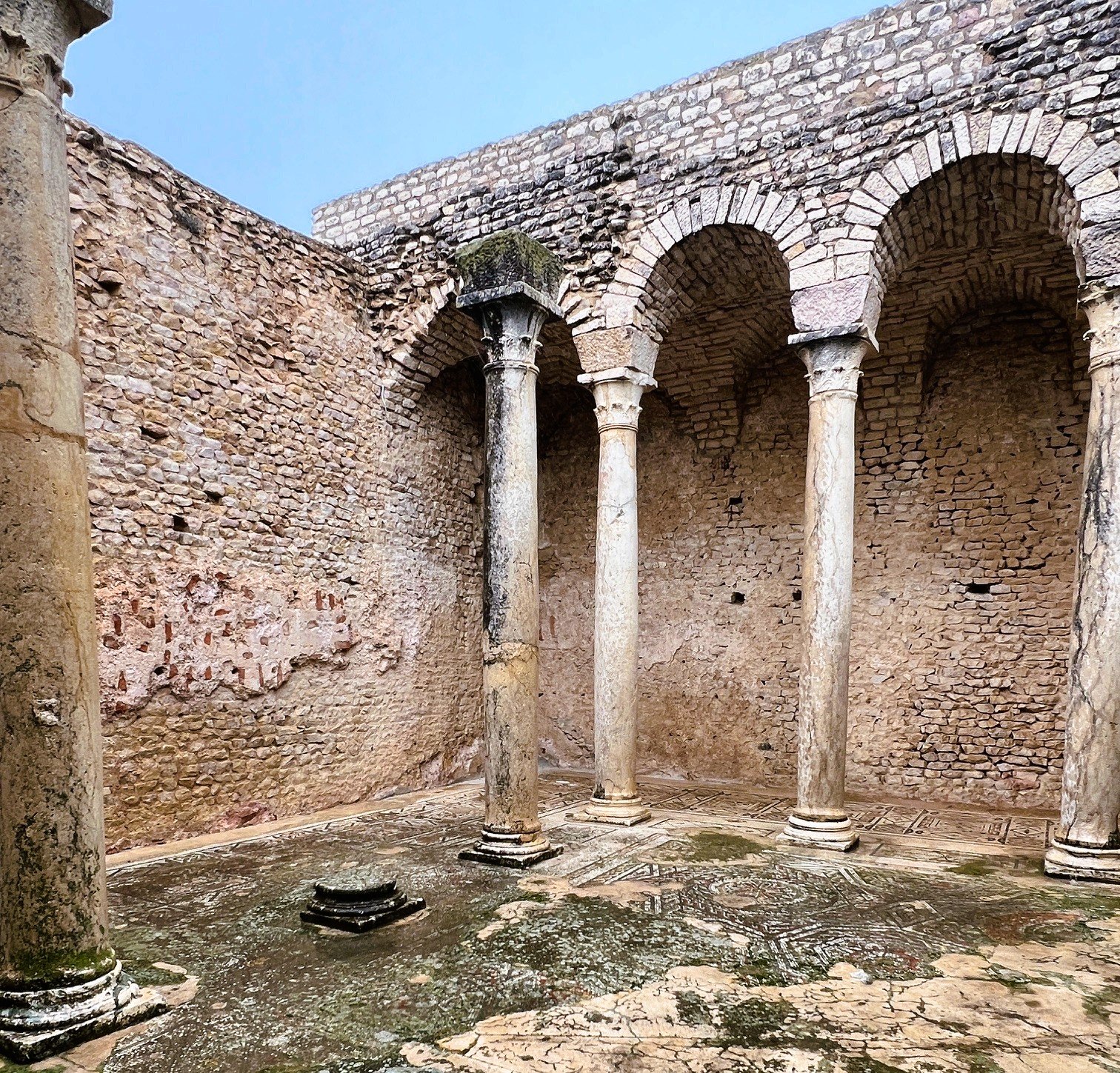
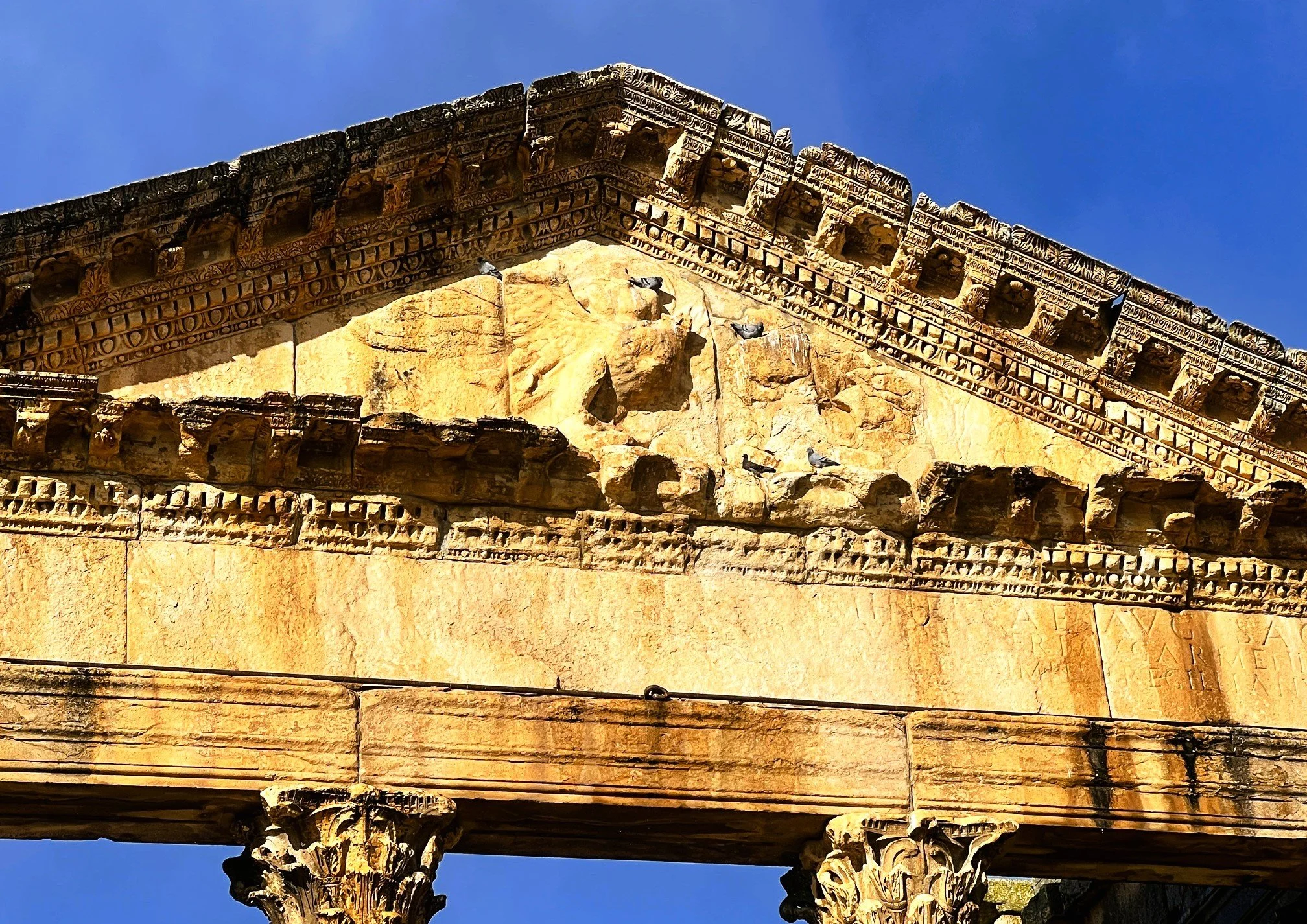
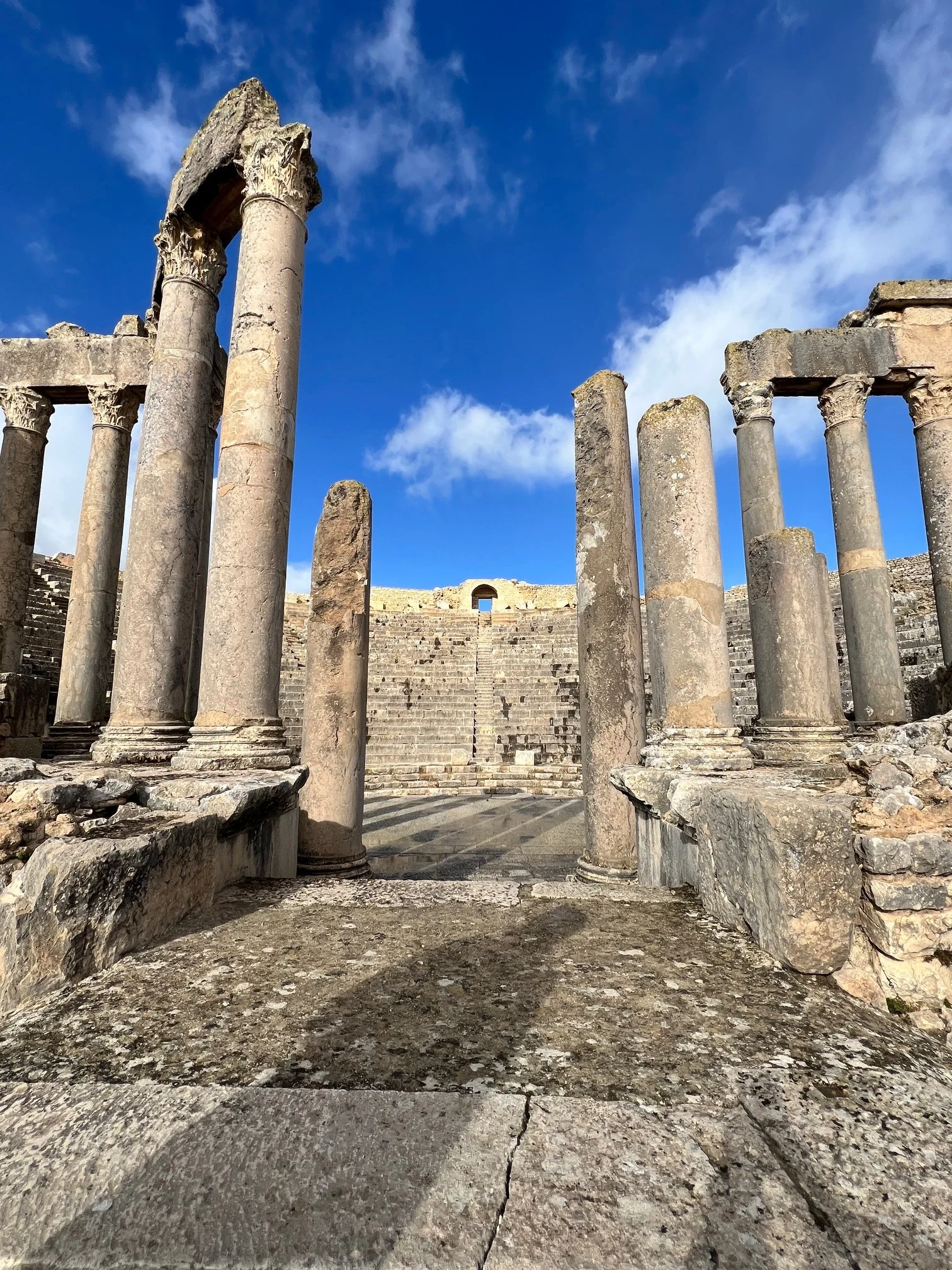
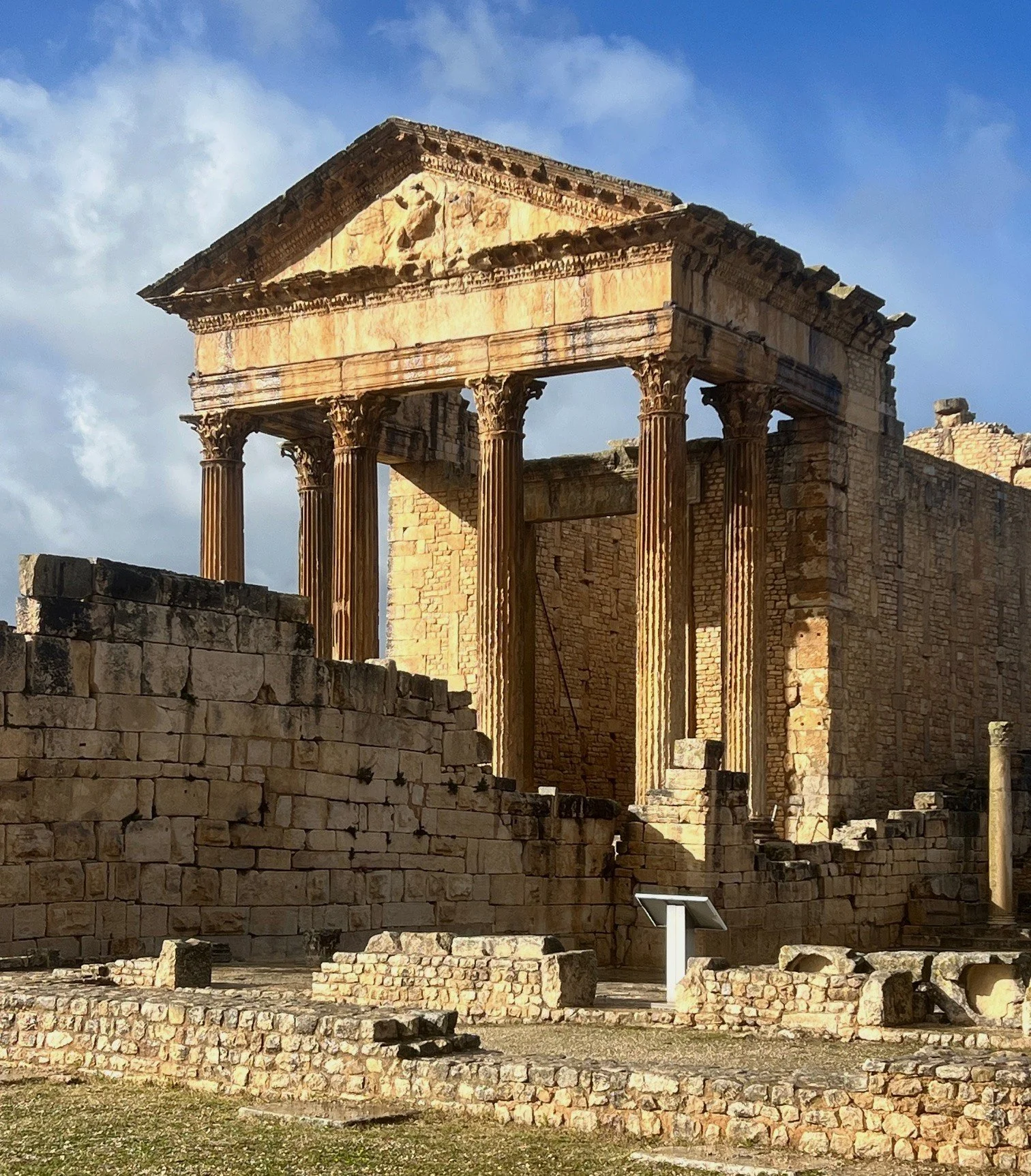
Dougga is evocative, enigmatic. Ghosts patrol the first century amphitheater carved into a hill slope, the market shops and stalls, the Forum, the Temples of Fortune and Piety, the Arch of Alexander, porticoes, baths, houses, a mausoleum. Streets of stone pavers, uneven and slippery wet, wind their way past Corinthian columns, crumbling walls and communal latrines.
Rain drops the size of Tunisian oranges start pelting me. In minutes, I could not be any wetter if I stood submerged under a waterfall. The wind flings stinging raindrops against my cheeks. My teeth are chattering. My umbrella is turned inside out. I am waterlogged.
Off in the distance, a spot of blue sky taunts me. It’s as if a Roman god is laughing, “You wanted a taste of life in Roman times, well, Roman centurions stood watch whatever the weather.”
Life in a Roman military town, as I’m learning firsthand, was not always a sunny Mediterranean one. For the legions wearing battle gear and Roman sandals, it was a hard life of grit, hardship, determination, disappointment. And cold, wet winters.
Their grumbling—like so much of history—is lost to me. The unwritten voices of the past are gusted away on the stormy winds of time.
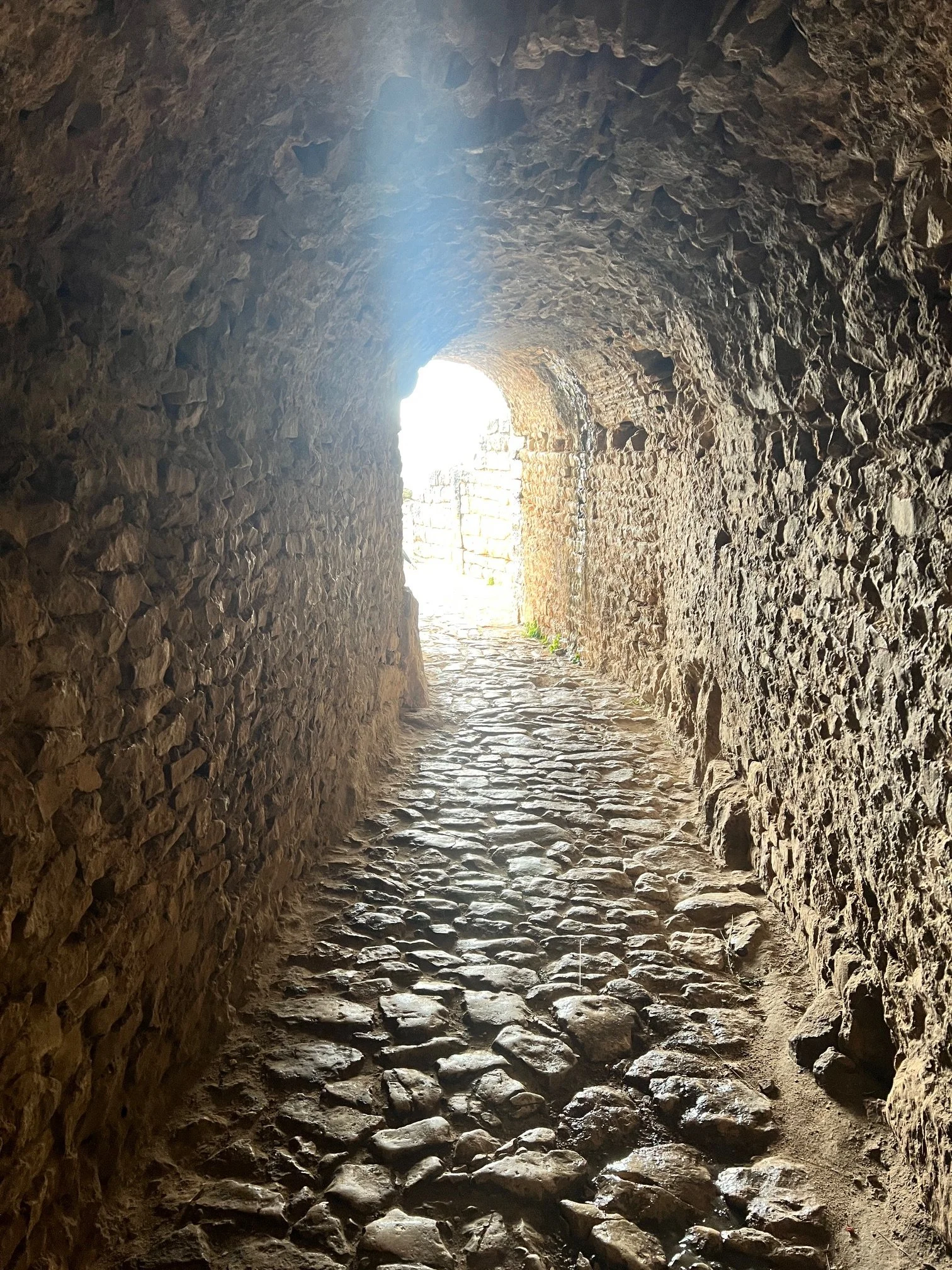
Waiting for the storm to pass, my only protection is the labyrinth of slave quarters and tunnels. It’s a relief to find shelter.
The panicky instinct to cut and run grips me. Is it even safe out here? Will there be lightning? What if the roads wash out? What’s the point, at this point, of getting even wetter? I could—no one would ever know—teach about the Roman Empire from history books at the library.
The downpour purifies the air. If equal opportunity has a smell, this is it. Roman slaves, soldiers and schoolteachers, equally, were drenched in winter and baked in summer. A lived detail to enrich my lectures.
This morning, overconfidence—the history teacher’s curse—made me forget to check the weather report. Like swaggering into a classroom unprepared, pretending to have more knowledge than I do.
From now on, when I’m tempted to teach with too much conviction, Dougga will interrupt to ask, “How do we know what we know? Whose voices don’t we hear?”