Jonathan C. Lewis
Sightseeing with Samuel
A fictional travelogue; three minute read.
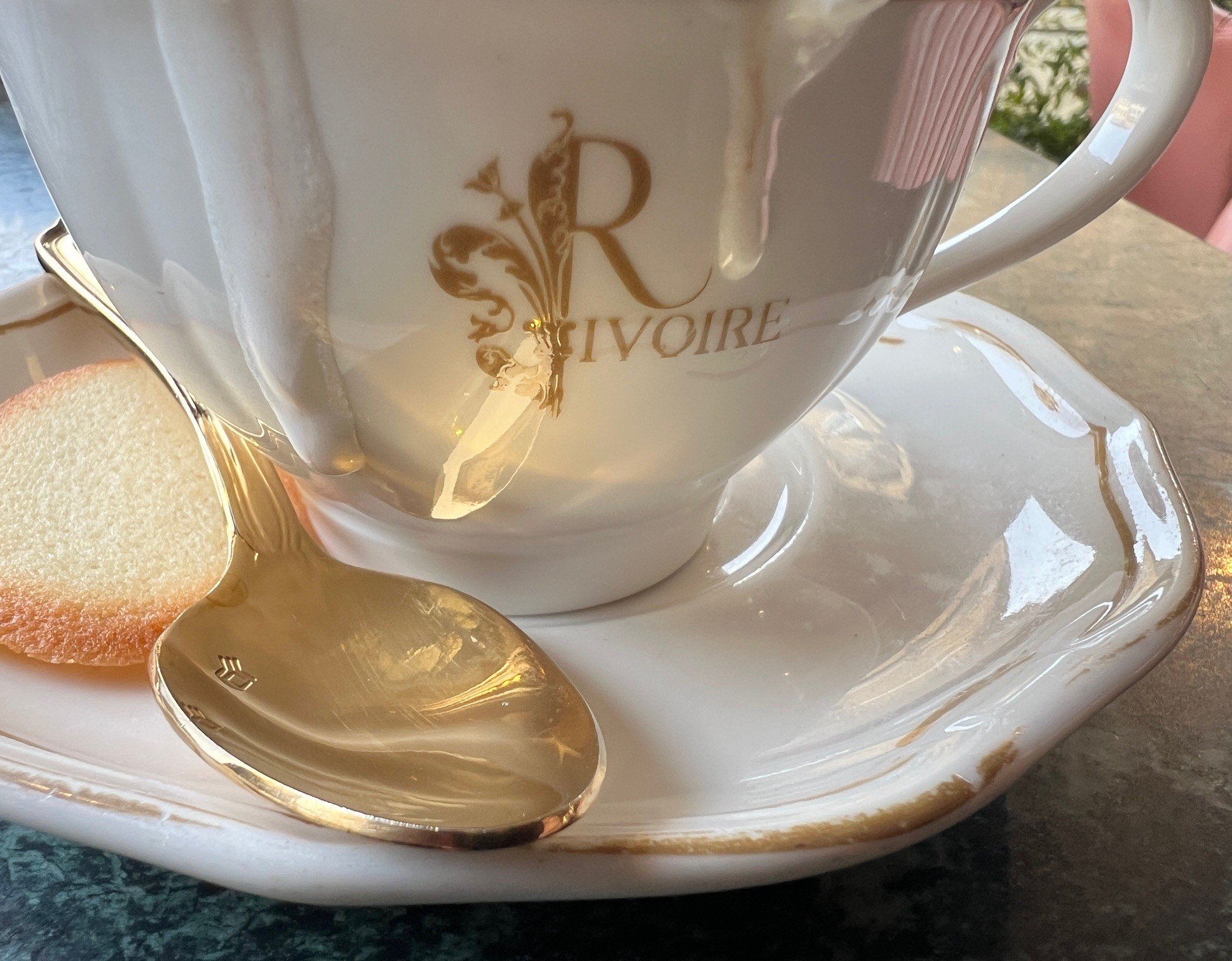
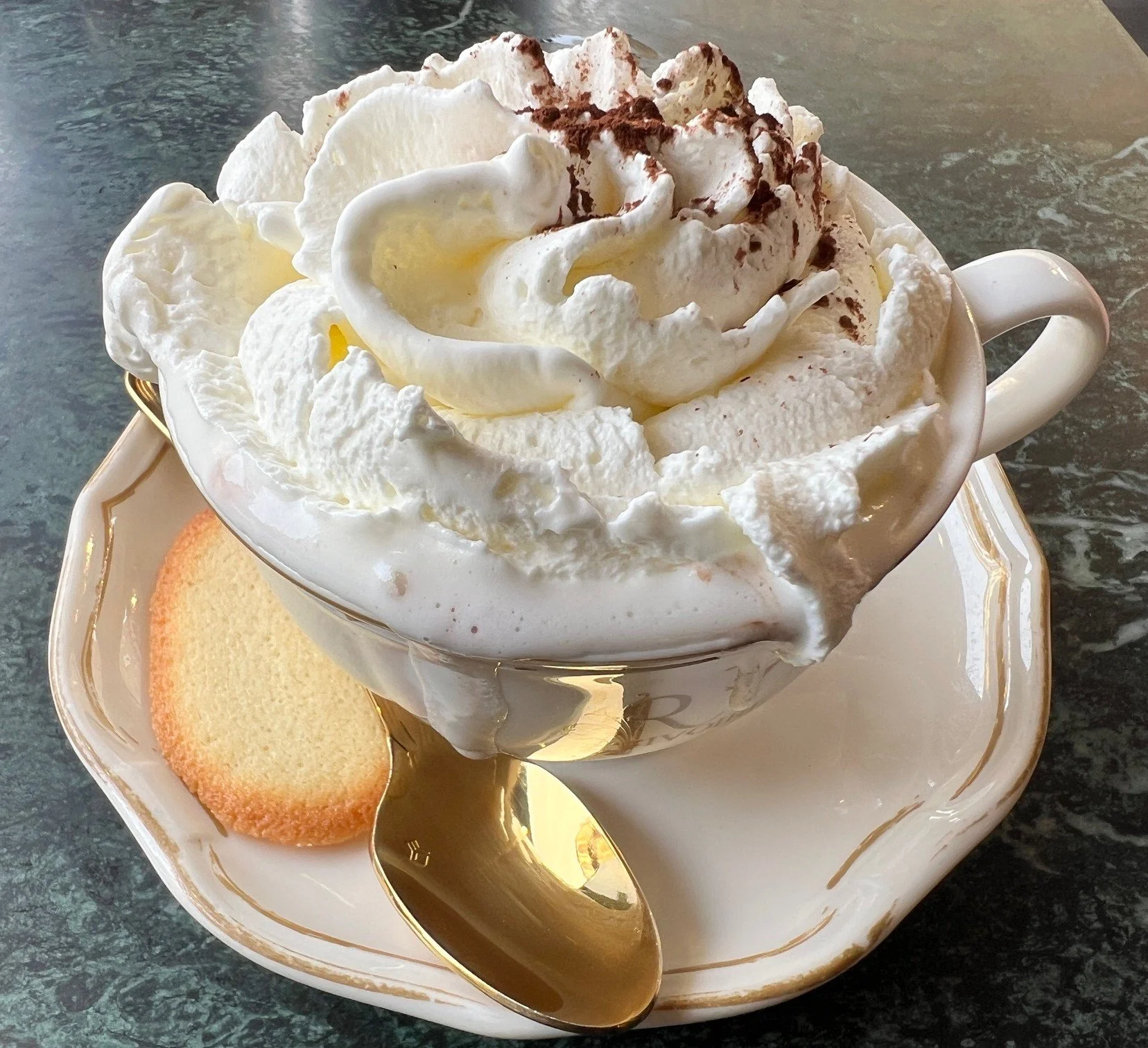
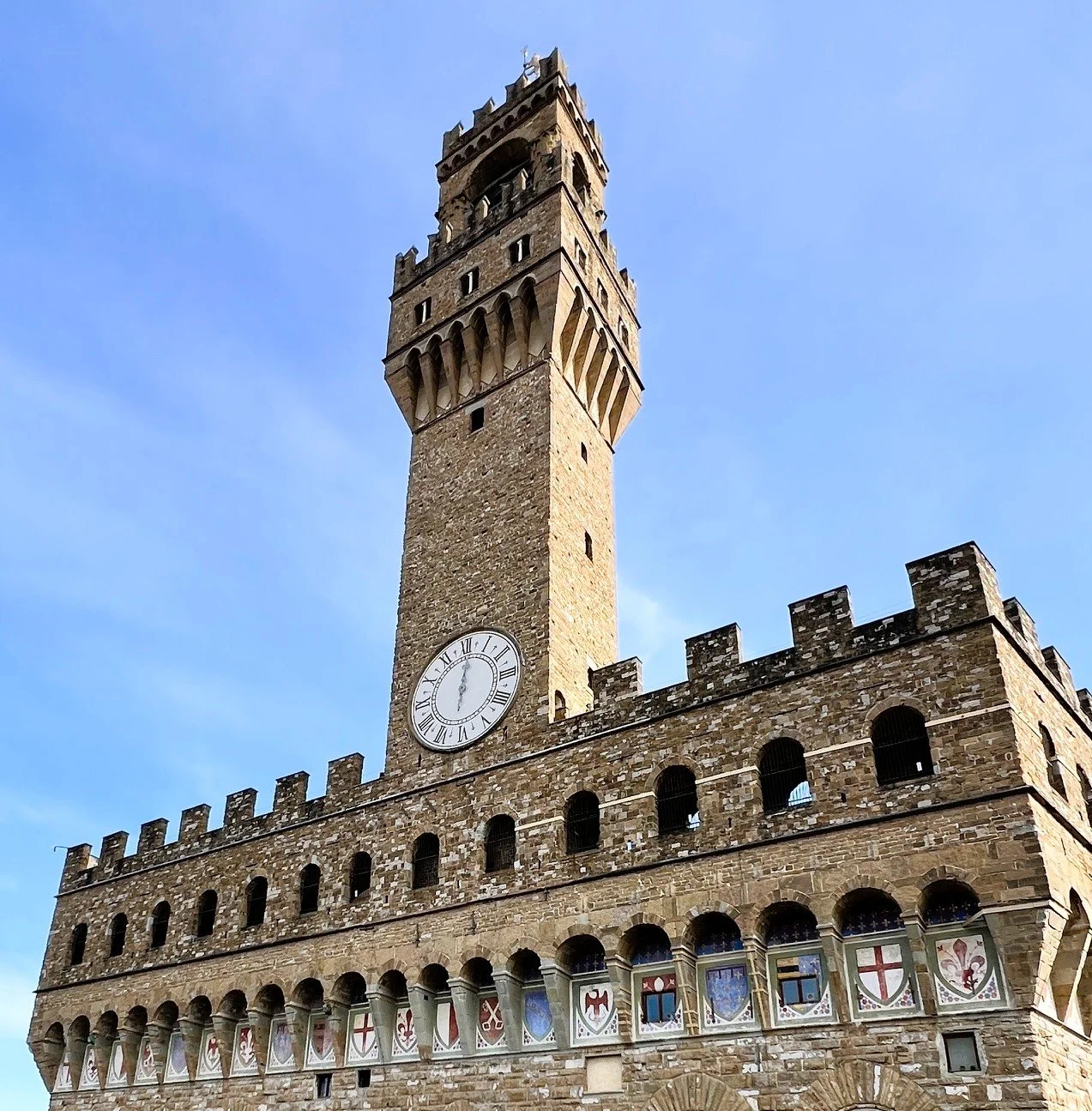
Across from the Palazzo Vecchio on the Piazza della Signoria at Rivoire, I’m nursing a rich, frothy hot chocolate covered in whipped cream. I’m waiting for a former student.
Samuel is in Florence on a postdoc fellowship researching Italian art history. I’m looking forward to finding out about his studies, but also his life path. It will be good to talk as near equals. In my high school history classes, he went by Sammy.
Maybe I’ll learn that my habit of weaving art history into the standard geo-political curriculum mattered to Sam’s, uh, Samuel’s, career choice. My ego is flattering me. More likely, a college professor influenced his decision.
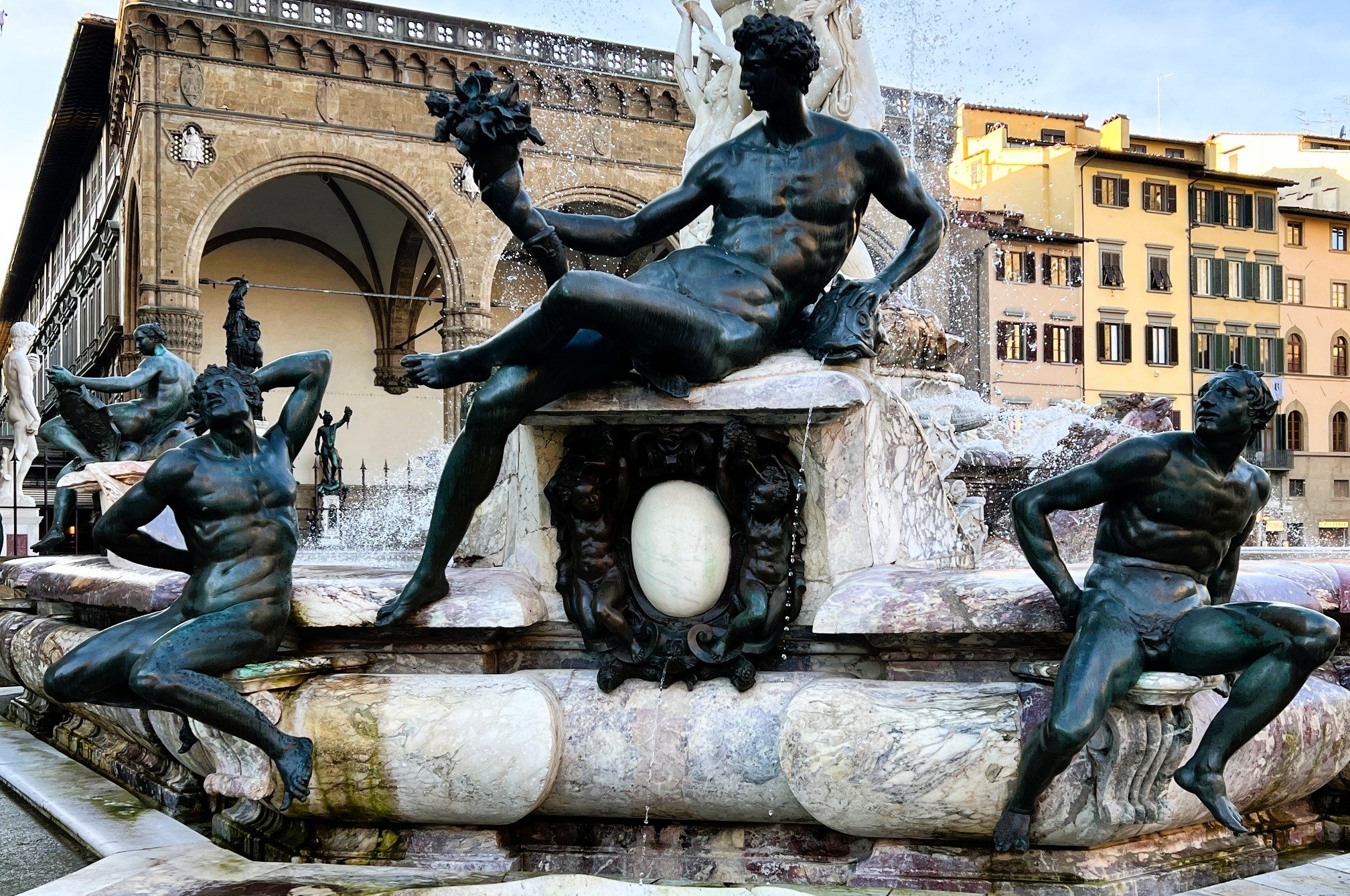
The stinging coolness of the morning air smacks my cheeks. The piazza is art in motion.
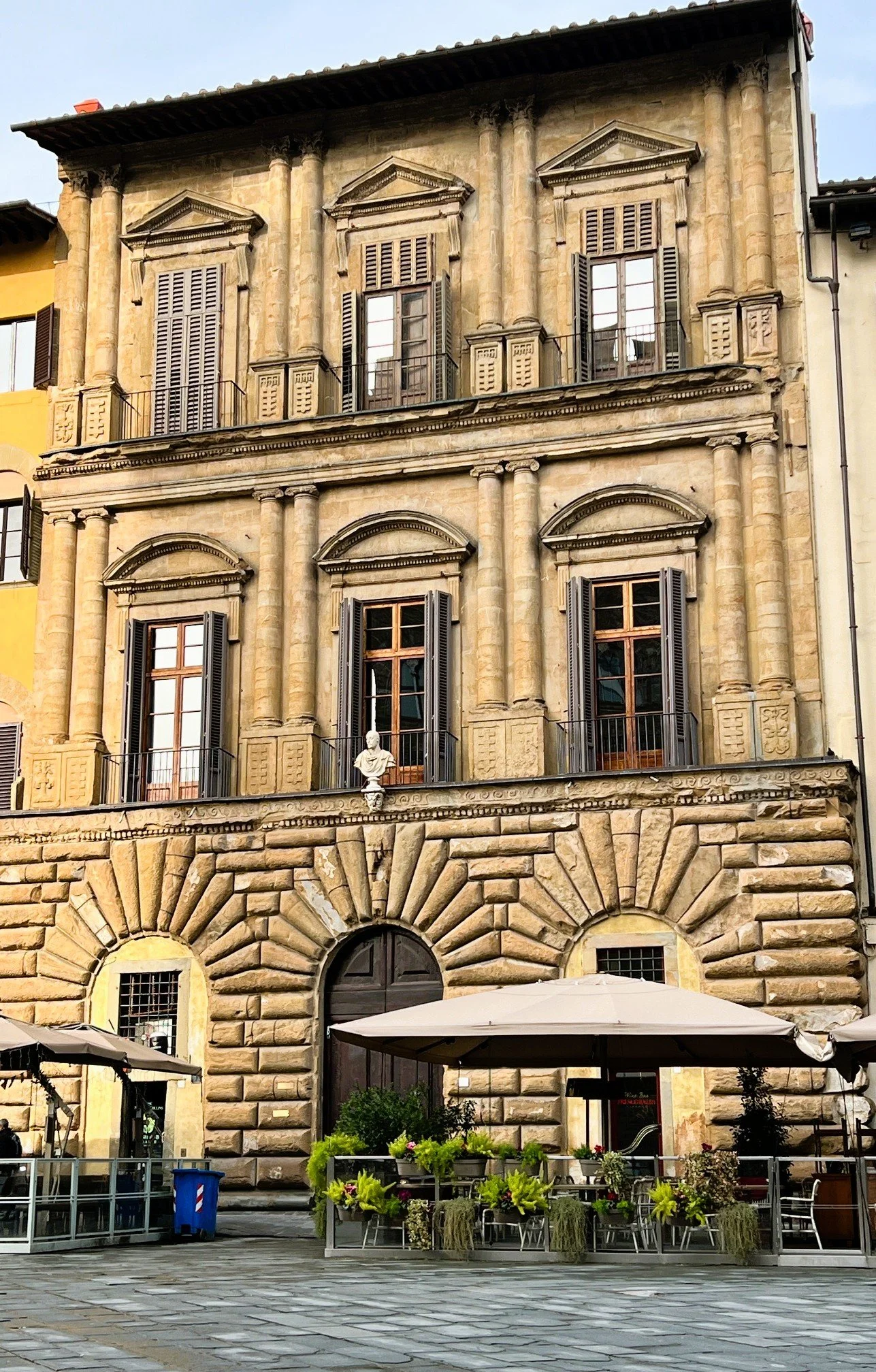
The piazza is coming to life. Colorful awnings over outdoor tables are appearing. Birds in search of pastry crumbs chirp with conviction. The aroma of cappuccino makers fills my nostrils. Three leashed dogs pull an elderly couple in the direction of the Arno river. A merchant rolls out a revolving rack of postcards.
Striding across the pavement, Samuel is dressed in dark grey slacks, black loafers, ironed white shirt. In my classes, he slumped in his back row seat wearing a hoodie. Now, he sits upright.
After sharing our life paths, Samuel changes the subject, “Remember our class discussions about repatriating artworks to their home countries? Like returning the Elgin Marbles at the British Museum back to the Parthenon in Athens?” My teacher’s self-esteem surges. I nod.
“Do you remember telling our class about the Charlie Chaplin look-alike contest that Charlie Chaplin lost? And asking us if we were turned off to learn Häagen-Dazs was invented in the Bronx?” he smiles coyly. I wonder where his flashbacks are headed. I lean forward.
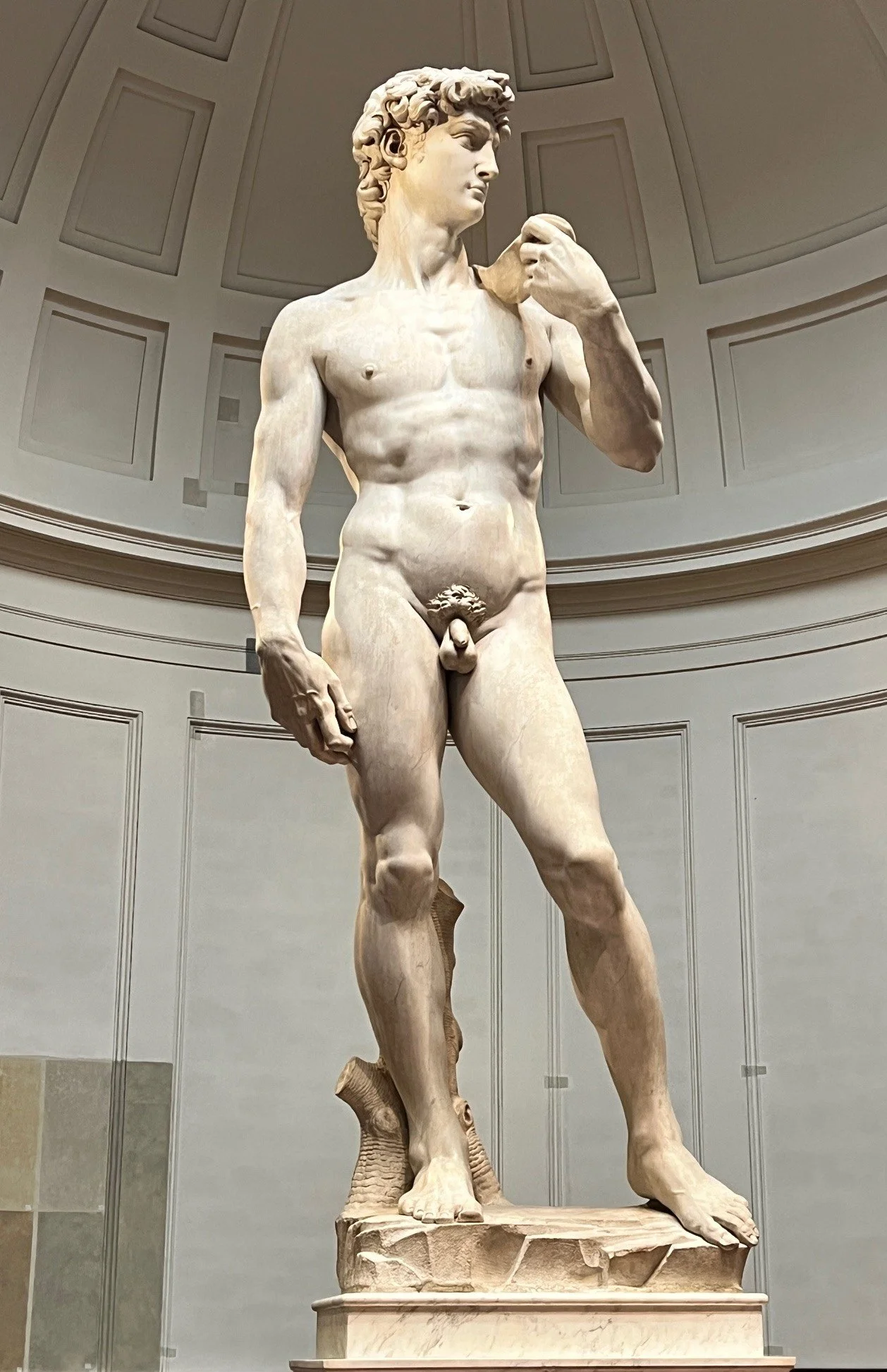
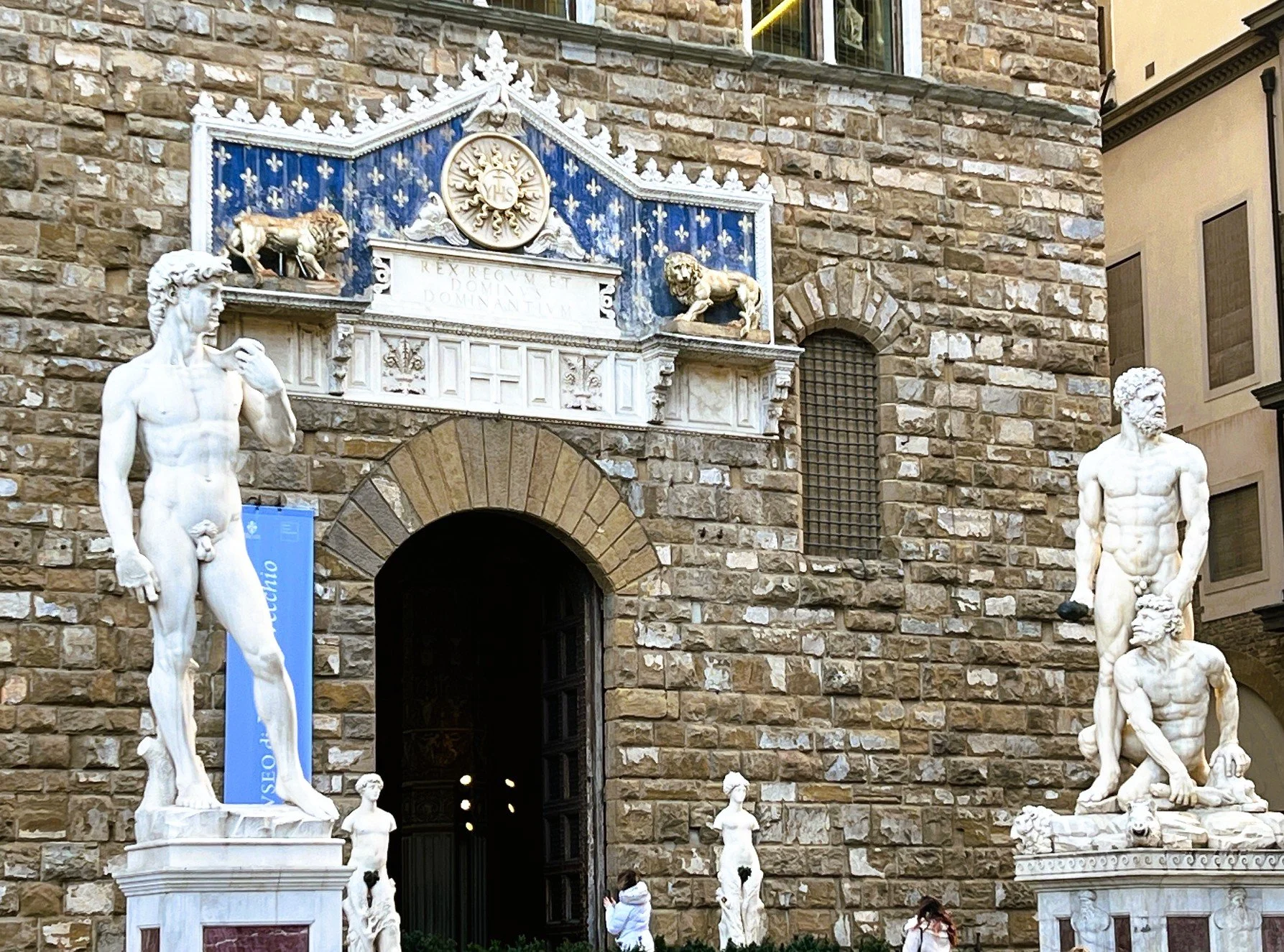
Pointing, he adds, “I know you know that the piazza’s statue of The David is a clone, a copy of Michelangelo’s original over at the Galleria dell'Accademia.” Every year five million people marvel over the plaza’s statuary. Again, I nod.
He pauses, taking a long breath. “I’m writing a paper about using modern technology to democratize art. All the world’s most famous artworks should be returned to their rightful countries, but exact duplicates could be widely distributed around the world.”
“Beethoven is German, but orchestras everywhere play his music. Homer was Greek, but everyone gets to read the Iliad and the Odyssey. Swan Lake and Sleeping Beauty are danced all over the world to music by Tchaikovsky, a Russian.”
“What do you think?” he asks. For a moment, Sammy is back in my class.
I think of the multiple copies of Rodin’s The Burghers of Calais, and the limited-edition Picasso ceramics produced by artisan helpers in the south of France, and the odd fact that Ginsu Knives are manufactured in Ohio.
But some things are harder to swallow than others. Fake artworks? Licensed forgeries?
In college, my cultural anthropology prof—a mentor whose voice shows up in my lectures—once told me that travel is appreciating the new and the different—the morphing skyline, challenging artwork, strange architecture, unexpected foods. Talking to Samuel here in the birthplace of Renaissance art, I’m ‘sightseeing’ the birth of artistic entrepreneurship.
I tell Samuel, “No one owns beauty.”