Jonathan C. Lewis
Taking a Bath
A fictional travelogue; three minute read.
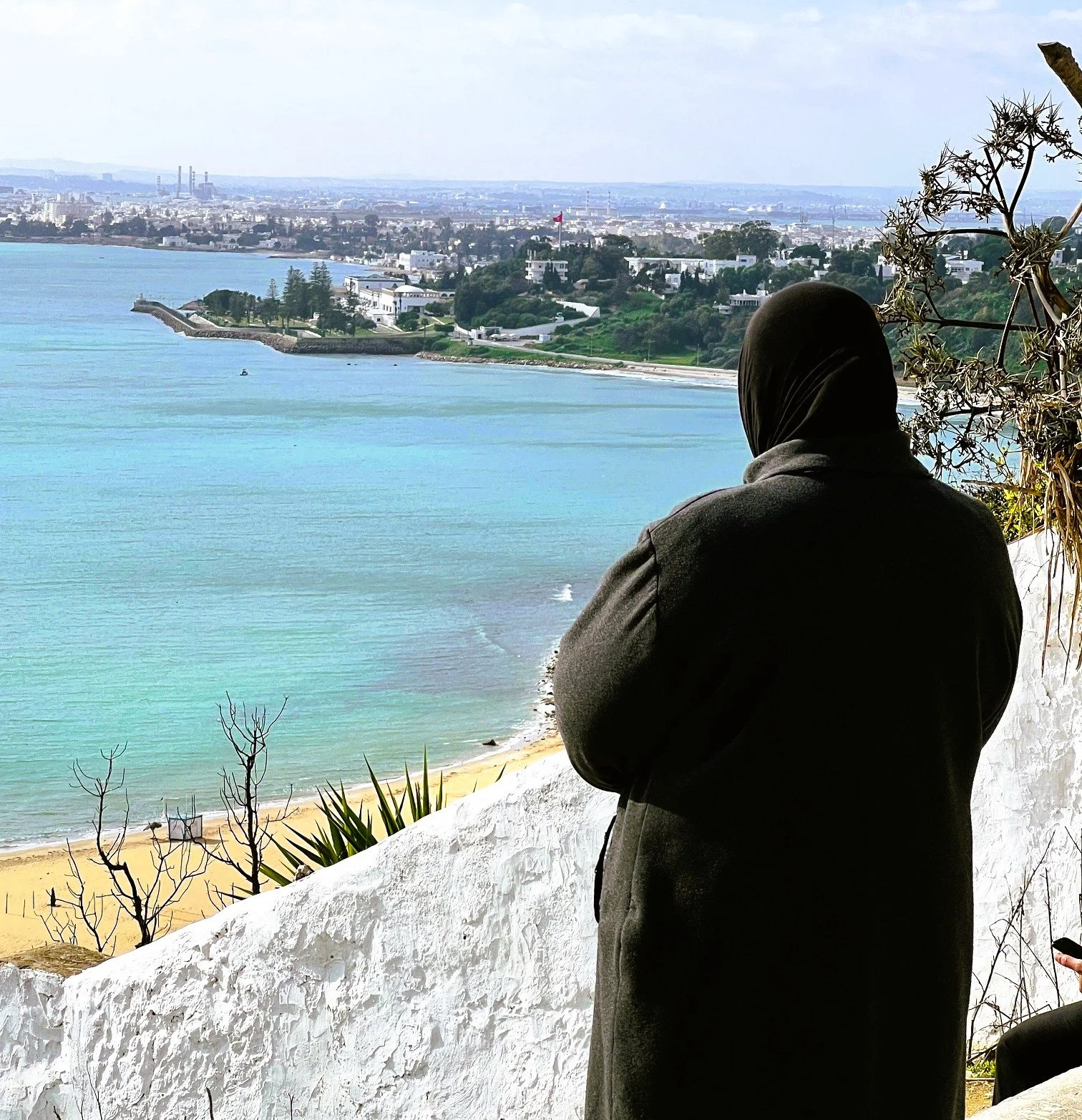
Twenty feet from where I’m standing, a sea breeze blowing off the Gulf of Tunis agitates the turquoise waters. Across the way, where the Atlas Mountains dive into the Gulf, an orange-y, pinkish haze harbingers a piercing, exposing sun.
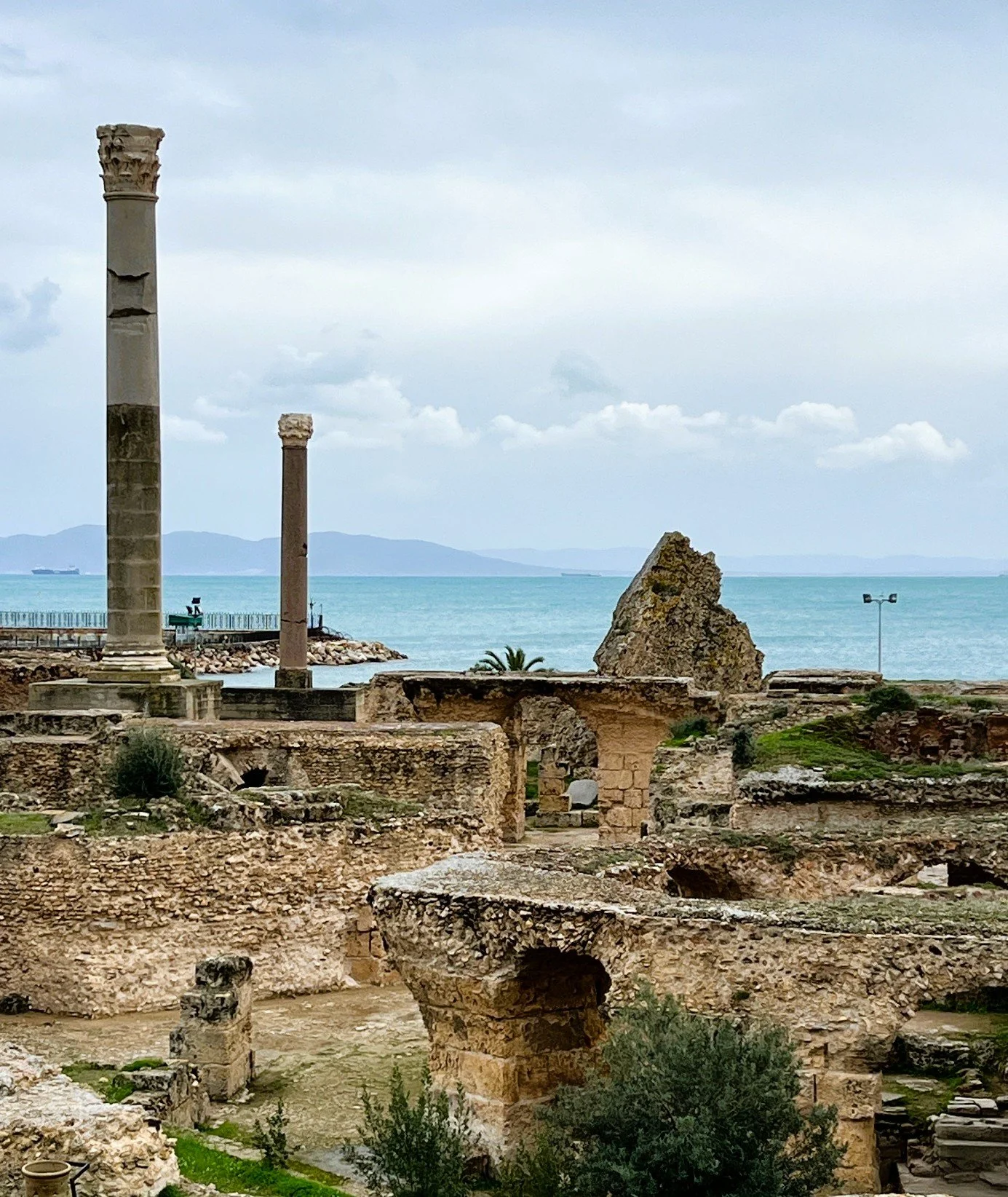
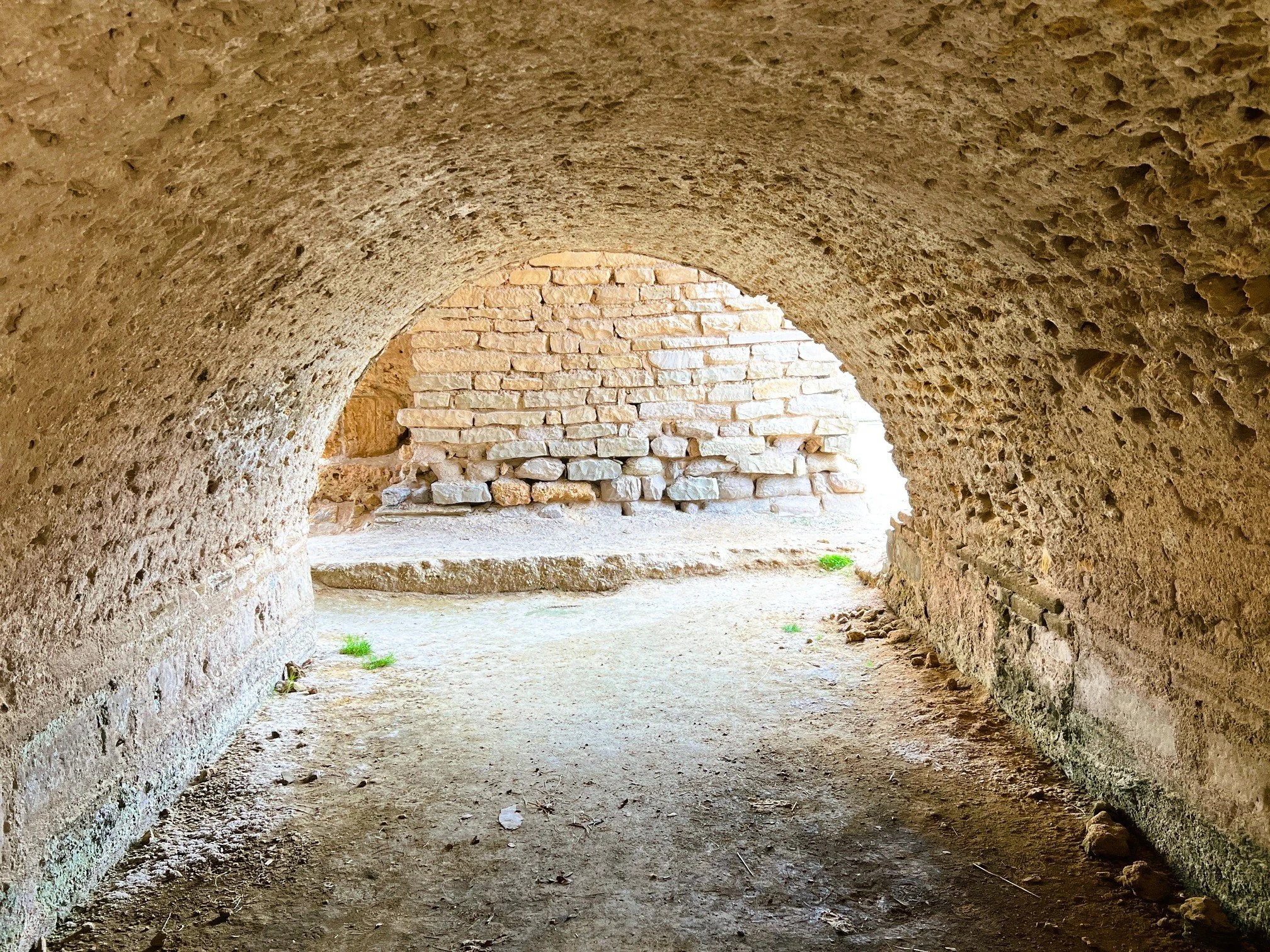
To prepare a firsthand report for my high school history students, I’m poking around the Roman baths at Carthage, a temple devoted to soaking pleasures. Built by the Emperor Hadrian with heated pools, steam rooms, chilly plunge pools, underfloor hot air furnaces, fresh and saltwater cleansing pools, libraries, exercise areas and gardens, it was the Roman Empire’s second largest public bath complex.
Once, Carthage ruled the Mediterranean. Armadas of triremes sailed from here bound for Egypt, Sicily, Gibraltar and the Atlantic. Today, the land is adjacent to the Tunisian presidential palace and the city’s priciest view homes.
On a bench, an old man who I first mistake for an archaeological artifact, is wearing a frayed flannel jacket and decades of beard growth. Needing to rest, I join him.
A half a dozen chattering girls stroll by. Their bare midriffs, short skirts and exposed cleavage perfectly match what my teen daughter Brittany wears to the mall. The male groundskeepers stop their raking to gaze approvingly.
As if activated by a hidden switch, my bench companion launches into a history lesson worthy of Seneca. “All over North Africa, our public baths were famous. Men and women bathed together. One day, a chaste Christian woman got herself a scolding from the local bishop for bathing naked, ‘You gaze upon no one immodestly, but you yourself are looked at immodestly. In delighting others, you yourself are corrupted.’”
In other words, if the woman’s dress (or undress) provoked a lust in others, that was on her. Words Brittany would hotly dispute.
The man’s story echoes the stomach-churning arguments I have with Brittany. I am the bishop.
History books don’t document the date when women began adorning themselves. But, in a 9,000-year-old Turkish village, archaeologists have uncovered polished mirrors of volcanic obsidian glass—mainly in the graves of women. Like the sun over the Gulf, it’s slowly dawning on me that Brittany’s wardrobe is part of a long tradition—part self-expression, part vanity, part mating ritual.
History also doesn’t record when the gods of fashion first manipulated women and girls into thinking they were thinking for themselves. In teen magazines, Brittany sees style and self-expression. I see fashion ads lying to her about the nature of beauty—trying to convince women that lipstick, mascara and rouge can solve their problems.
Every morning in front of her mirror, I hear Brittany pulling clothes out of her closet. Each new outfit is a new identity—a search for acceptance and romance.
I want Brittany to find what she’s looking for without finding more than she bargained for. Just the possibility of it makes it hard for me to swallow.
As I struggle to explain, “Would it be OK with you if your brother showed up topless at school dances? Or wore a speedo to his classes?” In rebuttal, she eye rolls, “Oh, dad.”
My mouth goes dry. I am without words.
In that moment, I’m helpless. A failing father.
If her mom were alive, she’d know what to say.