Jonathan C. Lewis
The Attic
A fictional travelogue; three minute read.
The Palazzo Butera, an 18th century palace built on the Palermo waterfront is an attic masquerading as a modern museum. I’m roaming my way through a hodge-podge of avant-garde artwork, venerated oil paintings, vintage hand tools, rare porcelains, contemporary sculpture and ornate mahogany carvings. Polished silver candlesticks and recessed LED lights work side-by-side.
I start to lose track of time. The museum—anchored in its past, celebrating the present—is for the curious of heart.
Like Palermo, my history teacher’s tan tweed blazer and olive corduroy slacks are a bit frayed. Like I excavated them from a thrift shop. They’re the same clothes I wear at the research library when I’m nerding out in search of history’s treasures.
When I was nine years old, no older than that, my early travel escapes were into our family attic. I’d haul myself up a wobbly wooden ladder to read comic books under a bare, low-wattage lightbulb. Dusty cardboard boxes, holiday decorations and Samsonite suitcases kept me company.
In time, I began exploring. Sepia photos pasted into family albums took me sightseeing to other civilizations, to mysterious lands. The strangest people possible—my ancestors—their rock-solid faces looking straight through me--swirled my imagination.
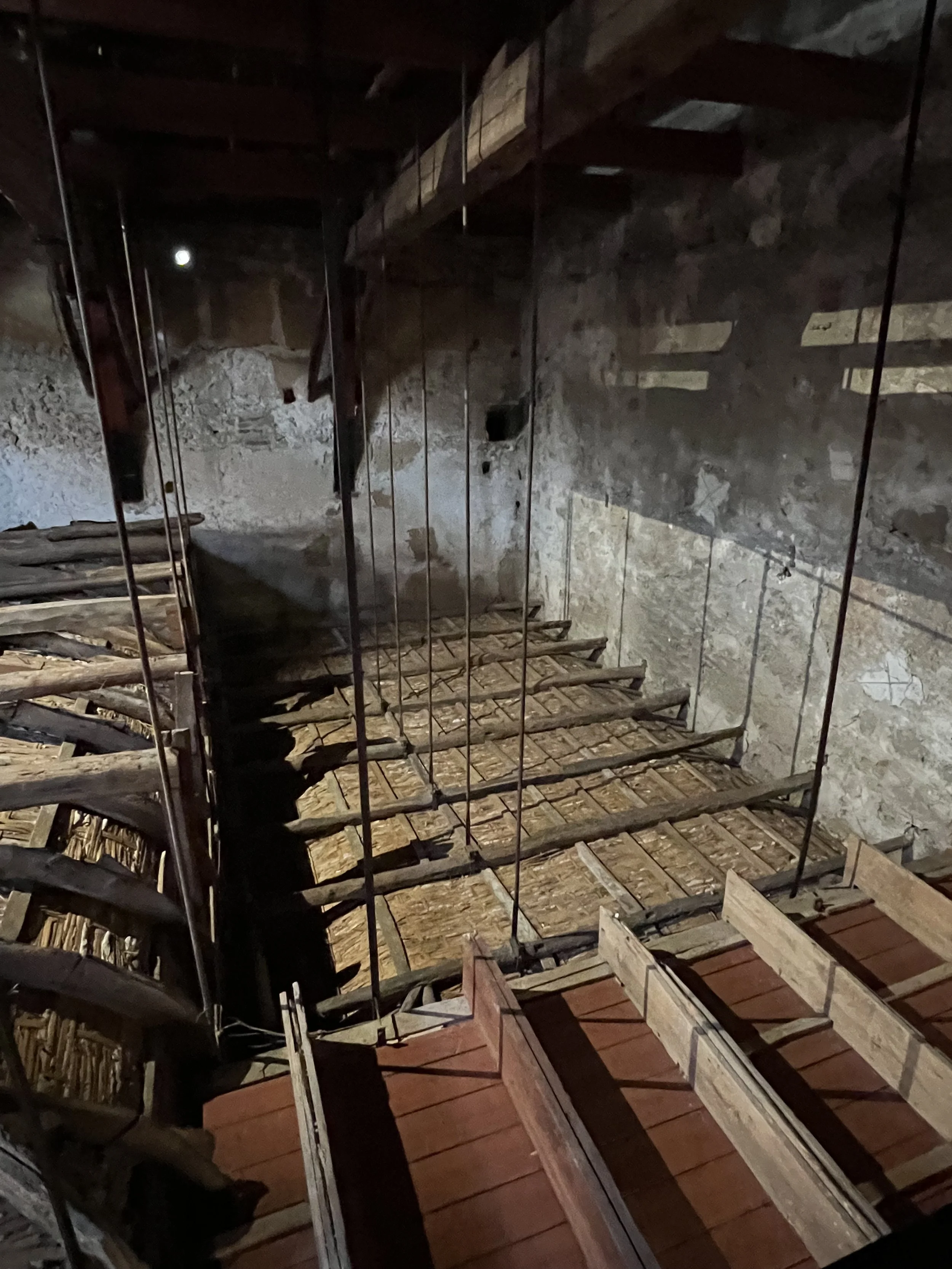
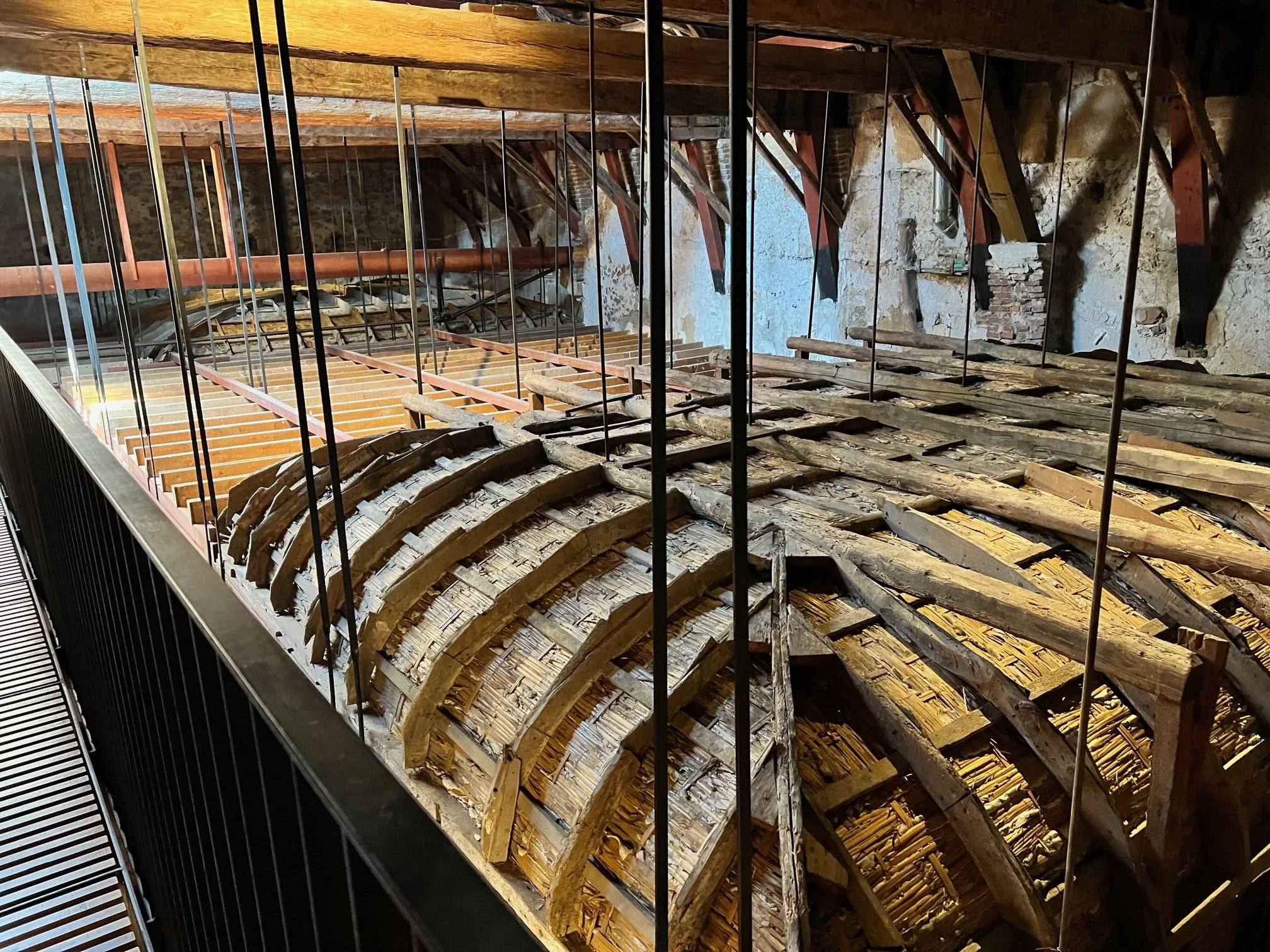
The Butera’s attic is open to the public. I’m in it, alone. The catwalks expose me to rafters, crawl spaces, joists. Peeking at the museum’s private parts—its structural undergirdings—I am thrown back to rummaging, very secretly, through my dad’s hidden girlie magazines. I can still blush.
The whole of the Palermo is an attic showing off its ancestors. Through the ages, it has assimilated Arab, Christian, Byzantine, Roman, Norman, Jewish, Italian newcomers. The city’s architecture, her churches, the art are the children of countless cultural intermarriages. I feel welcome here because everyone else has been.
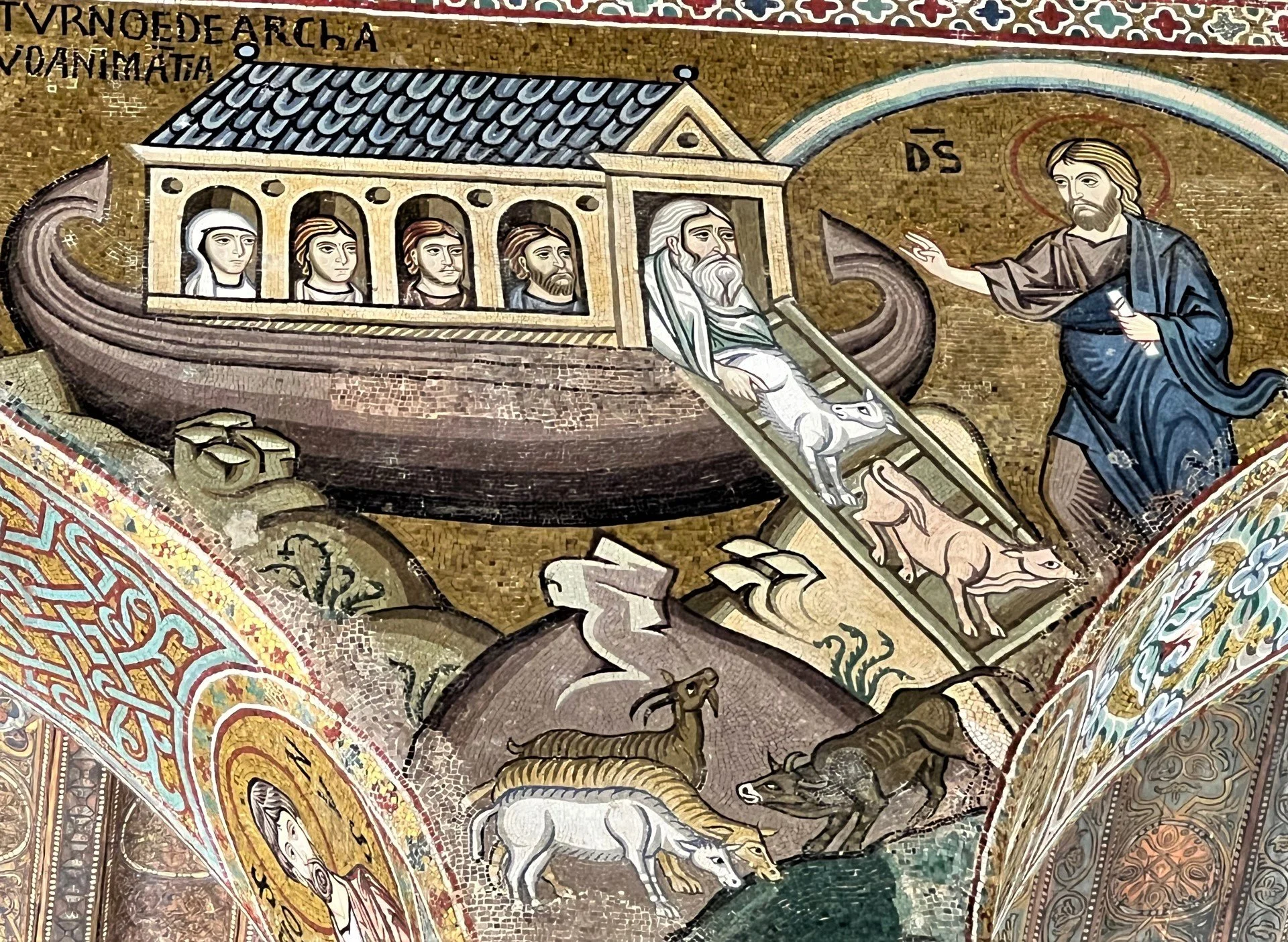
I head off to the Palatine Chapel, I crane my neck to focus on the church’s mosaic canopy. My gaze fixes on a mosaic message of universal care for all living things—a Noah’s Ark. A school trip to the zoo comes into focus, and then fades. For a split second, I’m sure the nave is spinning.
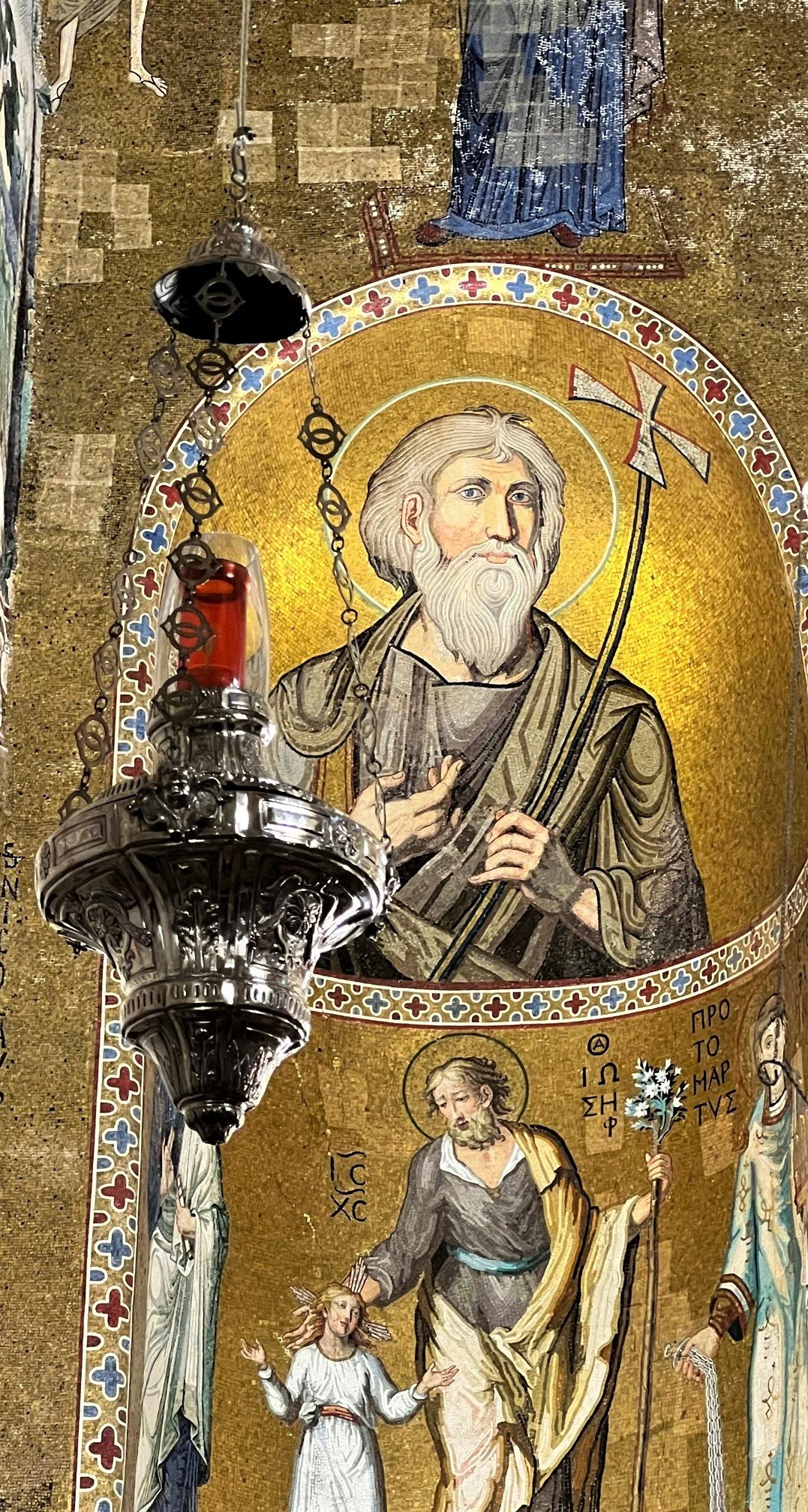
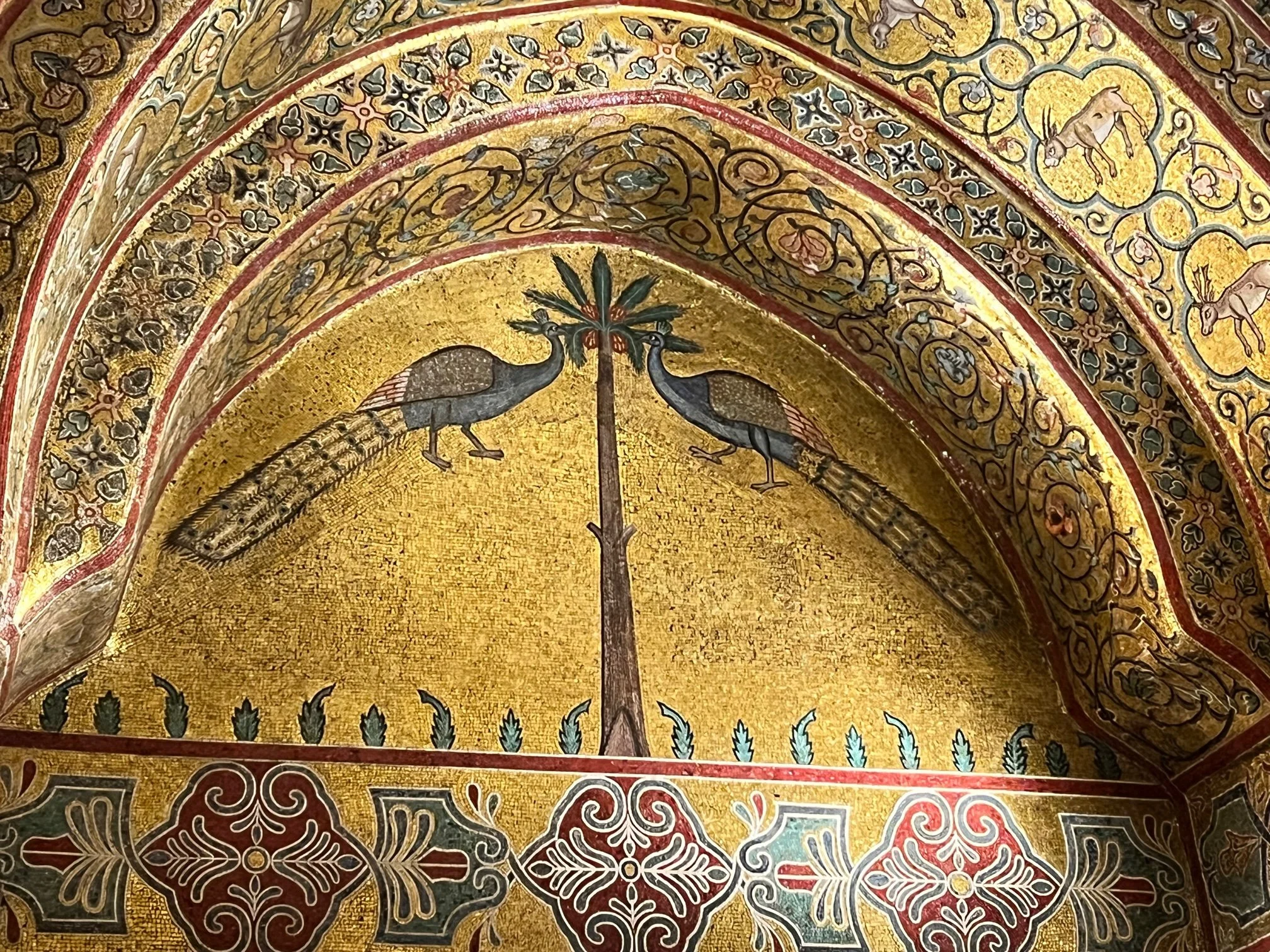
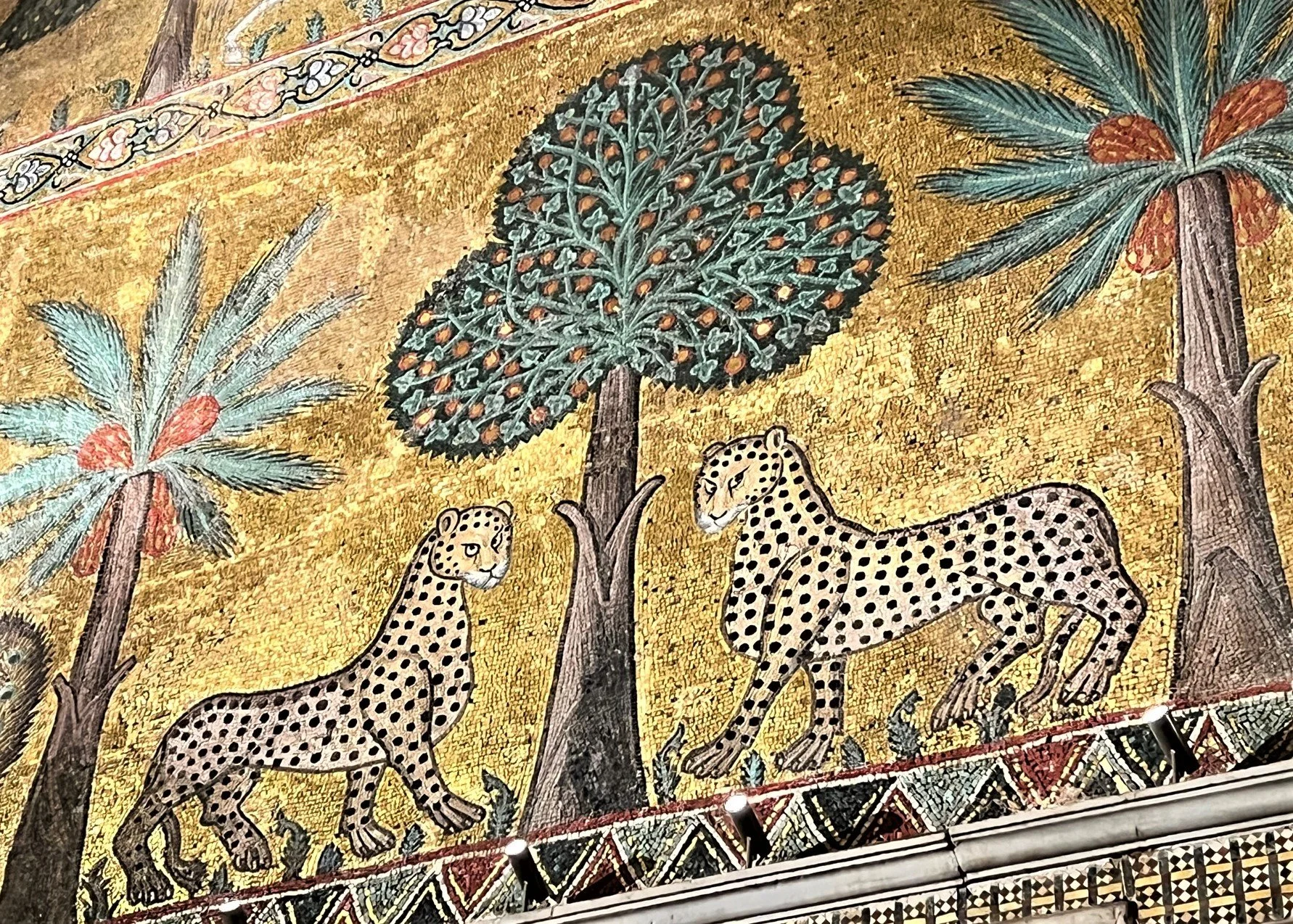
Ignoring my tired feet, I can’t leave Palermo without taking in the mosaic opulence at La Mortorana church and the Royal Palace. Processions of stylized eagles, cheetahs, peacocks, lions, geese and griffins goosebump my skin. Shimmering kings, queens, saints and archangels overload me. As sensuous as any of my dad’s magazines.
A ringing in my ears signals that I’ve seen enough. Leaving the 12th century to brave the crowded, chaotic Palermo street scene, I barricade myself behind a pair of dark sunglasses.
Shop windows with colorful ceramics beg me to open my wallet. Scruffy public parks with broken pavements pull at my ankles. Rusted balconies cantilever overhead, hanging off crumbly buildings. Cars parked in rugby scrums block my passage.
Palermo is a steamer trunk. Scuffed, dusty, dirty. Aging leather is cracked. Metal straps, rusted rivets, frozen clasps girdle her. Musty papers, broken crockery, tattered bits of cloth, scrumptious old family recipes, the detritus of a long-lived life are crammed into her corners.
When I get home, I’m going to preserve my travel memories for my grandkids and their grandkids to uncover. I’m buying a trunk.
I’ll put it in the attic.