Jonathan C. Lewis
Underground Paris
A fictional travelogue; three minute read.
The ticket-seller’s drooping skin looks as if it might slide off his face before he finishes processing my voucher for the Paris Catacombs. From inside his glass coffin, he’s as silent as a corpse when I ask, “Can I pay with crypto currency?”
With the weariness of someone who’s been defying death his entire life, he pushes my ticket across the counter. I’ve seen the same boredom in my high schoolers when we study history’s tombs—the Egyptian pyramids, China’s terra cotta warriors, Italy’s Pompeii.
Westminster Abbey, the Basilica of Santa Croce, Sengakuji Temple, the Taj Mahal, Lenin’s Tomb. Everywhere humans make death a tourist attraction, I’ve been to them all.
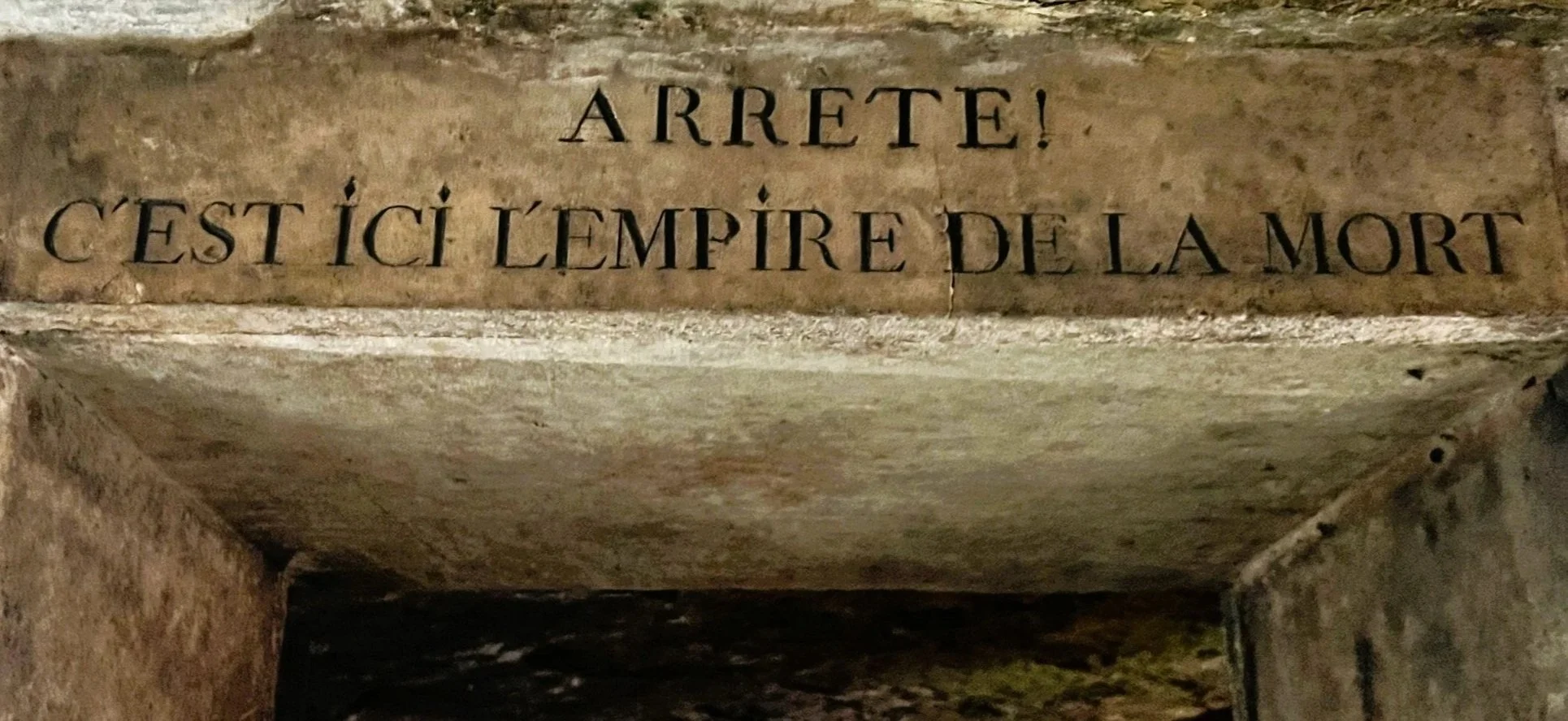
Entering the catacombs, a sign chiseled into a stone wall reads "Stop! This is the Empire of Death." No one stops.
The subterranean air is clammy, confining. I’m five stories below street level—deeper than the Paris Metro. This is the labyrinth of caves and passageways where the French Resistance hid from the Nazis.
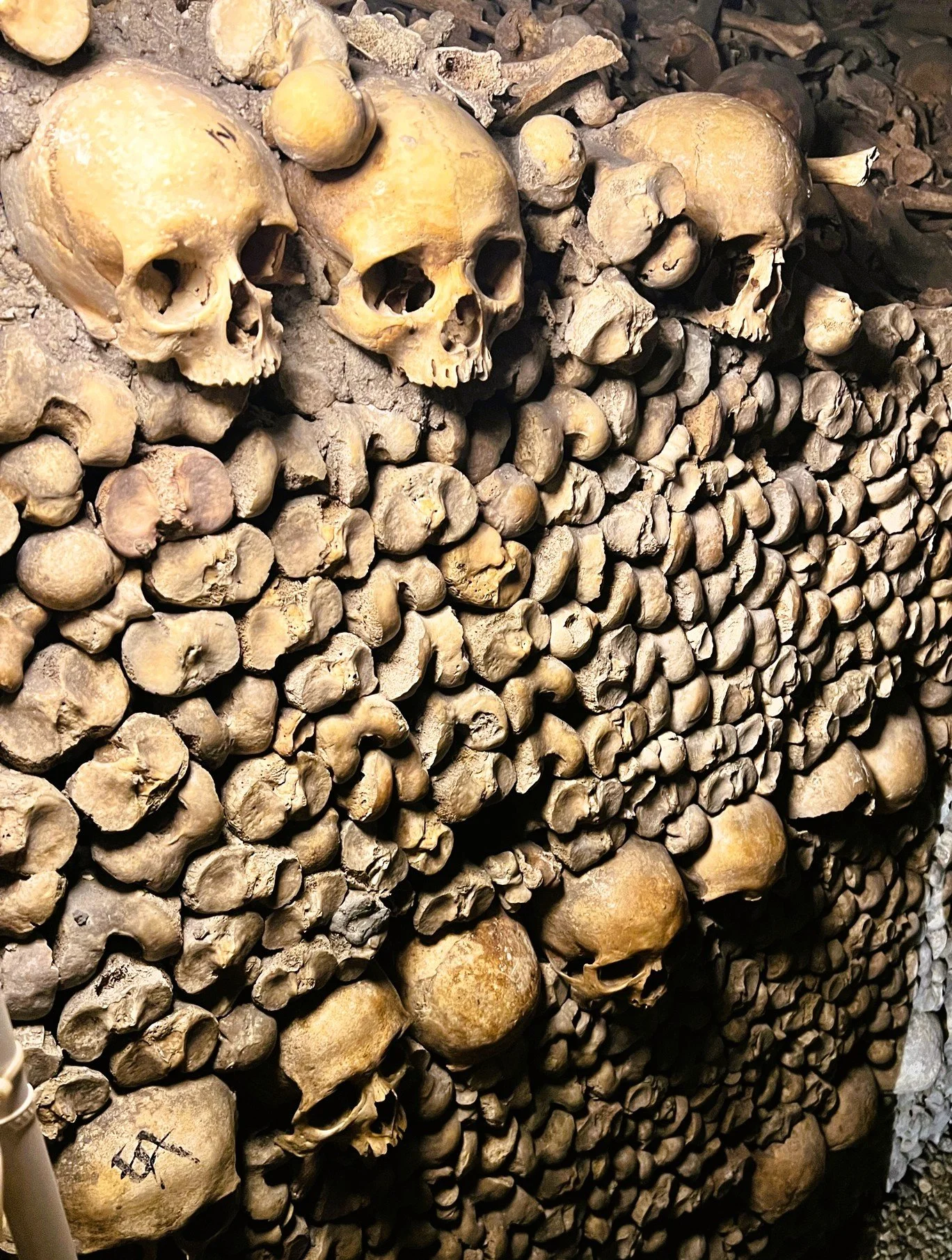
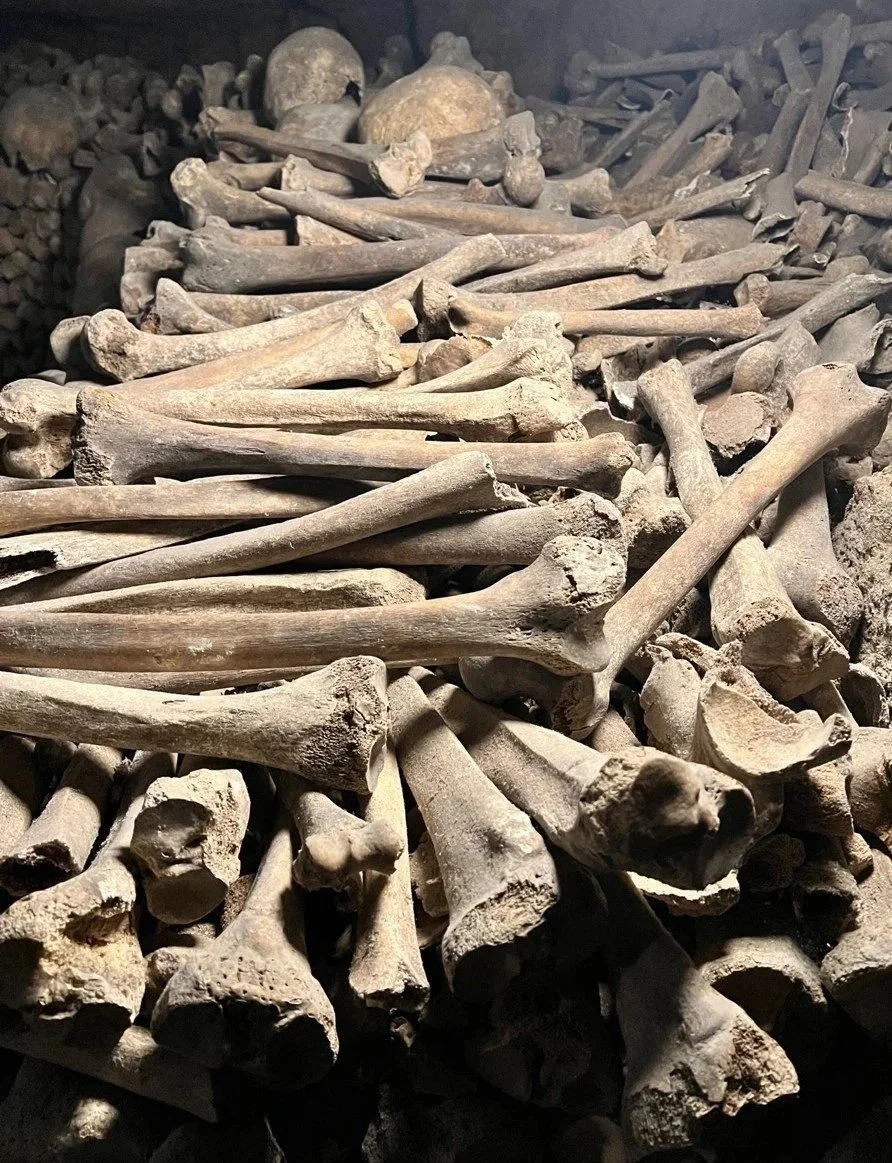
Five million bodies—stacks of bones arranged in displays worthy of a Printemps window dresser—are five million reminders that I may never pass this way again. No one notices my hands trembling. I put them in my pockets anyway.
I’m what my students consider in my vintage dinosaur years—middle-aged. I’m not yet extinct, but I don’t have any trouble imagining my fossilized bones decorating a burial chamber. Last year, a teacher at school—my closest friend Matthew—died of cancer. Slowly, bit by bit, his life dulled. His daily existence was controlled and compressed into hospital waiting rooms, then hospital beds and then a coffin. Like a fine car in an auto salvage yard with its life crushed out of it.
“At end of the 14th century, a hideous public health menace hit Paris,” the guide is saying. “Decaying bodies buried in common graves and cemeteries were overrun with hungry rats. To control the scourge, corpses were transplanted to underground quarries outside the city limits—where we are now.”
Rats gnawing on moldering bodies makes me think of my headstrong school principal who rules the school like a conquering Napoleon. Meeting her for the first time was annoying, and downhill from there. Imagining that even a rat might leave her alone makes me grin. Matt would have too.
When our tour enters yet another room packed floor to ceiling with skulls, hands, torsos, feet, the guide cautions. “Don’t take any souvenirs.” She’s not joking, but I’m dying to ask, “Replacement parts if I break my arm? For making broth?”
The macabre rush of touristing at a grave site is a bit like driving past a highway accident before the bodies have been shoveled off the pavement. From morbid curiosity, I slow down. The funereal warning is unmistakable: The mangled bodies could be me.
I’m not liking what I see, but there’s no reason not to look. I don’t hear any of the people buried here complaining.
When I die, nothing worse can happen to me. Nothing worse is going to happen to them either—or to Matt.
Exiting the catacombs, I emerge on the streets of Paris. The temperature is bone-chilling. Leaves dropping off horse chestnut trees are swept by wind gusts towards an unknown afterlife.
A streetlight flickers.